Selling children’s products online can be a rewarding business opportunity, but it also comes with significant legal and safety responsibilities. Parents expect products intended for babies and young children to meet strict safety standards, and governments have established regulations to ensure these expectations are met. Whether a business manufactures products, imports them from overseas, purchases them from wholesalers, or operates through a dropshipping model, compliance with safety regulations is essential before products reach consumers.
The discussion centers on a merchant selling baby products who is facing a common challenge: overseas suppliers are unable or unwilling to provide the documentation required for selling children’s products in the United States. The merchant wants to understand how to proceed when suppliers cannot provide a Children’s Product Certificate (CPC), especially when using dropshipping or print-on-demand business models.
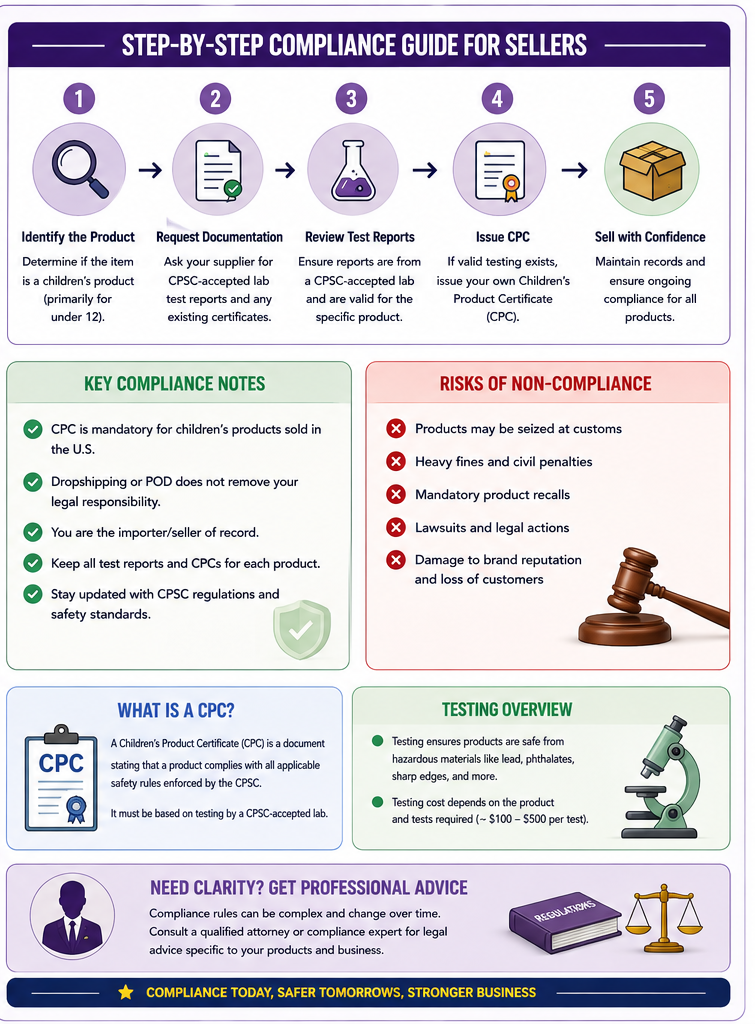
Several practical recommendations emerge from the discussion. The first step is determining whether the product legally qualifies as a children’s product. If it does, appropriate testing and certification become necessary before the product is offered for sale. Merchants are advised to request third-party laboratory test reports from suppliers whenever possible. If testing has not been completed, businesses may need to arrange independent testing before issuing the required documentation themselves. If suppliers refuse to cooperate, switching suppliers or negotiating testing costs may become necessary. The discussion also emphasizes that selling children’s products without proper compliance can result in product seizures, financial penalties, recalls, and legal consequences.
Although no final resolution is reached, the overall recommendation is clear: merchants should prioritize compliance, obtain valid testing, prepare appropriate documentation, and seek professional legal guidance whenever uncertainty exists.
This article explains why compliance is essential, how certification works, what responsibilities sellers have, and how businesses can reduce risks when selling children’s products internationally.
Why Children’s Product Safety Is So Important
Children are among the most vulnerable consumers.
Unlike adults, young children may:
- Put products in their mouths
- Swallow small parts
- Be exposed to harmful chemicals
- Have sensitive skin
- Use products differently than intended
Because of these factors, products designed primarily for children must meet stricter safety standards than many general consumer goods.
Safety regulations exist to reduce injuries, prevent accidents, and protect children’s health.
Understanding Children’s Products
One of the first recommendations in the discussion is determining whether a product is legally considered a children’s product.
Generally, products primarily designed or intended for children under the age of twelve fall into this category.
Examples may include:
- Baby clothing
- Toys
- Feeding accessories
- Nursery products
- Children’s furniture
- Educational items
- Baby carriers
- Infant care accessories
Correctly identifying whether a product belongs in this category is an important first step because different regulations may apply depending on the intended user.
Why Certification Exists
Certification requirements are designed to demonstrate that products meet established safety standards.
Certification helps verify that products have been evaluated for potential hazards before reaching consumers.
These evaluations may examine:
- Physical safety
- Mechanical strength
- Chemical content
- Flammability
- Small parts
- Sharp edges
- Toxic substances
- Material quality
The goal is to reduce the likelihood of injuries during normal product use.
The Role of Independent Testing
The discussion highlights the importance of third-party laboratory testing.
Independent testing provides objective evidence that products comply with applicable safety requirements.
Rather than relying solely on manufacturer claims, accredited laboratories evaluate products using standardized testing procedures.
Independent verification increases confidence for:
- Consumers
- Retailers
- Regulatory authorities
- Importers
Reliable testing also helps businesses defend their products if compliance questions arise later.
Requesting Documentation from Suppliers
Before purchasing products, merchants should ask suppliers for available compliance documentation.
Useful documents may include:
- Laboratory test reports
- Material specifications
- Safety certificates
- Manufacturing information
- Quality control records
Receiving complete documentation early helps businesses evaluate whether a supplier understands regulatory expectations.
Suppliers who maintain organized records often demonstrate stronger quality management practices.
When Suppliers Cannot Provide Documentation
The central problem discussed is suppliers who cannot provide required documentation.
This situation creates uncertainty for merchants.
Possible reasons include:
- Products were never tested
- Testing has expired
- Suppliers lack experience with international markets
- Documentation has been lost
- Products were modified after testing
Regardless of the reason, businesses should avoid assuming products are compliant without supporting evidence.
Arranging Independent Testing
If suppliers cannot provide valid documentation, merchants may need to arrange independent product testing.
Although testing requires additional investment, it provides confidence that products satisfy required safety standards.
Testing costs vary depending on:
- Product complexity
- Required evaluations
- Number of samples
- Laboratory location
- Applicable regulations
While testing increases initial expenses, it may prevent significantly greater financial losses later.
The Importance of Reliable Suppliers
Supplier selection is one of the most important business decisions.
Reliable suppliers typically:
- Maintain consistent product quality
- Keep accurate documentation
- Understand export requirements
- Respond promptly to questions
- Cooperate during compliance reviews
Businesses should evaluate suppliers carefully rather than choosing solely based on price.
Lower purchase costs may become expensive if compliance problems arise.
Negotiating Testing Costs
The discussion suggests negotiating with suppliers when testing has not yet been completed.
Possible arrangements include:
- Shared testing expenses
- Supplier-funded testing
- Discounted product pricing
- Future order commitments
Suppliers interested in long-term business relationships may be willing to cooperate.
Open communication often produces better outcomes than assuming suppliers will refuse.
Knowing When to Change Suppliers
Not every supplier is suitable for international business.
If suppliers consistently refuse to:
- Provide documentation
- Improve quality
- Complete testing
- Answer compliance questions
Businesses should consider alternative suppliers.
Changing suppliers may temporarily delay product launches but often reduces long-term risks.
Understanding Seller Responsibility
An important point emphasized in the discussion is that selling through dropshipping does not remove legal responsibilities.
Many new merchants mistakenly believe suppliers assume full responsibility because products ship directly to customers.
However, businesses selling products generally remain responsible for ensuring compliance with applicable regulations.
Responsibility often includes:
- Product safety
- Accurate product information
- Consumer protection
- Legal compliance
Business owners should understand these obligations before launching products.
Risks of Non-Compliance
Selling non-compliant children’s products creates significant risks.
Potential consequences include:
- Product recalls
- Financial penalties
- Customs seizures
- Business reputation damage
- Customer lawsuits
- Account restrictions
- Lost consumer trust
Even a single compliance failure can create substantial financial and reputational harm.
Preventive compliance is usually far less expensive than resolving problems after products reach customers.
Protecting Brand Reputation
Customer trust is difficult to build and easy to lose.
Parents purchasing children’s products expect businesses to prioritize safety above profit.
Demonstrating compliance helps strengthen brand reputation by showing commitment to quality and responsible business practices.
Businesses that invest in safety often earn greater customer confidence over time.
Quality Control Beyond Certification
Certification alone should not replace ongoing quality control.
Businesses should also monitor:
- Manufacturing consistency
- Packaging quality
- Material changes
- Supplier performance
- Customer feedback
- Product defects
Continuous quality monitoring helps identify problems before they become widespread.
Product Traceability
Maintaining accurate records supports product traceability.
Useful information includes:
- Supplier details
- Production batches
- Purchase dates
- Shipping records
- Test reports
- Customer complaints
Good documentation simplifies investigations if product issues arise later.
Traceability also improves inventory management and recall readiness.
Customer Communication
Clear communication helps customers make informed purchasing decisions.
Businesses should provide accurate information regarding:
- Product materials
- Age recommendations
- Safety instructions
- Proper usage
- Care instructions
- Warnings
Transparent communication reduces misunderstandings while improving customer satisfaction.
International Business Challenges
Selling internationally introduces additional complexity.
Businesses may need to understand:
- Import regulations
- Product standards
- Customs documentation
- Labeling requirements
- Country-specific laws
Requirements differ between markets.
Products acceptable in one country may require additional testing or documentation elsewhere.
International sellers should research destination market regulations carefully.
Working with Professionals
The discussion recommends seeking legal advice when uncertainty exists.
Professional guidance can clarify:
- Applicable regulations
- Documentation requirements
- Testing procedures
- Business responsibilities
- Import requirements
Although professional advice represents an additional cost, it often prevents expensive compliance mistakes.
Long-Term Business Benefits
Investing in compliance provides benefits beyond avoiding penalties.
Businesses with strong compliance programs often experience:
- Greater customer trust
- Better supplier relationships
- Easier expansion
- Improved operational consistency
- Reduced legal risk
- Stronger brand reputation
Compliance should be viewed as a long-term business investment rather than merely a regulatory obligation.
Building a Responsible Business
Successful children’s product businesses focus on more than sales.
They also prioritize:
- Product safety
- Customer confidence
- Quality assurance
- Ethical sourcing
- Transparent communication
- Regulatory compliance
These principles contribute to sustainable business growth while protecting consumers.
Conclusion
Selling children’s products in the United States requires careful attention to safety regulations, testing requirements, and compliance responsibilities. Businesses cannot assume that suppliers have completed all necessary safety procedures, especially when sourcing products internationally. Instead, merchants should verify whether products qualify as children’s products, request valid laboratory testing documentation, and arrange independent testing when required.
If suppliers cannot or will not provide appropriate documentation, businesses should carefully evaluate whether continuing the relationship is worth the associated risks. Negotiating testing costs, selecting more reliable suppliers, or investing in independent testing may require additional time and financial resources, but these efforts help protect customers, strengthen business credibility, and reduce long-term legal and financial risks.
Importantly, operating through dropshipping or other fulfillment models does not eliminate the seller’s responsibility for product compliance. Merchants remain accountable for ensuring that the products they offer meet applicable safety standards before reaching consumers. By prioritizing quality assurance, maintaining accurate documentation, working with trustworthy suppliers, and seeking professional guidance when needed, businesses can build a strong reputation while providing safe, reliable products for children and families