Managing an online store involves much more than processing customer orders. Once sales begin coming in, business owners also need accurate financial records for bookkeeping, tax reporting, cash flow monitoring, and payment reconciliation. One seemingly small piece of missing information can create hours of extra work for accountants and finance teams. A good example is the absence of a payment identifier or payment reference in transaction exports.
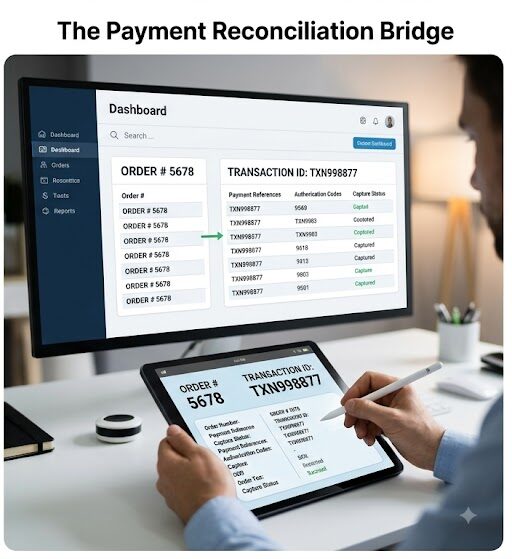
The discussion centers on a merchant who wants the transaction history export to include a payment identifier, transaction reference, or payment code so their accountant can reconcile payments without manually comparing multiple spreadsheets. While order numbers are already included in the standard export, they are often not enough because payment providers typically generate their own unique payment references.
Several responses explain that the necessary payment information exists within the platform’s transaction records but is not included in the standard downloadable export. The conversation points toward technical methods of retrieving the missing information through developer access or custom reporting solutions, while also noting an important complication: authorization and capture transactions may have different identifiers. However, no built-in setting or official product update currently solves the issue directly through the standard export.
This discussion highlights a broader challenge faced by growing ecommerce businesses: balancing operational simplicity with the detailed financial records required for professional accounting.
Why Payment Reconciliation Is Important
Payment reconciliation is the process of confirming that every recorded sale matches an actual payment received.
For an ecommerce business, this means comparing:
- Customer orders
- Payment records
- Bank deposits
- Accounting records
- Refunds
- Fees
The goal is ensuring that every transaction is accurately recorded.
Without proper reconciliation, businesses may experience:
- Accounting errors
- Duplicate entries
- Missing payments
- Incorrect financial reports
- Tax complications
- Audit difficulties
As order volume grows, manual reconciliation becomes increasingly difficult.
Why Order Numbers Are Not Always Enough
Many merchants assume that an order number uniquely identifies every financial transaction.
In practice, payment systems often generate additional identifiers.
A single customer purchase may involve multiple references.
For example:
- Order number
- Payment reference
- Authorization code
- Capture reference
- Refund reference
These identifiers may serve different purposes.
An accountant working across multiple financial systems often needs the payment-specific identifier rather than only the order number.
Understanding Different Transaction Identifiers
One of the key lessons from the discussion is that multiple identifiers can exist for a single purchase.
Although customers usually see only their order number, the payment process itself can generate several records behind the scenes.
These records help payment systems track different stages of processing.
Understanding these distinctions becomes important when reconciling financial records.
Authorization and Capture Are Not Always the Same
A particularly important technical detail discussed is that authorization and capture may create separate records.
In many payment workflows, authorization happens first.
This step confirms that funds are available.
Later, capture completes the payment.
Depending on how the payment is processed, these two stages may have different identifiers.
This creates additional complexity for accounting exports.
A reconciliation report may therefore need to distinguish between these different transaction stages.
Why Accountants Need Payment References
Accountants rarely work with only one spreadsheet.
Instead, they often compare information from:
- Sales records
- Payment reports
- Bank statements
- Accounting software
- Refund reports
A payment reference provides a reliable way to match these records together.
Without that reference, accountants may need to search manually through multiple files.
This process becomes increasingly time-consuming as businesses grow.
The Hidden Cost of Manual Reconciliation
At first, manually comparing spreadsheets may seem manageable.
However, even a modest online store can generate hundreds of transactions each month.
Imagine comparing:
- Order number
- Payment date
- Customer name
- Payment amount
- Bank deposit
for hundreds of orders.
Small mismatches can consume significant amounts of time.
Manual work also increases the risk of human error.
Why Standard Exports May Be Limited
The discussion explains that the standard transaction export focuses primarily on order-related information.
While useful for many operational purposes, it does not necessarily include every payment-system reference required for accounting.
This limitation creates a gap between operational reporting and financial reconciliation.
For many merchants, the missing payment reference becomes the critical missing piece.
Why Businesses Need More Detailed Financial Data
As businesses grow, financial reporting requirements become more sophisticated.
Store owners may need reports for:
- Monthly bookkeeping
- Tax preparation
- Profit analysis
- Payment reconciliation
- Cash flow reviews
- Financial audits
These reports often require more detailed transaction information than standard exports provide.
Growing businesses therefore need increasingly flexible reporting capabilities.
Understanding the Payment Lifecycle
Every customer purchase follows a series of steps.
A simplified payment lifecycle often includes:
- Customer places an order.
- Payment is initiated.
- Payment is authorized.
- Payment is captured.
- Funds are transferred.
- Settlement occurs.
- Accounting records are updated.
Each stage may generate its own internal records.
This explains why a single purchase can produce multiple identifiers.
Why Custom Reporting Becomes Valuable
When standard exports cannot provide every required field, businesses often explore customized reporting methods.
The discussion suggests creating reports that include additional transaction information.
Customized reports can help businesses:
- Reduce manual work
- Improve reconciliation accuracy
- Save accounting time
- Reduce spreadsheet comparisons
- Improve financial visibility
The exact implementation depends on technical capabilities, but the underlying objective remains the same: creating more useful financial reports.
Using Developer Access for Transaction Data
Several responses point out that the missing payment information exists within transaction records that developers can access.
This allows businesses to retrieve additional fields beyond those included in standard exports.
Although this approach requires technical implementation, it demonstrates that the information itself is generally available within the platform’s transaction data.
The challenge is presenting it in a format that accountants can easily use.
Why Technical Solutions Require Care
Retrieving transaction data programmatically may sound straightforward, but financial data requires careful handling.
Businesses should ensure that:
- Reports remain accurate.
- Sensitive information is protected.
- Data matches accounting records.
- Duplicate entries are avoided.
- Authorization and capture records are handled correctly.
Financial reporting should prioritize accuracy over convenience.
Understanding Gateway References
The discussion repeatedly emphasizes the importance of payment gateway references.
These references often become the common link between:
- Payment processors
- Bank records
- Accounting systems
- Transaction histories
Without this shared reference, matching transactions becomes much more difficult.
This is why merchants often request that payment references appear directly within downloadable reports.
Why Native Reporting Requests Continue
The discussion ultimately remains unresolved because merchants continue requesting a built-in solution.
The desired outcome is relatively simple.
Instead of requiring custom development or external reporting methods, merchants want a downloadable report that already includes:
- Order number
- Payment reference
- Transaction identifier
- Authorization information
- Capture information
Such a report would significantly simplify reconciliation.
Challenges of Multiple Payment Events
Not every order follows a simple payment process.
Possible scenarios include:
- Full payment
- Partial payment
- Partial refund
- Multiple captures
- Payment failure
- Retry attempts
Each event can create additional transaction records.
Good reporting should account for these situations rather than assuming every order has only one payment event.
Why Financial Accuracy Matters
Accurate reconciliation affects much more than bookkeeping.
It also supports:
- Tax compliance
- Business planning
- Cash flow forecasting
- Fraud detection
- Financial audits
- Investor reporting
Reliable financial data helps business owners make better decisions.
Poor reconciliation can create confusion throughout the business.
Building Better Financial Workflows
The discussion indirectly encourages merchants to think beyond individual exports.
A strong financial workflow should include:
- Consistent transaction records
- Reliable payment references
- Organized documentation
- Regular reconciliation
- Clear reporting procedures
Good financial organization reduces stress during tax season and monthly accounting reviews.
Reducing Spreadsheet Dependence
Many growing businesses eventually discover that manually managing multiple spreadsheets becomes inefficient.
A more structured reporting workflow helps reduce:
- Copy-and-paste work
- Manual matching
- Duplicate records
- Missing transactions
- Human error
Even small improvements in reporting can save significant time over the course of a year.
Documenting Transaction Information
Businesses can also improve internal processes by documenting how transaction records should be handled.
Useful documentation may include:
- Which identifier to use
- How refunds are matched
- How payment stages are recorded
- Which reports are generated monthly
- Who reviews reconciliation
Clear internal procedures help maintain consistency.
Planning for Business Growth
A business processing ten orders each month has different reporting needs than one processing thousands.
Planning early helps businesses avoid larger problems later.
As transaction volume grows, merchants benefit from:
- Organized records
- Reliable payment references
- Efficient reporting
- Scalable reconciliation processes
Preparing these systems early makes future growth much easier.
What Merchants Can Do Today
Even without a built-in export that includes every desired field, merchants can still strengthen their reconciliation process.
Practical steps include:
- Understanding available transaction data.
- Identifying which payment reference accountants need.
- Reviewing authorization and capture records separately when necessary.
- Maintaining organized financial documentation.
- Creating consistent reconciliation procedures.
- Regularly comparing sales records with payment records.
These habits improve financial accuracy regardless of reporting limitations.
The Bigger Lesson
The discussion illustrates an important reality of ecommerce operations.
Features that seem small from a customer perspective can become major operational challenges behind the scenes.
Customers rarely think about payment references.
Accountants depend on them.
Bridging this gap becomes increasingly important as businesses scale.
The conversation also shows that operational reporting and accounting reporting are not always identical.
Businesses need both.
Conclusion
The request to include a payment identifier in transaction exports highlights a practical accounting challenge faced by many growing ecommerce businesses. While order numbers are useful for managing customer purchases, accountants often need payment-specific references to accurately reconcile sales with payment records, bank deposits, refunds, and financial statements.
The discussion explains that these payment references generally exist within transaction records, but they are not included in the standard downloadable export. It also points out an important technical detail: authorization and capture events may generate different identifiers, meaning reconciliation reports may need to account for multiple transaction stages rather than relying on a single reference.
Although no native export setting currently solves the problem, the conversation emphasizes broader lessons about financial organization, scalable reporting, and accurate reconciliation. Businesses that understand their transaction lifecycle, maintain organized records, document their reconciliation process, and ensure payment references are available wherever possible create stronger accounting workflows as they grow.
Ultimately, payment reconciliation is not simply an accounting task. It is a critical operational process that supports financial accuracy, business planning, compliance, and long-term growth. As transaction volumes increase, having reliable payment references becomes increasingly valuable because it transforms reconciliation from a time-consuming manual exercise into a more efficient and dependable financial process.