A suspension for “counterfeit goods” can be one of the most frustrating problems for an ecommerce or dropshipping business. It is especially confusing when a store owner believes that the products being sold are genuine, the flagged products have already been removed or corrected, and the associated product listing account has been restored, yet the advertising account continues to reject appeals.
The discussion around this issue highlights an important reality: advertising platforms do not evaluate only whether a merchant personally believes a product is genuine. They also evaluate product information, brand claims, website content, pricing, product images, supplier relationships, business identity, and other signals that may influence whether products appear authentic and trustworthy.
In the reported case, a dropshipping store owner received a suspension for allegedly promoting counterfeit goods. The owner stated that the problematic products had been removed or corrected and that the product listing account had already been resolved. Despite those changes, repeated appeals for the advertising account were rejected.
Another participant later reported experiencing a similar situation. They claimed that their products were original and that they had invoices and authorization documents proving their legitimacy. However, they were frustrated because the appeal process did not provide an obvious way to attach all of their supporting documents.
The discussion remains unresolved, but it provides useful lessons about why counterfeit-related suspensions happen, what merchants should investigate, and how businesses can prepare stronger evidence before submitting an appeal.
What Does a Counterfeit Suspension Mean?
A counterfeit suspension generally means that the advertising platform believes a merchant may be promoting products that imitate or falsely represent another company’s branded products.
Counterfeit concerns can involve more than products that are physically fake.
For example, problems may arise when:
- A product uses another company’s trademark without authorization.
- Product images appear to belong to a different brand.
- Product titles contain brand names that the seller cannot substantiate.
- Packaging shown in images does not match the actual product.
- A supplier’s product information makes unsupported brand claims.
- A product appears suspiciously similar to a well-known branded item.
- The merchant cannot establish a legitimate supply chain.
Therefore, simply stating that a product is genuine may not be enough to resolve the issue.
Why Dropshipping Can Create Additional Risk
Dropshipping creates a unique challenge because the merchant may not physically handle the products before selling them.
The supplier may provide:
- Product descriptions
- Product images
- Brand information
- Product specifications
- Packaging photographs
The merchant may then publish those materials on the store.
If the supplier’s information is inaccurate, misleading, or unauthorized, the merchant can still face consequences because the products are being advertised through the merchant’s account.
This means that dropshipping businesses need to perform their own supplier due diligence rather than automatically trusting supplier-provided information.
Removing a Flagged Product May Not Automatically Solve the Problem
One of the most important points in the discussion is that removing or editing the products that initially caused concern does not necessarily guarantee immediate reinstatement.
A suspension can involve the overall business account rather than only individual products.
For example, the platform may continue reviewing:
- The website
- Product catalog
- Business information
- Brand claims
- Shipping information
- Return policies
- Product descriptions
- Other products
- Account history
Consequently, simply deleting one product may not resolve the underlying concern.
Why a Merchant Account Can Be Approved While Advertising Remains Suspended
Another confusing aspect is that different parts of an ecommerce advertising ecosystem may be reviewed separately.
A merchant may successfully resolve problems with product listings while the advertising account remains suspended.
This can happen because the two systems may apply different policies or review processes.
Therefore, a successful product listing review should not automatically be interpreted as confirmation that every advertising requirement has been satisfied.
The Importance of Product Authenticity
For branded products, authenticity should be supported by evidence.
Merchants should ideally maintain documentation showing where their products come from.
Potential evidence can include:
- Supplier invoices
- Purchase receipts
- Distributor agreements
- Brand authorization letters
- Wholesale documentation
- Manufacturer information
- Supply-chain records
The exact documentation required can vary depending on the circumstances.
The important principle is that merchants should be able to explain and demonstrate the origin of the products they sell.
Why Invoices Can Matter
Invoices are particularly useful because they can connect a merchant to a supplier.
A strong invoice may contain information such as:
- Supplier name
- Supplier address
- Merchant information
- Product descriptions
- Quantities
- Dates
- Prices
However, having an invoice does not automatically guarantee that an appeal will succeed.
The documentation needs to be credible and relevant to the products being advertised.
If an invoice comes from an unknown supplier while the product claims to be an authorized branded product, additional verification may still be necessary.
Authorization Is Different From Authenticity
Another important distinction is between owning a genuine product and having permission to commercially advertise a brand.
A merchant might purchase an authentic branded product from a legitimate source.
However, that does not necessarily mean the merchant is authorized to represent itself as an official distributor or use the brand’s intellectual property in every way.
Businesses should therefore avoid making claims such as:
- “Official distributor”
- “Authorized retailer”
- “Official partner”
unless they can substantiate those claims.
Product Images Can Trigger Suspicion
Images are another important area to investigate.
A merchant may unknowingly use supplier images that contain:
- Brand logos
- Packaging
- Watermarks
- Trademarked designs
- Official-looking promotional materials
If the merchant cannot establish permission to use those materials, the content may contribute to trust or policy concerns.
Merchants should review every image associated with affected products.
Product Titles and Descriptions Matter
The same principle applies to written content.
Product titles should accurately describe what is being sold.
Descriptions should not exaggerate authenticity or affiliation.
For example, if a store is selling a generic product inspired by a particular style, using a famous brand name in the title may create unnecessary risk.
Merchants should use factual descriptions based on the actual product.
Pricing Can Also Raise Questions
Extremely low prices can sometimes create additional suspicion.
A product advertised at a fraction of the normal market price may cause customers or automated systems to question its authenticity.
Low pricing alone does not prove that a product is counterfeit, but it can become one factor among several.
Merchants should therefore be prepared to explain unusually large price differences when selling branded products.
Reviewing the Entire Store
When an advertising suspension occurs, merchants should not look only at the products that were specifically flagged.
The entire website should be reviewed.
Important areas include:
Product Pages
Check:
- Titles
- Descriptions
- Images
- Brand references
- Pricing
- Product specifications
Business Information
Make sure:
- Business name is consistent.
- Contact information is visible.
- Company details are accurate.
- Policies are clearly presented.
Shipping Information
Customers should be able to understand:
- Where products ship from
- Estimated delivery times
- Shipping charges
- International delivery conditions
Return and Refund Policies
Policies should be clear and realistic.
A website that appears incomplete can reduce overall trust.
Avoid Making Unsupported Brand Claims
One of the safest approaches is to describe products accurately without implying relationships that do not exist.
If a merchant is not officially connected to a brand, the website should not suggest otherwise.
This is especially important for dropshipping stores that source products from multiple suppliers.
Supplier Due Diligence
A major lesson from the discussion is that merchants need to investigate suppliers before listing branded products.
Before adding a product, merchants should ask:
- Who manufactured it?
- Who supplied it?
- Is the product genuinely branded?
- Is the supplier authorized?
- Can the supplier provide documentation?
- Are the product images legitimate?
- Can the supplier confirm the product’s origin?
These questions can prevent serious problems later.
Keep Documentation Before You Need It
Many merchants only search for invoices or authorization documents after receiving a suspension.
That is too late.
A better approach is maintaining documentation from the beginning.
Create organized records for:
- Supplier invoices
- Purchase orders
- Agreements
- Authorization letters
- Product specifications
- Supplier communications
This makes future reviews much easier.
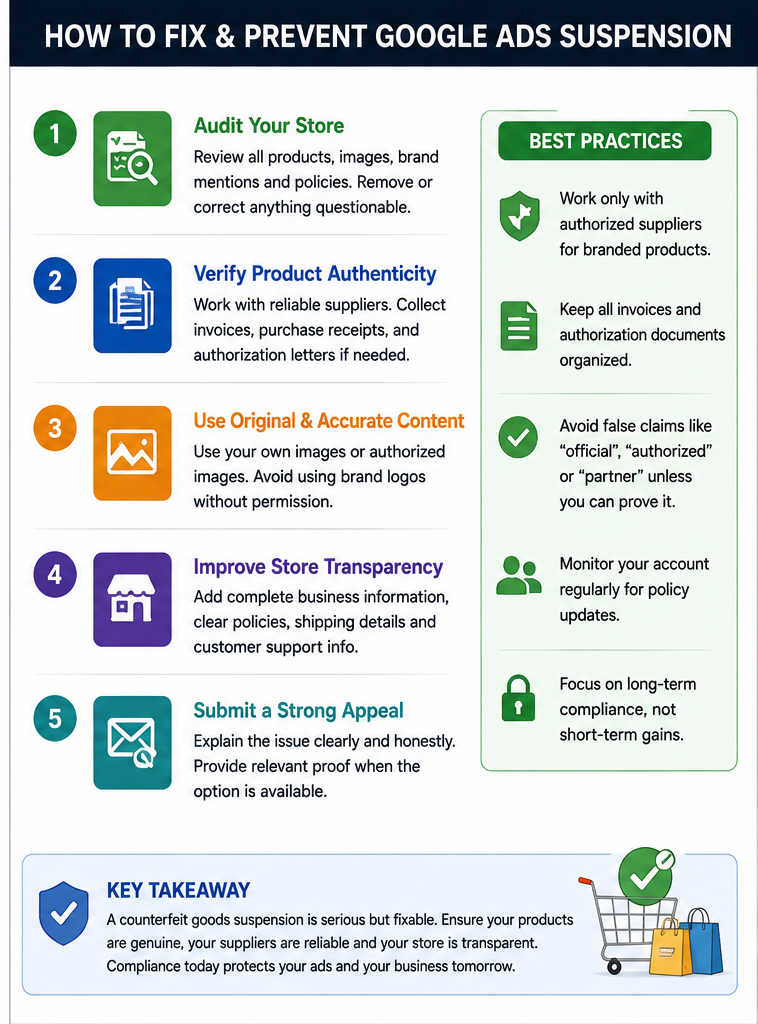
What to Do Before Appealing
Before submitting another appeal, merchants should conduct a complete audit.
First, identify exactly what triggered the suspension.
Then review the entire store for similar issues.
Next, remove or correct anything that could reasonably create the same concern.
Finally, gather evidence that demonstrates legitimate business operations.
The goal should not simply be to convince the platform that one product is genuine.
The goal is to demonstrate that the business as a whole operates legitimately and transparently.
Why Repeated Appeals May Not Help
Repeatedly submitting the same appeal without making meaningful changes can be ineffective.
If the underlying problem remains unresolved, another appeal may produce the same result.
Instead, merchants should use each rejection as an indication that something may still require attention.
This does not mean guessing at policy requirements.
It means conducting a systematic review and ensuring that the business can substantiate its claims.
The Problem With Limited Document Upload Options
The second merchant in the discussion raises another important problem: having legitimate documentation but not being able to attach it during the appeal.
This can be particularly frustrating.
A business may have:
- Supplier invoices
- Purchase receipts
- Authorization documents
- Business registration records
but still struggle to provide enough context during a limited appeal form.
In such situations, merchants should carefully follow the available official appeal process and provide the most relevant information requested rather than submitting random or unnecessary documents.
Do Not Fabricate Documentation
This point is extremely important.
Merchants should never create, edit, or fabricate invoices, authorization letters, receipts, or supplier records simply to make an appeal look stronger.
False documentation can create much more serious problems than the original suspension.
All evidence should be genuine and traceable.
When Changing Suppliers May Be Necessary
If a supplier cannot provide credible documentation for branded products, continuing to sell those products may not be worth the risk.
A merchant may need to:
- Find a different supplier
- Switch to authorized distribution
- Sell unbranded products
- Remove questionable products
- Focus on private-label products
The cheapest supplier is not always the safest supplier.
Building a More Trustworthy Store
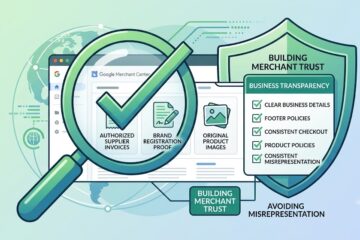
A strong ecommerce business should make it easy for customers and platforms to understand who is behind the store.
Helpful elements include:
- Clear business information
- Accurate contact details
- Transparent policies
- Realistic shipping information
- Authentic product descriptions
- Consistent branding
- Genuine customer support information
These elements contribute to overall business credibility.
Lessons for New Dropshipping Businesses
The discussion offers several lessons that are useful even for merchants who have never experienced a suspension.
First, do not blindly copy supplier listings.
Second, verify branded products before advertising them.
Third, keep supplier documentation.
Fourth, avoid unsupported brand claims.
Fifth, review the entire website when an account problem occurs.
Finally, understand that dropshipping does not remove the merchant’s responsibility for what is being advertised.
Conclusion
A counterfeit-related advertising suspension can be difficult to resolve, particularly when a merchant believes that all products are genuine. The discussion shows that simply removing flagged products or correcting individual listings may not always be enough. Advertising platforms can consider a wider range of signals, including product information, images, brand claims, supplier relationships, and overall website credibility.
The safest approach is to investigate the issue systematically. Merchants should review the entire catalog, verify supplier relationships, maintain genuine invoices and authorization documents, remove unsupported brand claims, and ensure that their website accurately represents their business.
For dropshipping businesses, supplier due diligence is especially important because merchants often rely on information provided by third parties. A supplier’s product description or image should not automatically be treated as proof that a product is authorized or suitable for advertising.
The unresolved discussion ultimately highlights a broader ecommerce lesson: compliance should be treated as part of the business from the beginning, not as something to address only after an account has been suspended. Businesses that maintain clear documentation, use accurate product information, work with reliable suppliers, and present transparent websites are in a much stronger position when their advertising accounts are reviewed.
A suspension may be frustrating, but it can also reveal weaknesses in a store’s sourcing, documentation, or product presentation. Addressing those weaknesses systematically is more sustainable than repeatedly appealing without understanding the underlying concern.