Starting an ecommerce business is exciting, but one of the biggest questions every beginner faces is how much inventory to buy for the first product test. Buying too little can increase the cost per unit and limit your ability to fulfill orders smoothly, while buying too much can leave you with unsold stock and unnecessary financial risk. This dilemma becomes even more challenging in India, where customer buying behavior, delivery expectations, and cash-on-delivery preferences create a different environment from many international markets.
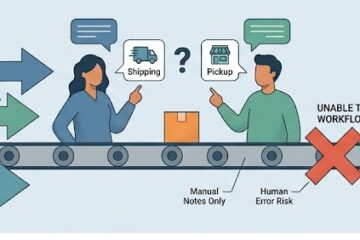
The discussion centers on a beginner entrepreneur who wants to build an ecommerce or dropshipping-style business in India. Their initial strategy is to find low-competition products that are already performing well in foreign markets, test demand through paid advertising, and purchase inventory only if customer interest looks promising. However, they recognize a practical problem: because many Indian customers prefer paying after delivery, testing a product may require holding at least some real inventory to evaluate shipping performance, returns, and customer behavior.
The entrepreneur is also frustrated after purchasing a course that promised to teach ecommerce but provided only basic information before encouraging enrollment in a more expensive brand-building program. As a result, they are now searching for practical, self-guided ways to learn product sourcing, inventory planning, and brand-building without relying on costly courses.
Although the discussion does not produce a universal answer for the perfect first inventory quantity, it offers valuable insights into how beginners can reduce risk, validate products, and build a sustainable business step by step.
Why First Inventory Decisions Matter
The first inventory purchase often feels like a major commitment.
Many beginners believe they must choose between buying hundreds of units or avoiding inventory completely.
In reality, the goal of the first batch is not maximizing profit.
Its primary purpose is learning.
A first batch helps answer important questions such as:
- Do customers actually want this product?
- Will they complete purchases?
- Are delivery times acceptable?
- Does the product meet quality expectations?
- Are return rates manageable?
- Is pricing sustainable?
These lessons become much more valuable than trying to achieve maximum margins immediately.
Understanding Product Validation
One of the strongest ideas in the discussion is validating products before making large investments.
Product validation means confirming that real customers are interested in buying a product before scaling inventory.
Instead of assuming a product will succeed because it performs well elsewhere, entrepreneurs should gather evidence from their own target market.
Useful validation methods include:
- Measuring customer interest
- Testing advertising response
- Collecting inquiries
- Tracking add-to-cart activity
- Monitoring completed purchases
The goal is reducing uncertainty before making larger financial commitments.
Why International Trends Can Be Useful
Many entrepreneurs search international markets for product ideas.
This approach has some advantages.
Products that succeed abroad may reveal:
- Emerging trends
- New customer interests
- Creative product ideas
- Untapped opportunities
However, copying international products without adaptation can create problems.
Markets differ in:
- Customer preferences
- Pricing expectations
- Shipping behavior
- Payment methods
- Competition
- Cultural habits
Therefore, international inspiration should become a starting point rather than a guarantee of success.
Understanding the Indian Market
The discussion highlights an important reality about ecommerce in India.
Many customers prefer cash on delivery.
This creates additional operational considerations.
Unlike prepaid orders, cash-on-delivery businesses must think carefully about:
- Delivery success
- Return rates
- Order acceptance
- Logistics costs
- Customer confirmation
Because payment often happens after shipment, businesses need confidence in their fulfillment process.
This is one reason why many entrepreneurs feel that holding some inventory becomes necessary.
Why Inventory Feels Necessary
Pure dropshipping reduces inventory risk.
However, entrepreneurs sometimes worry that relying entirely on suppliers makes it difficult to control customer experience.
Holding some inventory provides opportunities to:
- Test product quality
- Verify packaging
- Improve delivery speed
- Handle replacements
- Understand customer behavior
Even a small inventory can provide valuable operational experience.
The Risk of Buying Too Much
One of the biggest fears for beginners is ending up with unsold inventory.
Large purchases create several risks.
These include:
- Money tied up in stock
- Storage costs
- Unsold products
- Changing trends
- Cash flow pressure
Many products lose momentum over time.
Buying excessive inventory before validating demand increases financial exposure.
The Risk of Buying Too Little
Buying too few units also creates challenges.
Small orders may result in:
- Higher unit costs
- Lower profit margins
- Frequent reordering
- Stock shortages
- Missed sales
The discussion captures this tension clearly.
Beginners want enough inventory to learn, but not enough to create unnecessary risk.
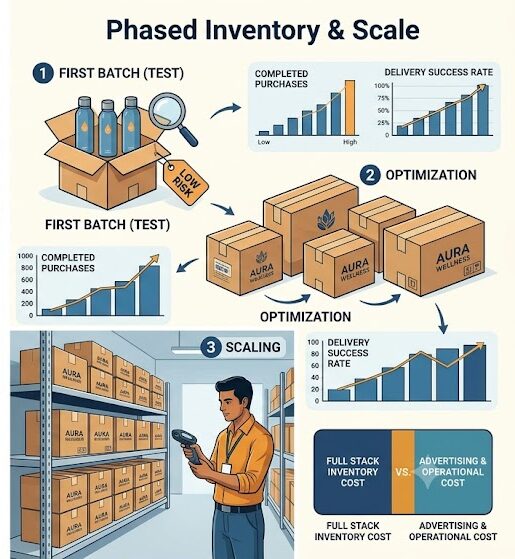
Thinking in Phases Instead of One Big Order
Rather than treating inventory as one permanent decision, beginners benefit from thinking in phases.
Phase One: Validation
The goal is learning.
Questions include:
- Do people click?
- Do they buy?
- Do they accept delivery?
- Are they satisfied?
Phase Two: Optimization
Once early sales appear, entrepreneurs can improve:
- Pricing
- Product pages
- Delivery
- Packaging
- Customer support
Phase Three: Scaling
Only after consistent performance should larger inventory purchases become a priority.
This phased approach reduces financial pressure.
Focus on One Product First
Another practical lesson is avoiding too many products initially.
Beginners sometimes launch dozens of unrelated products simultaneously.
This creates unnecessary complexity.
Instead, focusing on one carefully selected product allows entrepreneurs to learn faster.
A single product makes it easier to analyze:
- Advertising performance
- Customer feedback
- Delivery success
- Profitability
- Return rates
Learning becomes much clearer.
Understanding Product Costs
Before purchasing inventory, entrepreneurs should calculate the complete cost of selling.
Important costs include:
- Product cost
- Shipping
- Packaging
- Payment processing
- Advertising
- Returns
- Customer support
Looking only at supplier pricing can produce misleading profit expectations.
True profitability depends on total operating costs.
Testing Advertising Before Scaling
The entrepreneur’s strategy of testing demand before making large purchases reflects a valuable principle.
Advertising can help measure customer interest.
However, clicks alone do not guarantee sales.
Important signals include:
- Product page engagement
- Cart additions
- Completed purchases
- Cost per sale
- Customer questions
The goal is understanding real buying behavior.
Why Brand Building Still Matters
The discussion also reflects frustration with expensive brand-building courses.
However, the underlying lesson remains important.
Brand building does not necessarily require expensive training.
A brand grows through consistent customer experiences.
Important brand elements include:
- Clear identity
- Reliable quality
- Professional presentation
- Honest communication
- Consistent packaging
- Good customer support
Strong brands are built gradually through trust.
Self-Learning Can Be Effective
Many successful entrepreneurs develop their skills independently.
Useful learning approaches include:
- Studying successful stores
- Reading industry discussions
- Analyzing competitors
- Testing products
- Reviewing customer feedback
- Practicing marketing
Practical experience often teaches lessons that theoretical courses cannot.
Learning from Competitors
Competitor research provides valuable insights.
Entrepreneurs can observe:
- Product presentation
- Pricing
- Collections
- Customer reviews
- Delivery promises
- Brand messaging
The goal is learning patterns rather than copying businesses directly.
Choosing Products Carefully
Not every trending product becomes a good business opportunity.
Useful evaluation questions include:
- Does the product solve a problem?
- Is it visually appealing?
- Can customers understand it quickly?
- Is it affordable?
- Can it survive shipping?
- Are return risks manageable?
Careful selection reduces unnecessary experimentation.
Preparing for Returns
Returns are part of ecommerce.
Businesses should prepare for them from the beginning.
Important considerations include:
- Return policy
- Replacement process
- Customer communication
- Product inspection
- Refund handling
Planning ahead reduces future stress.
Improving Customer Trust
Customers buying from new businesses often look for reassurance.
Trust can be strengthened through:
- Professional product pages
- Clear descriptions
- Realistic delivery timelines
- Transparent policies
- Responsive support
Trust becomes especially important when customers pay upon delivery.
Managing Cash Flow
Cash flow deserves as much attention as inventory.
Money tied up in excessive stock becomes unavailable for:
- Advertising
- Packaging
- Shipping
- Customer support
- New products
Balanced inventory planning helps preserve flexibility.
When to Reorder
Instead of waiting until inventory reaches zero, businesses should monitor sales patterns.
Useful questions include:
- How quickly is stock selling?
- How long does replenishment take?
- How many units remain?
- Are sales becoming consistent?
Thoughtful reordering helps avoid stock shortages.
Building Systems Early
Even small businesses benefit from organized systems.
Useful habits include:
- Tracking inventory
- Recording costs
- Monitoring sales
- Documenting suppliers
- Reviewing customer feedback
Good organization makes scaling much easier later.
Patience Is Part of the Process
One emotional theme in the discussion is frustration.
Many beginners expect faster progress.
However, ecommerce often involves continuous learning.
Successful entrepreneurs usually improve through:
- Testing
- Measuring
- Adjusting
- Repeating
Small improvements accumulate over time.
Avoid Depending Entirely on Courses
Courses can provide structure, but they are not the only path to learning.
Entrepreneurs should evaluate educational resources critically.
Useful learning usually includes:
- Practical examples
- Real testing
- Clear explanations
- Actionable advice
- Independent thinking
Building skills directly through experience often creates stronger long-term confidence.
A Practical First-Batch Framework
Instead of searching for one perfect inventory number, beginners can use a practical framework.
Step 1: Research Products
Study customer demand and competition.
Step 2: Estimate Costs
Calculate complete selling costs.
Step 3: Test Interest
Measure customer response before scaling.
Step 4: Buy a Small Learning Batch
Purchase enough inventory to test operations without risking excessive capital.
Step 5: Monitor Results
Track sales, returns, delivery success, and customer feedback.
Step 6: Improve
Optimize pricing, messaging, and fulfillment.
Step 7: Scale Gradually
Increase inventory only after consistent performance appears.
This approach balances learning with financial caution.
Conclusion
Deciding how much inventory to buy for a first ecommerce product launch in India is not about finding one universal number. Instead, it is about balancing learning, customer validation, operational experience, and financial risk. The discussion shows that beginners often face competing pressures: buying too few units can increase costs, while buying too many can tie up valuable capital in unsold stock.
The Indian market adds unique considerations, particularly because many customers still prefer cash on delivery, making real inventory useful for testing fulfillment, delivery performance, and customer behavior. At the same time, relying entirely on international trends or expensive training programs does not guarantee success. Entrepreneurs benefit more from validating products in their own market, calculating complete costs, studying competitors, learning independently, and building strong customer trust through professional presentation and reliable service.
The most practical lesson is to treat the first inventory purchase as a learning investment rather than a scaling decision. By testing carefully, monitoring real customer response, improving operations, and increasing inventory only after consistent sales appear, beginners create a much stronger foundation for sustainable growth while avoiding unnecessary financial risk. Ultimately, successful ecommerce businesses are rarely built through one perfect inventory decision—they grow through continuous testing, thoughtful adjustments, and disciplined execution over time.