Starting an online business has never been more accessible. With modern ecommerce platforms, entrepreneurs can launch a store, showcase products, and begin reaching customers around the world in a relatively short amount of time. This accessibility has inspired many young people to explore entrepreneurship while they are still in school or college. They see online business as an opportunity to earn income, develop valuable skills, and build something meaningful at an early age.
However, launching an online store involves more than choosing products and designing a website. Every business must also consider legal, financial, and regulatory responsibilities. Questions about business registration, payment processing, taxes, identity verification, and age requirements often arise before the first sale is even made.
The discussion centers on a 17-year-old entrepreneur in Sweden who wants to start an online dropshipping business targeting customers in the United States and other international markets. While preparing to launch the store, the merchant discovers that the payment system requires business registration information, including a legal business name and registration number, before allowing payment services to be activated. Since the business has not yet generated any revenue, the merchant questions whether formal registration is really necessary at such an early stage. As a minor, another concern is whether parents or guardians must become involved in the registration process.
Several responses present different viewpoints. Some emphasize that business registration is an important legal requirement that builds credibility and ensures compliance with financial regulations. Others suggest exploring alternative payment methods or delaying formal registration until the business begins generating consistent revenue. However, no definitive answer is reached regarding Swedish legal requirements, and the discussion remains open.
This article explores why business registration matters, the challenges young entrepreneurs face, the legal considerations involved in operating an online business, and the practical factors every new business owner should evaluate before launching.
The Appeal of Starting an Online Business
Online businesses attract entrepreneurs because they often require lower startup costs than traditional retail stores.
Instead of renting physical space, merchants can:
- Build an online storefront
- Market products through digital channels
- Reach international customers
- Operate from home
- Expand gradually as demand grows
These advantages make ecommerce particularly attractive for students and first-time entrepreneurs.
Many young people see online business as an opportunity to learn practical business skills while earning additional income.
Why Young Entrepreneurs Face Additional Challenges
Although enthusiasm and creativity are valuable, younger entrepreneurs often encounter additional legal and financial requirements.
Many countries establish minimum age requirements for:
- Signing legal contracts
- Opening business bank accounts
- Registering companies
- Applying for payment services
- Entering supplier agreements
These requirements exist because operating a business involves legal responsibilities.
When someone is under the legal age required to enter binding agreements, parents or guardians may need to become involved.
Understanding Business Registration
Business registration is the process of officially recognizing a business under the applicable laws of a country or region.
Registration typically establishes:
- Legal business identity
- Ownership information
- Business structure
- Tax obligations
- Regulatory compliance
Once registered, the business becomes easier for financial institutions, suppliers, customers, and government authorities to identify.
Registration also creates accountability.
Why Payment Providers Request Business Information
One of the main concerns raised in the discussion is why payment services request business registration details before the business has made any sales.
This requirement may seem unnecessary to first-time entrepreneurs.
However, payment providers operate under strict financial regulations.
They often need to verify:
- Business ownership
- Legal identity
- Business activities
- Country of operation
- Tax information
- Anti-fraud compliance
Collecting this information before processing customer payments helps reduce fraud, identity theft, and financial crime.
Although this process may appear inconvenient, it is designed to protect both businesses and consumers.
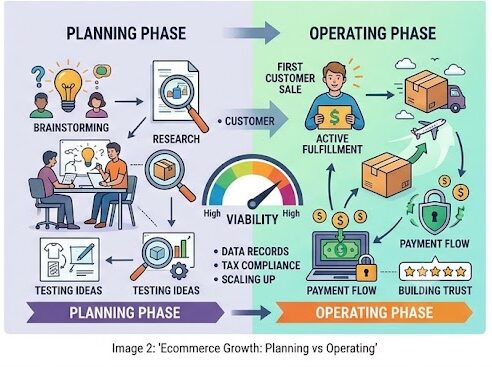
The Difference Between Planning and Operating
Many aspiring entrepreneurs believe that because they have not yet earned revenue, formal registration should not be necessary.
However, there is an important distinction between planning a business and actively operating one.
Planning activities may include:
- Researching products
- Designing a website
- Studying competitors
- Learning marketing
- Contacting suppliers
Operating a business usually begins when the merchant starts offering products or accepting customer payments.
At this stage, legal and financial requirements often become more relevant.
Building Customer Trust
Business registration can also improve customer confidence.
Consumers purchasing online often want reassurance that the seller is operating professionally.
Visible business information may increase trust by demonstrating that the business is legitimate and accountable.
Trust influences purchasing decisions.
Customers are generally more comfortable buying from businesses that appear transparent and reliable.
Why Legal Compliance Matters
Legal compliance protects both businesses and customers.
Operating within the law helps reduce risks such as:
- Financial penalties
- Account restrictions
- Payment interruptions
- Tax complications
- Consumer disputes
Following legal requirements from the beginning often prevents larger problems later.
Although registration may involve additional paperwork, it creates a stronger foundation for long-term growth.
Challenges for Minors
Young entrepreneurs face unique circumstances because many legal systems restrict business ownership or contractual agreements for minors.
Depending on local regulations, parents or guardians may need to:
- Register the business
- Open financial accounts
- Sign agreements
- Accept legal responsibility
This does not prevent young people from participating in business operations.
Instead, it often means that an adult provides the legal framework while the young entrepreneur manages daily activities.
Involving Parents or Guardians
Some young entrepreneurs hesitate to involve their parents.
Common concerns include:
- Wanting independence
- Avoiding additional paperwork
- Fear of rejection
- Uncertainty about legal requirements
However, involving parents can provide several advantages.
Parents may offer:
- Financial guidance
- Business advice
- Legal support
- Administrative assistance
- Emotional encouragement
Their involvement may simplify many early business processes.
Alternative Payment Methods
Some participants suggest exploring alternative payment options that may have different onboarding requirements.
Different payment providers often maintain different verification procedures.
However, entrepreneurs should remember that even if one provider appears easier to join initially, legal obligations regarding taxes, business registration, and financial reporting may still apply under local law.
Choosing a payment method should not replace understanding legal responsibilities.
Delaying Registration
Another viewpoint discussed is delaying formal business registration until consistent revenue begins.
Some entrepreneurs report testing business ideas first, carefully monitoring sales, and completing registration only after confirming that the business is viable.
This approach attempts to reduce initial costs and administrative work.
However, whether this strategy is legally appropriate depends entirely on the laws governing the entrepreneur’s country and business activities.
Merchants should always verify local legal requirements before choosing this path.
Tracking Sales Carefully
Even businesses operating during an early testing phase should maintain accurate records.
Important information includes:
- Sales revenue
- Customer orders
- Refunds
- Expenses
- Shipping costs
- Supplier payments
Good record keeping makes future business registration, tax reporting, and financial analysis much easier.
It also demonstrates responsible business management.
Understanding International Sales
The entrepreneur in the discussion plans to target customers outside Sweden.
Selling internationally introduces additional considerations.
Businesses may need to understand:
- International taxes
- Customs procedures
- Consumer protection laws
- Currency conversion
- Shipping regulations
- Import requirements
Even if customers are located overseas, the business owner usually remains subject to the laws of their home country as well.
International selling therefore requires careful planning.
The Importance of Research
Before launching an online business, entrepreneurs should research several key topics.
These include:
- Local business registration rules
- Tax obligations
- Age requirements
- Consumer rights
- Shipping policies
- Refund procedures
- Data privacy regulations
Understanding these areas reduces uncertainty and helps entrepreneurs make informed decisions.
Thinking Beyond the First Sale
Many new entrepreneurs focus only on getting their first customer.
However, successful businesses should also plan for future growth.
Questions to consider include:
- How will customer support be handled?
- How will taxes be reported?
- How will inventory be managed?
- How will refunds be processed?
- How will business finances be tracked?
Thinking beyond the launch stage helps create a more sustainable business.
Learning Business Skills Early
Regardless of age, starting a business teaches valuable skills.
Young entrepreneurs often develop experience in:
- Marketing
- Customer service
- Financial management
- Communication
- Problem solving
- Negotiation
- Time management
These skills remain valuable even if the first business does not become a long-term success.
Entrepreneurship itself becomes an important learning experience.
Balancing Risk and Opportunity
Starting a business always involves uncertainty.
Registration requirements, payment verification, supplier selection, and legal compliance may initially seem like obstacles.
However, these processes also create stability.
Businesses that begin with strong foundations are often better prepared for future expansion.
Rather than viewing compliance as a barrier, entrepreneurs can see it as an investment in long-term credibility.
Seeking Professional Advice
Because business regulations differ between countries, obtaining guidance from qualified professionals or relevant government authorities is often worthwhile.
Professional advice may clarify:
- Registration requirements
- Tax responsibilities
- Age restrictions
- Business structures
- Licensing obligations
Reliable guidance helps entrepreneurs avoid costly mistakes.
Developing a Long-Term Mindset
Successful businesses rarely grow overnight.
Instead, they develop gradually through careful planning, responsible decision-making, and continuous improvement.
Young entrepreneurs should focus on building strong business habits from the beginning.
These habits include:
- Honest communication
- Accurate record keeping
- Customer satisfaction
- Legal compliance
- Financial responsibility
Strong habits create stronger businesses.
Conclusion
The question of whether business registration is necessary before launching an online store depends on several factors, including local laws, age requirements, payment verification rules, and the stage of business operations. While it may seem unnecessary to complete formal registration before earning any revenue, many payment providers require legal business information upfront as part of identity verification and regulatory compliance.
For younger entrepreneurs, additional considerations arise because minors may not be able to enter certain legal agreements independently. In these situations, involving parents or guardians often provides the legal support needed to establish the business while allowing the young entrepreneur to manage daily operations and gain valuable experience.
Although some individuals choose to delay registration during early testing phases or explore alternative payment methods, these approaches should always be evaluated carefully against local legal requirements. Ultimately, building a successful online business involves more than launching a website or finding products to sell. A strong foundation based on legal compliance, responsible financial management, accurate record keeping, and long-term planning creates greater credibility, reduces future risks, and positions the business for sustainable growth.