Summary
Dropshipping has become an attractive business model for entrepreneurs who want to sell products online without maintaining their own inventory. While many businesses focus on general consumer products, some entrepreneurs are exploring a more premium market: branded and luxury fashion items.
Selling products from well-known brands such as Dolce & Gabbana, Versace, and Adidas can appear to be an attractive opportunity. These products already have brand recognition, established customer demand, and a premium market position. However, selling luxury and branded products through dropshipping involves several challenges that are different from ordinary ecommerce operations.
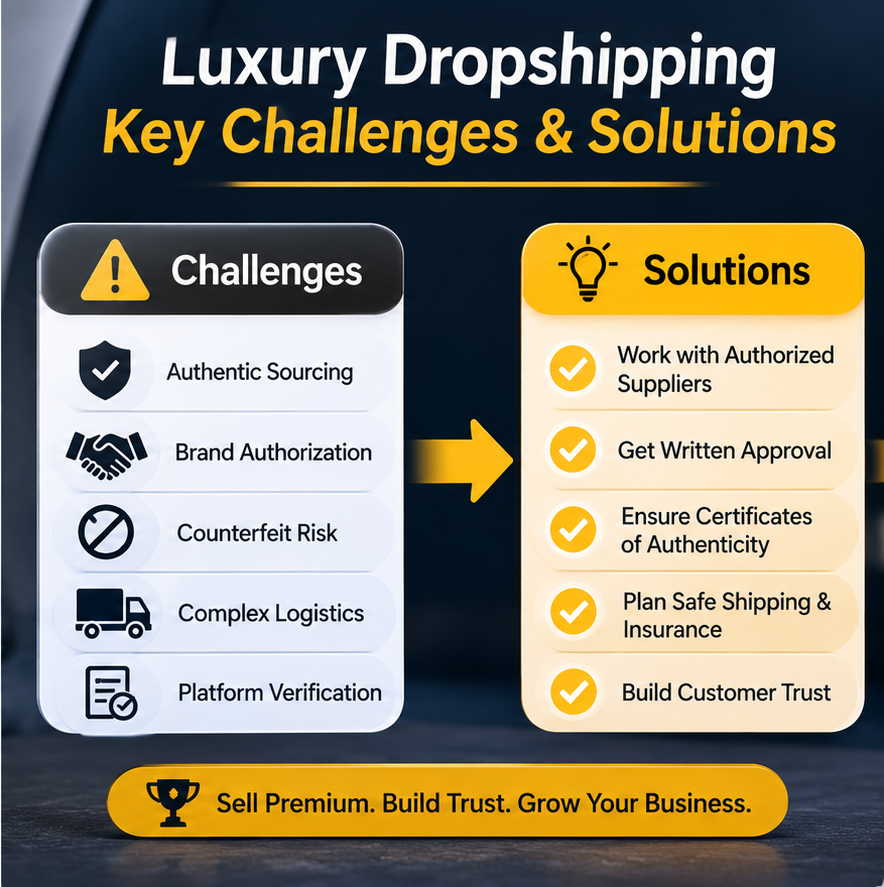
The main concern is finding genuine products through authorized suppliers while ensuring that the business has the necessary permission to resell them. Luxury brands often maintain strict control over distribution, pricing, branding, and third-party sellers. Without proper authorization, sellers may face counterfeit concerns, marketplace restrictions, legal complications, and damage to their reputation.
This article explores the opportunities and challenges of selling branded and luxury products through dropshipping, the importance of authentic sourcing, potential supplier options, and alternative business models for entrepreneurs interested in entering the premium ecommerce market.
Introduction
The ecommerce industry provides entrepreneurs with several opportunities to establish online businesses without investing heavily in inventory, storage facilities, or physical retail locations.
Dropshipping is one of the business models that makes this possible. Instead of purchasing products in advance and storing them, sellers list products in their online stores and arrange for suppliers to fulfil orders directly to customers.
This approach is commonly used for clothing, accessories, electronics, home products, and lifestyle items.
However, some entrepreneurs want to move beyond ordinary products and explore higher-value categories. Branded fashion and luxury goods are particularly interesting because customers are often willing to pay premium prices for products associated with established names.
For example, a seller may want to offer designer clothing, branded footwear, luxury handbags, watches, or premium accessories without purchasing and maintaining stock.
The business opportunity sounds attractive, but it raises an important question:
Can entrepreneurs successfully sell authentic branded and luxury products through a dropshipping business?
The answer depends on supplier relationships, brand authorization, product authenticity, distribution agreements, and the ability to manage customer expectations.
1. Understanding Luxury Product Dropshipping
Luxury product dropshipping follows the same general principle as traditional dropshipping, but the products and operational requirements are different.
In a traditional dropshipping arrangement, a seller lists products in an online store and receives orders from customers. The supplier manages inventory, packaging, and shipping.
The seller focuses on marketing, customer communication, pricing, and store management.
In luxury dropshipping, the same process applies, but sellers must pay much closer attention to product authenticity and brand authorization.
For example, an entrepreneur might want to sell premium clothing, designer handbags, branded sneakers, or luxury accessories.
When a customer places an order, the supplier should provide the genuine product and arrange its delivery.
The seller does not necessarily need to handle the product physically. However, the seller remains responsible for ensuring that the product is accurately represented and that the business has the right to sell it.
This makes supplier selection one of the most important parts of the business.
2. Why Entrepreneurs Are Interested in Branded and Luxury Products
There are several reasons why branded and luxury products attract ecommerce entrepreneurs.
Established Brand Recognition
Well-known brands already have an established position in the market.
Customers may recognize brands such as Versace, Dolce & Gabbana, and Adidas without requiring extensive explanations about the products.
This recognition can make product promotion easier compared with introducing an entirely unknown product.
Premium Customer Segment
Luxury products generally target customers who are interested in quality, design, exclusivity, and brand reputation.
These customers may be willing to spend more on products that match their preferences.
This creates an opportunity for sellers who understand premium customer expectations.
Potentially Higher Profit Margins
Luxury products can have higher selling prices than ordinary consumer products.
The discussion mentions potential profit margins of up to 250%. However, this should be treated as an opportunity mentioned by participants rather than a guaranteed or typical return.
Actual profitability depends on supplier prices, shipping costs, marketplace fees, taxes, advertising expenses, returns, and customer acquisition costs.
A high product price does not automatically mean high profit.
Inventory-Free Business Operations
Dropshipping allows entrepreneurs to explore premium product categories without purchasing large quantities of stock in advance.
This can reduce the initial inventory investment and allow sellers to test customer demand before expanding their operations.
However, inventory-free selling does not remove the need for reliable suppliers and proper product verification.
3. The Biggest Challenge: Finding Authentic Products
Product authenticity is one of the most important concerns in luxury dropshipping.
Luxury brands invest significant resources in maintaining their reputation. Their products are often distributed through selected retailers, authorized distributors, and approved sales channels.
This means that not every supplier claiming to offer designer products is necessarily authorized to distribute them.
A seller must distinguish between three important categories:
Authorized suppliers: Businesses that have the appropriate commercial relationships or permissions to distribute particular branded products.
Independent resellers: Businesses that may legally resell genuine products under applicable laws, but whose rights and restrictions need to be evaluated carefully.
Unauthorized or counterfeit suppliers: Sellers offering products without legitimate sourcing or falsely representing imitation products as genuine branded goods.
The third category presents serious risks.
A product that looks similar to an original designer item is not necessarily authentic.
Entrepreneurs should request reliable documentation, supplier information, invoices, and evidence of legitimate sourcing before listing products.
They should also verify whether the supplier has the right to distribute the products in the intended market.
4. Why Luxury Brands Control Their Distribution
Many luxury brands maintain strict distribution policies to protect their identity and market positioning.
Their reputation depends on product quality, customer experience, presentation, and controlled brand representation.
Allowing every third-party seller to offer their products could create problems related to pricing, product quality, customer service, and brand perception.
For this reason, some luxury brands carefully evaluate retailers and distribution partners.
Businesses interested in selling these products may need to demonstrate that they can meet specific commercial and operational requirements.
These requirements may include:
- Proof of business registration.
- Information about the business and its sales channels.
- Evidence of authorized product sourcing.
- Agreement with applicable distribution conditions.
- Compliance with brand presentation guidelines.
- Appropriate customer service and return policies.
- Compliance with regional selling restrictions.
Not every brand offers a dropshipping arrangement.
Some may work only with selected retailers, while others may have restrictions on online marketplaces or third-party sales.
Therefore, entrepreneurs should obtain written confirmation before building their business around a particular brand.
5. Potential Supplier Platforms for Premium Products
The discussion mentions several businesses that entrepreneurs may investigate when exploring luxury and premium fashion dropshipping.
These include:
BrandsGateway
BrandsGateway is mentioned as a potential source for premium and luxury fashion products.
Entrepreneurs interested in designer clothing and accessories may investigate its product selection, supplier conditions, and available fulfilment arrangements.
Before proceeding, sellers should verify the authenticity documentation, brand-specific distribution permissions, shipping arrangements, and geographical restrictions relevant to their business.
Styliafoe
Styliafoe is another name mentioned in the discussion as a possible option for accessing premium fashion products.
Businesses should evaluate its supplier terms, product sourcing information, fulfilment process, and suitability for their intended sales channels.
Brands Distribution
Brands Distribution is also identified as a potential supplier option.
Entrepreneurs should investigate its available product categories, business requirements, documentation, and arrangements for selling branded merchandise.
ITALIANMODA
ITALIANMODA is mentioned as another possible source for fashion-related products and supplier connections.
Businesses exploring this option should determine whether the available suppliers can support their specific product categories and fulfilment requirements.
Importantly, mentioning these businesses does not establish that every listed brand is available through them or that they have authorization for every luxury product.
Sellers must independently verify the supplier’s current terms, product authenticity, and distribution rights.
6. The Risk of Counterfeit Products
Counterfeit products are among the biggest risks in the luxury ecommerce industry.
Some suppliers may offer products using famous brand names, logos, or designs without having the legal right to do so.
Selling such products can create serious consequences.
Legal Complications
Selling counterfeit products can lead to trademark infringement claims and other legal problems.
The consequences depend on the applicable laws, the seller’s activities, and the markets involved.
Marketplace Account Restrictions
Online marketplaces and ecommerce service providers may investigate businesses that receive complaints about counterfeit products or unauthorized brand usage.
A seller may face listing removal, account restrictions, or suspension.
Loss of Customer Trust
Luxury customers generally expect genuine products and reliable service.
If a customer discovers that a product is counterfeit, the seller’s reputation can be seriously damaged.
Negative reviews and complaints can also affect future sales.
Financial Losses
Counterfeit-related disputes can result in refunds, chargebacks, legal expenses, and lost advertising investments.
Therefore, verifying authenticity before accepting customer orders is essential.
7. Shopify Verification and Brand Authorization
Entrepreneurs planning to sell luxury products through their own ecommerce stores must also consider the requirements of their selling platforms.
An online store can provide flexibility in website design, product presentation, pricing, and customer communication.
However, having an online store does not automatically grant permission to sell products belonging to established brands.
When selling branded merchandise, businesses should maintain appropriate documentation.
This may include:
- Supplier invoices.
- Purchase records.
- Authenticity certificates where applicable.
- Written authorization or distribution agreements.
- Brand-specific selling permissions.
- Documentation supporting the origin of products.
The exact documentation required can vary depending on the brand, supplier, product category, and selling channel.
Entrepreneurs should also avoid using protected brand logos, promotional images, or marketing materials in ways that violate applicable intellectual property rights.
Proper verification helps reduce the risk of disputes and supports a more trustworthy ecommerce operation.
8. Logistics and Shipping Challenges
Luxury dropshipping involves additional logistical considerations because the products may have significantly higher values.
Shipping a low-cost accessory and shipping an expensive designer handbag are not the same operational responsibility.
High-value products require careful handling and suitable delivery arrangements.
Shipping Security
Businesses should investigate whether suppliers offer secure packaging, reliable tracking, and suitable delivery services.
Insurance
For expensive products, sellers should understand whether shipping insurance is available and what losses or damages it covers.
International Customs
When products are shipped across countries, customs procedures, duties, taxes, and import restrictions may apply.
These costs should be considered when calculating the final selling price.
Returns and Exchanges
Luxury customers may have high expectations regarding product condition, packaging, and returns.
The seller should establish clear agreements with suppliers about damaged products, incorrect orders, exchanges, and refunds.
A reliable logistics arrangement is essential for maintaining customer confidence.
9. Alternative Business Models for Selling Premium Products
Traditional luxury dropshipping is not the only way to enter the premium ecommerce market.
Entrepreneurs can consider several alternative approaches.
White-Label Luxury-Inspired Products
White-label products allow businesses to sell products under their own brand identity.
Instead of using an established luxury brand’s name, the entrepreneur creates a distinct premium brand.
For example, a business might offer premium leather accessories, minimalist clothing, or designer-inspired home products under its own branding.
The products should have original branding and must not copy protected designs, logos, or trademarks.
This approach provides greater control over brand identity and customer relationships.
Direct Partnerships With Premium DTC Brands
Another opportunity involves working directly with smaller premium brands.
Some independent fashion businesses may be interested in expanding their online reach without managing every aspect of ecommerce operations themselves.
An entrepreneur could approach these businesses and propose a commercial partnership.
Depending on the agreement, the seller may handle online marketing, customer acquisition, storefront management, and order coordination while the brand manages inventory and fulfilment.
Written agreements should clearly establish product rights, pricing, responsibilities, and customer service expectations.
Hybrid Made-to-Order and Dropshipping Models
A hybrid model combines made-to-order products with supplier-managed fulfilment.
For example, a business may offer customized premium clothing or accessories that are produced after receiving an order.
This approach can reduce inventory requirements while giving customers a more personalized shopping experience.
It may be particularly suitable for independent premium brands that want to offer exclusive products without maintaining large quantities of finished inventory.
10. The Role of Influencers and Content Creators
Trust is extremely important when selling luxury products online.
Customers purchasing expensive fashion items want confidence that the products are genuine and that the seller is reliable.
Influencers and content creators can help premium ecommerce businesses communicate their value.
For example, creators can produce content explaining product materials, craftsmanship, styling options, and brand stories.
They can also demonstrate product quality and provide customers with a better understanding of what they are purchasing.
However, promotional content should remain transparent.
Businesses should not make unsupported claims about authenticity, exclusivity, or brand authorization.
A successful premium ecommerce business needs more than attractive promotional content. It requires genuine products, clear sourcing information, and reliable customer service.
11. Important Steps Before Starting a Luxury Dropshipping Business
Entrepreneurs interested in this market should follow a structured approach before launching their stores.
Step 1: Select a Product Category
Begin by identifying the products you want to sell.
This could include designer clothing, footwear, handbags, watches, accessories, or premium lifestyle products.
Focusing on a specific category can make supplier research and customer targeting easier.
Step 2: Research Suppliers
Identify potential suppliers and investigate their business background, product sourcing, and fulfilment arrangements.
Do not select a supplier simply because it offers attractive prices.
Step 3: Verify Product Authenticity
Request appropriate invoices, certificates, sourcing records, and other supporting documentation.
Verify whether the supplier has the necessary rights to distribute the specific products.
Step 4: Confirm Brand Permissions
Contact the relevant brand or authorized distributor to understand whether third-party resale and dropshipping are permitted.
Obtain written confirmation of applicable restrictions.
Step 5: Understand Shipping and Returns
Check delivery times, tracking arrangements, insurance options, customs responsibilities, and return procedures.
Step 6: Calculate Actual Profitability
Include supplier costs, shipping, insurance, taxes, marketplace charges, advertising, payment processing, and expected returns.
Do not base business decisions only on the difference between the supplier price and retail price.
Step 7: Build Customer Trust
Provide accurate product descriptions, transparent sourcing information, clear policies, and responsive customer support.
Step 8: Start With a Small Product Selection
Test the business with a limited range of verified products before expanding into additional categories.
This reduces operational complexity and helps identify problems early.
12. Future Opportunities in Premium Ecommerce
The premium ecommerce market offers opportunities for entrepreneurs who can combine reliable sourcing with strong customer relationships.
However, the most sustainable businesses will not necessarily be those offering the largest number of luxury brands.
Instead, successful sellers may focus on a smaller selection of carefully sourced products, transparent business practices, and consistent customer experiences.
Independent premium brands, customized products, and direct partnerships can also provide opportunities beyond traditional designer resale.
As ecommerce continues to develop, customers are likely to place significant importance on product authenticity, delivery reliability, and brand transparency.
Businesses that prioritize these factors can build stronger relationships with their customers.
Conclusion
Selling branded and luxury products through dropshipping is an interesting ecommerce opportunity, particularly for entrepreneurs who want to enter the premium fashion market without maintaining their own inventory.
Products from established brands can attract customers because of their recognition, reputation, and perceived value. The possibility of higher selling prices also makes this business model attractive.
However, luxury dropshipping requires more careful planning than ordinary dropshipping.
The most important challenges involve authentic product sourcing, brand authorization, supplier reliability, counterfeit prevention, shipping security, and customer trust.
Businesses exploring suppliers such as BrandsGateway, Styliafoe, Brands Distribution, and ITALIANMODA should carefully investigate their current offerings and verify the rights and documentation associated with individual products.
Entrepreneurs can also consider alternative approaches, including white-label premium products, direct partnerships with independent brands, and hybrid made-to-order business models.
Ultimately, building a successful luxury ecommerce business is not simply about finding expensive products and listing them online.
It is about creating a reliable commercial structure where customers can purchase genuine products with confidence.
The strongest opportunity lies in combining authentic sourcing, transparent business practices, reliable fulfilment, and a premium customer experience. These elements can help entrepreneurs build a trustworthy and sustainable business in the competitive luxury ecommerce market.
0 Comments