The discussion above reflects a situation many store owners eventually face.
After spending time improving collections, organizing products, working on search visibility, installing helpful tools, and cleaning up the storefront experience, the next question becomes:
How do you actually turn those improvements into more traffic and more sales?
The store owner is not starting from zero.
The foundation work has already been done.
Now the focus shifts from building the store to growing it.
The request asks for recommendations for marketing experts or agencies that can help increase:
traffic
conversions
customer acquisition
return on marketing spend
The discussion produced different viewpoints.
Some recommended full-service marketing support.
Others suggested diagnosing conversion issues before increasing advertising.
Another perspective encouraged learning core marketing internally rather than outsourcing everything.
No final recommendation emerged.
But the conversation reveals something important:
growth problems are not always traffic problems.
And marketing success usually comes from understanding the real bottleneck before spending more money.
Let’s explore why.
Why Store Improvements Do Not Automatically Create Growth
Many merchants believe improving a store should immediately increase sales.
Examples include:
better collections
cleaner navigation
improved SEO
new integrations
optimized layouts
These improvements matter.
But they mainly improve readiness.
Growth still requires customer acquisition and conversion systems.
Store improvements create opportunity.
Marketing activates it.
Why Traffic Alone Is Not the Goal
One of the most common mistakes in ecommerce is focusing only on visitor numbers.
Traffic feels exciting.
But visitors alone do not build sustainable growth.
Businesses ultimately care about:
qualified visitors
engagement
purchase intent
conversion quality
A smaller audience with stronger intent often performs better.
Understanding the Difference Between Traffic and Conversion Problems
The discussion introduced an important question:
Is the real issue low traffic or low conversion?
Those problems require different solutions.
Low traffic means:
not enough people arrive.
Low conversion means:
people arrive but do not buy.
Confusing the two leads to wasted budget.
Why Diagnosing Before Scaling Is Important
One of the most practical viewpoints suggested diagnosing the store before increasing advertising.
This matters because paid acquisition can amplify existing problems.
If conversion is weak:
more traffic often means more wasted spend.
Businesses should identify constraints before scaling.
Why Conversion Problems Are Often Hidden
Many merchants assume visitors are not interested.
But often the issue is communication.
Common friction points include:
unclear value proposition
weak product messaging
uncertain pricing
lack of trust
slow pages
complex buying flows
These issues reduce performance.
Why Product Benefits Matter More Than Features
A recurring recommendation focused on clear product benefits.
Customers rarely buy features alone.
They want outcomes.
Instead of asking:
What does the product do?
Customers ask:
Why should I care?
Strong messaging improves conversions.
Why Social Proof Influences Buying Decisions
Reviews were highlighted as an important factor.
Social proof reduces uncertainty.
Customers want evidence.
Signals may include:
reviews
testimonials
purchase experiences
usage examples
Social confidence supports decision-making.
Why Shipping and Return Clarity Builds Trust
Another recommendation emphasized visibility around shipping and returns.
This matters because uncertainty creates hesitation.
Customers commonly ask:
When will it arrive?
Can I return it?
What happens if there is a problem?
Transparency supports confidence.
Why Advertising Should Support Strategy, Not Replace It
Several responses suggested paid acquisition.
Advertising can accelerate growth.
But ads rarely fix weak positioning.
Businesses that scale effectively usually combine:
good offers
clear messaging
strong customer experience
effective acquisition
Why Social Advertising Remains Popular
Social platforms continue attracting ecommerce brands because they support:
audience targeting
creative storytelling
visual selling
retargeting
But success depends on execution quality.
Why Search-Based Acquisition Has Different Advantages
Search-driven traffic behaves differently.
People arriving through search often show clearer intent.
Search channels may support:
problem awareness
comparison behavior
purchase readiness
Traffic quality varies.
Why Retargeting Plays a Different Role
Retargeting appeared repeatedly in the discussion.
This strategy focuses on visitors who already showed interest.
Benefits may include:
improved efficiency
higher familiarity
reduced acquisition friction
Not every visitor converts immediately.
Why Email Still Matters
Email was also mentioned as a conversion strategy.
Email remains valuable because it creates owned communication.
Benefits include:
follow-up opportunities
repeat purchases
relationship building
audience retention
Traffic becomes more valuable when businesses can reconnect later.
Why Testing Landing Experiences Matters
Another recommendation involved testing pages and experiences.
Testing allows businesses to evaluate:
messages
layouts
offers
purchase paths
Assumptions often fail under real behavior.
Why Full-Service Marketing Sounds Attractive
Some responses promoted broader growth services.
These approaches usually bundle:
traffic generation
conversion improvement
analytics
retention
creative execution
This appeals to merchants who want faster execution.
Why Outsourcing Is Not Always the First Answer
One response encouraged learning internally.
This reflects an important perspective.
Founders benefit from understanding:
customer behavior
marketing economics
channel performance
business metrics
Knowledge improves decision-making.
Why Hybrid Learning Often Works Well
Many growing businesses combine:
internal understanding
external expertise
This balance creates:
better oversight
faster execution
stronger strategic decisions
Complete dependency can create risk.
Why Store Data Quality Supports Marketing
An interesting point raised involved maintaining accurate store information.
Growth becomes difficult if operations are inconsistent.
Examples include:
incorrect pricing
inventory issues
product mismatches
Marketing performs better when operations stay reliable.
Why Scaling Too Early Creates Problems
Many businesses increase budget immediately after making store improvements.
But growth usually requires validation first.
Questions include:
Which products convert?
Which audience responds?
Which offers work?
Scaling should follow evidence.
Why Conversion Optimization Is Continuous
Optimization is not a one-time project.
Customer behavior changes.
Competition changes.
Businesses continuously improve:
messaging
design
offers
customer journeys
Small improvements compound.
Why Agencies Are Not Interchangeable
Although the discussion requested recommendations, an important lesson emerges:
not every expert solves the same problem.
Some specialize in:
advertising
analytics
creative
retention
conversion
Choosing based on needs matters.
Why Merchant Expectations Influence Results
Businesses sometimes expect immediate outcomes after hiring support.
Growth usually requires:
testing
learning
iteration
refinement
Expectations influence satisfaction.
Why Marketing Works Best With Clear Goals
Before seeking support, businesses benefit from defining:
target traffic
conversion goals
acquisition costs
growth expectations
Clear objectives improve decisions.
Why Measurement Matters More Than Activity
Doing more marketing is not always better.
Tracking outcomes matters more.
Questions include:
Did traffic quality improve?
Did conversion increase?
Did profitability improve?
Measurement creates direction.
Why Long-Term Growth Is Built in Layers
Successful stores rarely grow through one tactic.
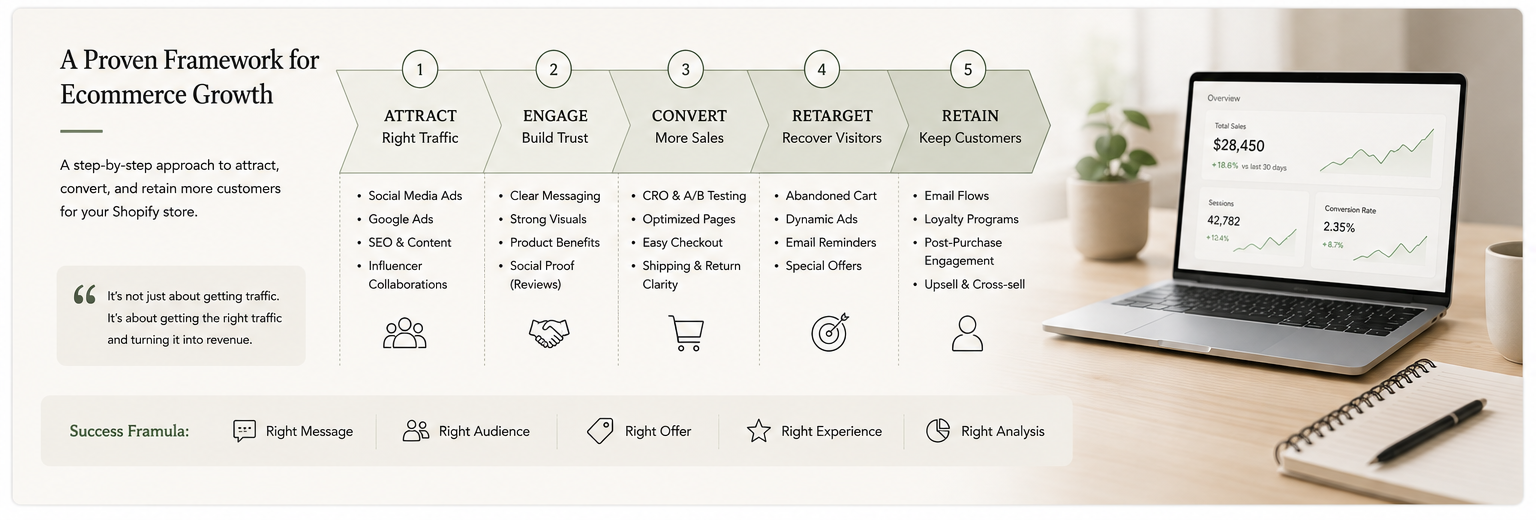
Growth usually combines:
brand building
acquisition
conversion
retention
operations
Sustainable systems outperform short bursts.
Why Customer Understanding Is the Real Advantage
The strongest businesses eventually understand:
who buys
why they buy
what creates trust
what removes hesitation
Customer insight drives performance.
The Bigger Lesson About Marketing Recommendations
The discussion starts with asking for experts.
But the deeper question becomes:
What problem are you actually trying to solve?
More visitors?
Better conversion?
Higher repeat purchases?
Marketing strategy changes depending on the answer.
Final Thought
The conversation highlights an important stage in ecommerce growth.
After improving a store’s structure, merchants naturally want to accelerate performance.
But successful growth usually starts with diagnosis before expansion.
Traffic, conversion, trust, messaging, and customer experience all work together.
The goal is not simply finding someone to run campaigns.
The goal is understanding what will create meaningful growth.
Because the strongest marketing outcomes rarely come from spending more—
they come from solving the right problem first.
Conclusion
The discussion shows that there is no universal answer for growing a Shopify store.
Different approaches emerged, but several themes remained consistent:
understand whether the issue is traffic or conversion
improve product communication
build customer trust
test before scaling
combine acquisition with retention
maintain strong operational data
As ecommerce becomes more competitive, sustainable growth increasingly depends on thoughtful strategy rather than simply increasing marketing activity.