Buying gold from estate sales, private sellers, auctions, or second-hand markets can be a profitable business when approached with the right knowledge and preparation. Whether the goal is to resell vintage jewelry, recover precious metals, or expand a jewelry inventory, one of the most important skills a buyer can develop is accurately calculating the melt value of gold before making an offer.
Many beginners make the mistake of relying solely on the stamp engraved on a piece of jewelry or the asking price provided by the seller. Others purchase items based on appearance or emotional appeal without first determining their actual intrinsic value. These approaches can lead to costly mistakes, reduced profit margins, and unnecessary financial risks.
The discussion focuses on a practical lesson learned by an experienced buyer who once overpaid for gold jewelry because the actual gold content was lower than expected. Since then, they have adopted a disciplined process of calculating the melt value before negotiating with sellers. This simple habit allows them to make informed purchasing decisions, establish fair offers, and protect their business from unnecessary losses.
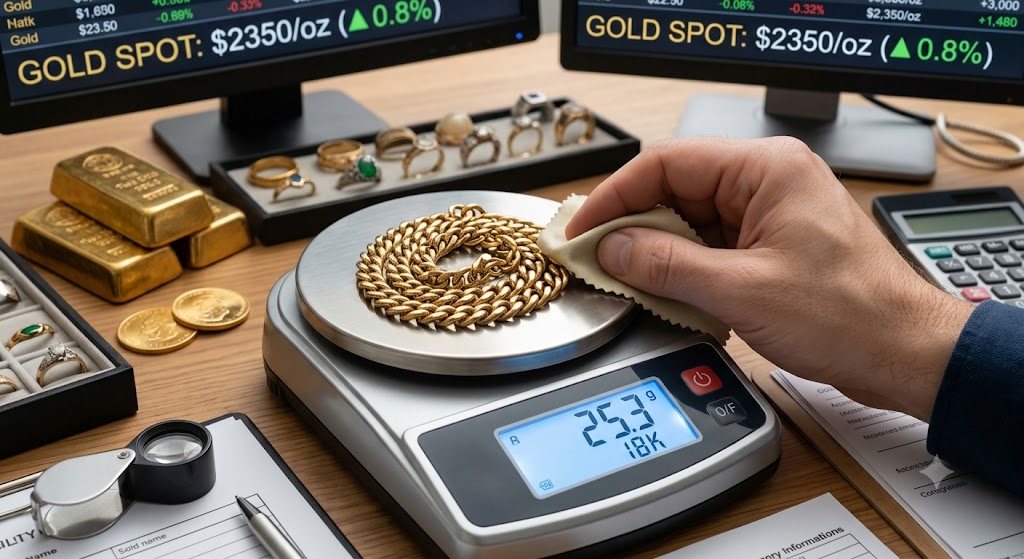
The shared method involves determining the item’s weight, identifying its purity based on its hallmark, checking the current market price of gold, and calculating the approximate value of the precious metal contained in the item. Rather than relying on guesswork, every purchase begins with objective data.
This article explains why melt value matters, how buyers calculate it, why purity and weight are critical, common mistakes to avoid, and how a data-driven buying strategy helps build a more profitable jewelry business.
Understanding Gold Melt Value
Gold melt value refers to the value of the pure gold contained within a piece of jewelry or another gold item based on current market prices.
It does not represent:
- Retail value
- Antique value
- Brand value
- Designer premium
- Collectible worth
Instead, melt value represents the worth of the gold itself if it were refined and sold according to its precious metal content.
This calculation provides buyers with an objective starting point when evaluating inventory.
Why Melt Value Matters
Every successful gold buyer understands that appearance alone does not determine value.
Two rings may look nearly identical but contain different amounts of gold.
Similarly, a heavier necklace may contain less pure gold than a lighter one.
Without calculating melt value, buyers risk:
- Paying too much
- Reducing profit margins
- Misjudging inventory value
- Losing negotiating power
Knowing the intrinsic value creates a stronger foundation for every purchase decision.
Learning from Experience
The discussion begins with a valuable lesson.
The buyer previously overpaid for several gold items because their actual weight and gold content differed from initial expectations.
Although the jewelry carried gold purity stamps, assumptions about total value led to inaccurate purchasing decisions.
Rather than repeating the mistake, the buyer introduced a standardized evaluation process.
Every purchase now begins with careful calculation rather than instinct.
This demonstrates an important principle in business: mistakes become valuable when they improve future decision-making.
Starting with Weight
Weight is one of the most important factors in determining gold value.
Generally, heavier items contain more precious metal.
However, weight alone is not enough.
Buyers must measure jewelry accurately using reliable scales.
Small differences in weight can significantly affect value, especially when purchasing multiple items or high-purity gold.
Accurate measurement provides the foundation for every calculation.
Understanding Gold Purity
Pure gold is very soft, making it unsuitable for many types of jewelry.
Manufacturers therefore mix gold with other metals to improve durability.
The proportion of pure gold determines the item’s purity.
Jewelry commonly includes markings indicating this purity.
Examples include:
- 10 karat
- 14 karat
- 18 karat
- 22 karat
- 24 karat
Higher purity generally means greater gold content.
Understanding these markings allows buyers to estimate how much pure gold is actually present.
Reading Hallmarks
Most gold jewelry contains small markings stamped onto the item.
These hallmarks help identify the metal’s purity.
Common locations include:
- Ring interiors
- Necklace clasps
- Bracelet fasteners
- Pendant backs
- Earring posts
Buyers should inspect these markings carefully.
However, they should also remember that stamps alone do not guarantee authenticity.
Additional verification may sometimes be necessary.
Checking Current Gold Prices
Gold prices change continuously based on global markets.
Because of this, yesterday’s value may no longer be accurate today.
Professional buyers regularly monitor current market prices before purchasing inventory.
Using updated pricing ensures calculations reflect actual market conditions.
This reduces the likelihood of paying more than the gold is worth.
Performing the Calculation
Once the buyer knows:
- Item weight
- Gold purity
- Current market price
they can estimate the melt value.
Although calculations are straightforward, consistency is essential.
Using the same process for every purchase creates reliable comparisons between different items.
Standardized evaluation also helps buyers make faster decisions during negotiations.
Using Melt Value as a Starting Point
An important point from the discussion is that melt value should not automatically become the purchase price.
Instead, it provides a reference point.
Other considerations include:
- Refining costs
- Shipping expenses
- Market demand
- Profit margins
- Repair requirements
- Selling costs
A profitable offer balances intrinsic value with expected business expenses.
Negotiating with Confidence
Buyers who understand melt value negotiate from a position of knowledge.
Rather than guessing or reacting emotionally, they can explain how their offer was determined.
Objective calculations often create more productive discussions with sellers.
Even when negotiations continue, both parties understand that the offer is supported by measurable information rather than arbitrary pricing.
Avoiding Emotional Buying
Gold buying can become emotional, especially when encountering attractive vintage jewelry or unique estate pieces.
However, appearance should not replace careful evaluation.
Professional buyers avoid making decisions based solely on:
- Beautiful designs
- Seller stories
- Rare-looking pieces
- Attractive packaging
Instead, they evaluate the item’s measurable value first before considering additional factors.
Understanding Business Margins
Profit margins are essential for long-term business success.
Paying too much for inventory reduces available profit before resale even begins.
Businesses must account for:
- Cleaning
- Repairs
- Marketing
- Packaging
- Shipping
- Platform fees
- Taxes
These costs reduce overall profitability.
Careful purchasing creates room for sustainable profit after all expenses are considered.
Estate Sales and Private Sellers
Estate sales often present valuable opportunities because sellers may prioritize convenience over maximizing value.
Private sellers may also have limited knowledge about gold pricing.
However, ethical buying remains important.
Fair pricing benefits both parties.
A well-informed buyer should avoid exploiting sellers while also protecting their own business interests.
Transparency builds trust and supports long-term reputation.
Protecting Against Fraud
Unfortunately, not every item offered for sale is genuine.
Some products contain:
- Gold plating
- Filled metals
- Counterfeit hallmarks
- Mixed alloys
Calculating melt value assumes the item is authentic.
Whenever uncertainty exists, additional testing may be necessary before completing the purchase.
Verification protects businesses from costly mistakes.
Building a Consistent Buying Process
One of the strongest lessons from the discussion is consistency.
Professional buyers often follow the same sequence for every purchase:
- Inspect the item.
- Measure its weight.
- Verify purity.
- Review current market prices.
- Calculate intrinsic value.
- Estimate business costs.
- Determine a fair offer.
Following a structured process reduces errors while improving purchasing confidence.
Using Data Instead of Guesswork
The discussion emphasizes data-driven decision-making.
Rather than relying on intuition, buyers base their offers on measurable information.
Advantages include:
- Greater consistency
- Reduced financial risk
- Faster negotiations
- Better inventory management
- Improved profitability
Objective evaluation often produces stronger business outcomes than emotional judgment.
Managing Inventory Efficiently
Knowing melt value also improves inventory management.
Businesses gain a clearer understanding of:
- Inventory investment
- Asset value
- Profit potential
- Cash flow
- Purchase performance
Accurate inventory valuation supports better financial planning and purchasing decisions.
Learning Through Experience
Every purchase provides valuable experience.
Buyers gradually improve their ability to:
- Identify quality items
- Recognize valuable hallmarks
- Estimate resale potential
- Detect counterfeit products
- Negotiate effectively
The more structured the buying process becomes, the more consistently profitable future purchases may be.
Common Mistakes Beginners Should Avoid
New buyers frequently make avoidable mistakes.
Examples include:
- Ignoring gold purity
- Estimating weight instead of measuring it
- Using outdated market prices
- Forgetting refining costs
- Overpaying because of attractive design
- Assuming every hallmark is genuine
Recognizing these mistakes early helps reduce unnecessary losses.
Maintaining Professional Standards
Successful buyers develop reputations for fairness and professionalism.
They:
- Explain offers clearly
- Use objective calculations
- Respect sellers
- Maintain accurate records
- Continue learning about market trends
Professional behavior encourages repeat business and referrals.
Long-Term Benefits
Calculating melt value before every purchase provides advantages beyond individual transactions.
Businesses benefit through:
- Better purchasing discipline
- Improved financial planning
- Stronger negotiation skills
- Higher profit margins
- Reduced inventory risk
- Greater confidence
These improvements accumulate over time, creating a stronger and more sustainable business.
Conclusion
Buying gold inventory successfully requires more than recognizing attractive jewelry or following market trends. The most effective buyers rely on objective information before making purchasing decisions. Calculating melt value by considering an item’s weight, gold purity, and current market price provides a reliable foundation for evaluating every opportunity.
Rather than guessing or relying on appearance alone, this data-driven approach helps establish fair purchase offers while protecting business profitability. It also encourages more transparent negotiations, stronger financial discipline, and better inventory management. Although additional factors such as craftsmanship, collectible value, and resale demand may influence final pricing, understanding intrinsic gold value remains one of the most important skills for anyone purchasing precious metal inventory.
By developing a consistent evaluation process, avoiding emotional decision-making, verifying authenticity, and maintaining professional buying standards, merchants can reduce unnecessary risks while building a profitable and trustworthy business in the gold resale market.