Furniture sourcing is one of the most important aspects of building a successful furniture business. Whether you are launching an ecommerce store, opening a retail showroom, creating a home décor brand, or developing a private-label furniture line, finding reliable suppliers and understanding the sourcing landscape can significantly impact your profitability, product quality, and customer satisfaction.
The discussion above focuses on a beginner-friendly but important question: where can entrepreneurs find online communities, forums, and networking groups that help them learn about furniture sourcing opportunities?
Rather than requesting direct supplier recommendations, the individual is looking for places where experienced professionals discuss sourcing strategies, supplier evaluation, manufacturing options, logistics, pricing, quality control, and industry trends.
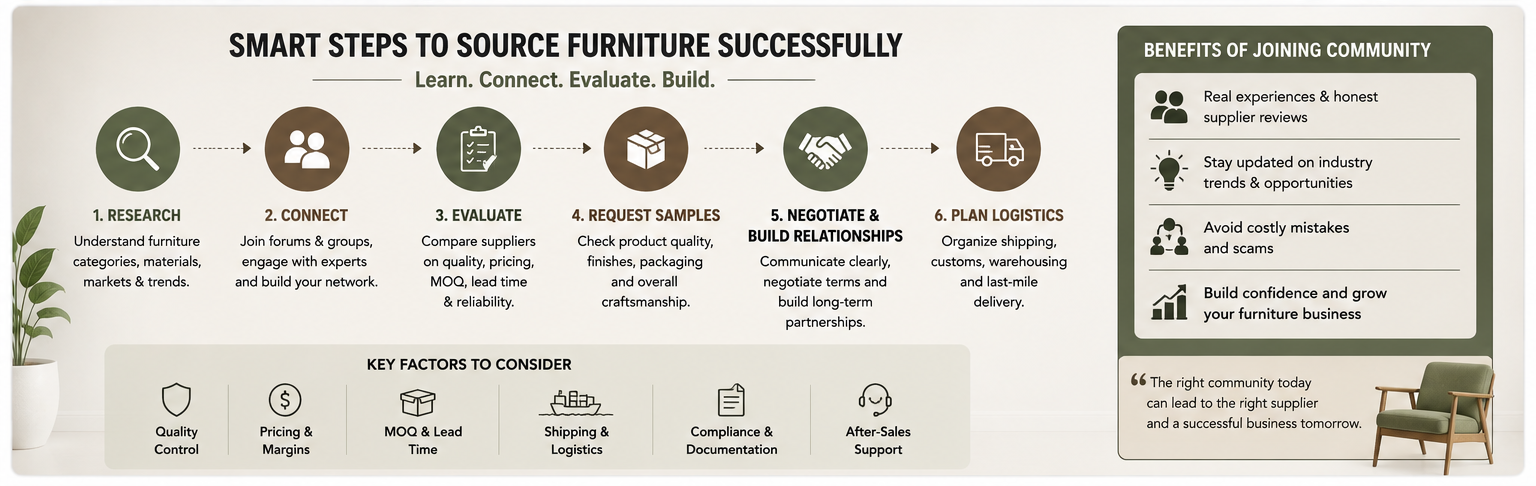
This approach is actually very smart. Before committing to suppliers or placing large orders, learning from experienced buyers, importers, manufacturers, and furniture retailers can help avoid costly mistakes.
The conversation itself remains unresolved, but it raises an important topic that many new entrepreneurs encounter when entering the furniture industry.
Why Furniture Sourcing Is Different from Other Products
Furniture sourcing is often more complex than sourcing smaller consumer goods.
Furniture products typically involve:
- Higher production costs
- Larger shipping volumes
- Longer manufacturing timelines
- Greater quality-control requirements
- More complex logistics
- Higher customer expectations
A mistake in furniture sourcing can be expensive because products are bulky and difficult to return.
This makes education and community learning particularly valuable.
Why Community-Based Learning Is Valuable
Many new business owners immediately start searching for suppliers.
While finding suppliers is important, experienced entrepreneurs often recommend learning the industry first.
Communities provide access to real-world experiences that suppliers themselves may not discuss openly.
Within sourcing communities, members frequently share information about:
- Supplier reliability
- Manufacturing quality
- Shipping experiences
- Pricing expectations
- Industry trends
- Import challenges
- Customer complaints
- Product opportunities
These insights can save both time and money.
The Importance of Learning Before Buying
Many beginners rush into placing orders after finding attractive supplier catalogs.
However, experienced furniture sellers often spend significant time researching before making purchasing decisions.
Learning through forums and industry discussions helps answer questions such as:
- Which countries specialize in specific furniture categories?
- What are reasonable production timelines?
- How can quality be verified?
- What common sourcing mistakes should be avoided?
- How should shipping costs be calculated?
Community discussions often reveal answers that are difficult to find elsewhere.
Understanding Different Furniture Sourcing Models
Before exploring communities, it helps to understand the major sourcing models available.
Furniture businesses typically source products through:
- Manufacturers
- Wholesalers
- Importers
- Distributors
- Trade marketplaces
- Private-label partnerships
- Local artisans
- Custom workshops
Each approach offers different advantages and challenges.
Understanding these options helps entrepreneurs ask better questions within sourcing communities.
Why Manufacturers Attract Many Entrepreneurs
Working directly with manufacturers often provides:
- Better pricing
- Customization opportunities
- Private labeling options
- Greater control over product specifications
However, direct manufacturing relationships often require:
- Larger order quantities
- More negotiation
- Strong quality-control processes
- Longer lead times
Communities frequently discuss the realities of managing these relationships.
Why Wholesalers Remain Popular
Wholesalers simplify sourcing by purchasing large quantities from manufacturers and reselling smaller quantities to retailers.
Benefits may include:
- Lower minimum orders
- Faster delivery
- Easier communication
- Reduced complexity
Many furniture startups begin with wholesale sourcing because it requires less upfront investment.
The Role of Trade Communities
Trade-focused communities often contain experienced professionals from multiple parts of the supply chain.
Members may include:
- Retailers
- Importers
- Manufacturers
- Interior designers
- Product developers
- Logistics specialists
This diversity creates valuable learning opportunities.
Questions posted within these groups often receive practical answers based on real business experience.
Learning About Regional Manufacturing Strengths
Furniture production is highly regional.
Different areas specialize in different product categories.
For example:
- Upholstered furniture
- Solid wood furniture
- Metal furniture
- Outdoor furniture
- Office furniture
- Luxury furniture
Community discussions frequently explore regional strengths and weaknesses.
This helps buyers identify sourcing opportunities that match their business goals.
Why Quality Control Is a Major Topic
Furniture quality can vary dramatically between suppliers.
A product that looks excellent in photos may perform poorly in real-world use.
Common quality concerns include:
- Material durability
- Structural integrity
- Finish consistency
- Packaging quality
- Assembly requirements
Experienced sourcing professionals often share quality-control strategies within industry communities.
Understanding Logistics Challenges
Furniture logistics present unique challenges due to product size and weight.
Topics frequently discussed include:
- Freight costs
- Container shipping
- Warehousing
- Last-mile delivery
- Damage prevention
- Packaging standards
Learning about logistics early helps entrepreneurs avoid unexpected expenses.
Why Supplier Verification Matters
One of the biggest risks in sourcing is selecting unreliable suppliers.
Supplier verification involves assessing:
- Manufacturing capability
- Business reputation
- Production capacity
- Communication quality
- Financial stability
Communities often share warning signs that help buyers identify potential problems before placing orders.
The Importance of Product Samples
Many experienced furniture buyers recommend ordering samples whenever possible.
Samples allow businesses to evaluate:
- Material quality
- Craftsmanship
- Packaging
- Design accuracy
- Customer experience
Community discussions frequently emphasize the value of sampling before making larger commitments.
Private Label Opportunities
Some entrepreneurs seek to build unique furniture brands rather than simply resell existing products.
Private labeling can offer advantages such as:
- Brand differentiation
- Greater customer loyalty
- Higher profit margins
- Stronger market positioning
However, private-label sourcing introduces additional complexity that communities often discuss in detail.
Building Relationships with Suppliers
Furniture sourcing is not simply about finding products.
Long-term success often depends on strong supplier relationships.
Successful partnerships are built on:
- Clear communication
- Consistent expectations
- Mutual trust
- Reliable payment practices
- Long-term collaboration
Many experienced business owners share relationship-building advice within sourcing communities.
Understanding Pricing Beyond Product Cost
New entrepreneurs sometimes focus only on product pricing.
Experienced sourcing professionals look at total landed cost.
This includes:
- Product cost
- Shipping
- Storage
- Packaging
- Customs fees
- Insurance
- Returns
Community discussions often help newcomers understand these hidden costs.
Why Networking Matters in Furniture Sourcing
The furniture industry remains highly relationship-driven.
Networking can create opportunities such as:
- Supplier introductions
- Partnership opportunities
- Industry insights
- Market intelligence
- Exclusive product access
Communities often serve as valuable networking environments.
Learning from Industry Veterans
One of the greatest benefits of forums and professional groups is access to experienced practitioners.
Industry veterans frequently share:
- Lessons learned
- Success stories
- Failure experiences
- Supplier recommendations
- Negotiation strategies
These insights can accelerate learning dramatically.
Avoiding Common Beginner Mistakes
Many sourcing mistakes repeat themselves.
Examples include:
- Choosing suppliers based solely on price
- Ignoring shipping costs
- Skipping quality inspections
- Ordering excessive inventory
- Failing to negotiate terms
Community discussions often help newcomers recognize and avoid these errors.
The Growing Importance of Sustainability
Modern consumers increasingly care about sustainability.
Furniture sourcing discussions now frequently include topics such as:
- Sustainable wood sourcing
- Recycled materials
- Ethical manufacturing
- Environmental certifications
- Responsible supply chains
Understanding these trends can create competitive advantages.
Why Product Category Matters
Furniture sourcing strategies vary depending on product type.
Sourcing requirements differ for:
- Luxury furniture
- Budget furniture
- Custom furniture
- Commercial furniture
- Home décor furniture
- Outdoor products
Communities often organize discussions around specific categories.
Balancing Quality and Profitability
One of the biggest sourcing challenges is balancing quality with profitability.
Higher-quality products generally command higher prices but may require greater investment.
Community discussions frequently explore:
- Customer expectations
- Market positioning
- Margin management
- Competitive differentiation
These conversations help businesses make informed decisions.
Using Communities for Market Research
Sourcing communities provide more than supplier information.
They can also help businesses understand:
- Emerging trends
- Popular materials
- Consumer preferences
- Competitive opportunities
- Market gaps
This broader perspective supports smarter product decisions.
Building a Long-Term Sourcing Strategy
Successful furniture businesses rarely rely on a single supplier or sourcing method forever.
As businesses grow, sourcing strategies often evolve.
Companies may transition from:
- Wholesale purchasing
- Direct manufacturing
- Private labeling
- Exclusive partnerships
Communities can help entrepreneurs navigate these transitions.
The Bigger Lesson Behind the Discussion
Although the original question asks for forums and chat groups, the deeper lesson is about education.
Successful sourcing starts with knowledge.
Finding suppliers is relatively easy.
Finding reliable suppliers, understanding costs, maintaining quality, and building profitable relationships requires ongoing learning.
Communities accelerate that learning process by providing access to real-world experiences.
Conclusion
The discussion highlights an important starting point for anyone interested in furniture sourcing. Before committing to suppliers or investing significant capital, entrepreneurs benefit from joining communities where experienced professionals discuss sourcing challenges and opportunities.
Furniture sourcing involves much more than locating products. It requires understanding supplier relationships, logistics, quality control, pricing structures, market trends, and long-term business strategy. Community-based learning offers valuable insights that can help new businesses avoid costly mistakes and make better sourcing decisions.
Ultimately, the best sourcing strategy depends on a company’s goals, budget, product category, and growth plans. By actively participating in industry discussions and learning from experienced professionals, entrepreneurs can build stronger sourcing networks and create a more sustainable foundation for long-term success in the furniture industry.