Summary
Dropshipping has become a popular ecommerce business model for entrepreneurs who want to start selling products online without purchasing and storing inventory in advance. In this business model, the store owner sells products through an online storefront, while suppliers manage product storage, packaging, and shipping directly to customers.
Starting a dropshipping business can be relatively simple, but building a successful and profitable store requires careful planning, product research, supplier selection, website development, and marketing.
A Shopify Community discussion titled “How do I establish a successful drop shipping store?” provides beginner-friendly guidance on setting up an online dropshipping business. It explains the basic setup process, including selecting a niche, researching products, finding suppliers, importing product listings, organizing collections, designing the storefront, and preparing the store for launch.
The discussion also highlights the importance of configuring payment methods, pricing, shipping, taxes, and legal pages before accepting customer orders. Automation can help reduce repetitive work, but choosing the right products and attracting customers remain important challenges for new business owners.
This article explores the complete process of establishing a dropshipping store, the key decisions beginners need to make, common challenges, and practical strategies for building a sustainable ecommerce business.
Introduction
Starting an online business has become more accessible because entrepreneurs no longer need to own warehouses, purchase large quantities of products, or manage complicated inventory systems before beginning.
Dropshipping provides an alternative approach that allows individuals to sell products online while suppliers handle the physical fulfilment process.
For example, imagine an entrepreneur wants to establish an online store selling home accessories. Instead of purchasing hundreds of products and storing them in a warehouse, the entrepreneur partners with suppliers who already have the products available.
When a customer places an order through the online store, the order information is forwarded to the supplier. The supplier then prepares and ships the product directly to the customer.
The store owner focuses on managing the website, selecting products, handling customer communication, and promoting the business.
Although this business model reduces the need for inventory investment, it does not guarantee success. Entrepreneurs still need to understand customer demand, product quality, pricing, supplier reliability, and online marketing.
Building a successful dropshipping store requires more than simply uploading products to a website. It involves creating a complete shopping experience that encourages visitors to become customers.
1. Understanding How Dropshipping Works
Before establishing an online store, beginners should understand the basic dropshipping process.
Traditional retail businesses generally purchase products in advance, maintain inventory, and fulfil orders themselves.
Dropshipping works differently because the supplier handles product storage and shipping.
The process usually follows these steps:
- The seller creates an online ecommerce store.
- Products are selected from suitable suppliers.
- Product listings are added to the online store.
- Customers browse the website and place orders.
- The seller receives the customer’s payment.
- Order details are forwarded to the supplier.
- The supplier prepares and ships the product.
- The customer receives the order.
The seller earns money through the difference between the selling price and the total business costs.
For example, if a product costs $12 from a supplier and the store sells it for $25, the initial difference is $13.
However, this amount is not necessarily the final profit. Payment processing, advertising, shipping, taxes, refunds, and other operating expenses must also be considered.
Understanding this process helps beginners recognize that dropshipping is a real ecommerce business requiring proper management and customer service.
2. Choosing the Right Product Niche
Selecting a suitable niche is one of the most important decisions when starting a dropshipping store.
A niche refers to a specific category or market that a business wants to serve.
Instead of selling random products across multiple categories, beginners should consider focusing on a particular customer group or product category.
Some possible niches include:
- Home improvement and decoration.
- Beauty and personal care.
- Fitness and sports accessories.
- Pet supplies.
- Fashion and lifestyle products.
- Kitchen and household accessories.
- Travel and outdoor products.
- Electronics accessories.
A focused niche makes it easier to understand customer requirements and develop a consistent brand identity.
How to Select a Niche
Entrepreneurs should consider several factors before choosing a niche.
Customer Demand: Research whether people are actively interested in purchasing products within the selected category.
Competition: Examine existing online stores and understand how competitors present their products, prices, and services.
Product Availability: Ensure that reliable suppliers offer suitable products within the chosen niche.
Profit Potential: Consider product costs, shipping charges, advertising expenses, and possible selling prices.
Long-Term Interest: Select a category that provides opportunities to introduce additional products and serve customers over time.
A good niche should offer a balance between customer demand, supplier availability, and business profitability.
3. Researching Products Before Adding Them to the Store
After selecting a niche, the next step is identifying products that customers may want to purchase.
Product research helps entrepreneurs avoid filling their stores with items that have little demand or poor commercial potential.
Beginners should not select products only because they look attractive or are inexpensive.
Instead, they should evaluate whether the products solve a problem, provide convenience, or offer something customers genuinely value.
For example, a kitchen accessories store might focus on products that save preparation time or make everyday household activities easier.
Important product research considerations include:
Market Demand: Identify products that people are actively searching for.
Product Quality: Investigate product materials, specifications, customer feedback, and supplier reliability.
Selling Price: Compare prices across different stores to understand the market.
Shipping Time: Check whether suppliers can deliver products within a reasonable period.
Competition: Determine whether the product market is extremely crowded or offers opportunities for differentiation.
Profitability: Calculate the expected profit after considering all relevant costs.
Testing a smaller selection of products before expanding the catalogue can help entrepreneurs make better decisions.
4. Finding Reliable Suppliers
Suppliers play a major role in the success of a dropshipping business.
Since the seller does not personally manage inventory or shipping, the supplier becomes responsible for several important parts of the customer experience.
A reliable supplier should offer good-quality products, accurate product information, reasonable shipping arrangements, and consistent order processing.
Before partnering with a supplier, entrepreneurs should investigate the following:
- Product quality and specifications.
- Product availability and stock updates.
- Shipping costs and delivery estimates.
- Order processing speed.
- Return and refund arrangements.
- Communication and customer support.
- Product packaging.
- Ability to handle increasing order volumes.
It is also helpful to order product samples before making products available to customers.
This allows store owners to inspect the actual product, understand its quality, and evaluate the delivery experience.
A supplier offering extremely low prices may not always be the best choice. Product quality and delivery reliability are equally important.
5. Importing Products and Managing Listings
Once suitable suppliers have been identified, entrepreneurs need to add products to their ecommerce stores.
Product listings generally include:
- Product names.
- Descriptions.
- Images.
- Selling prices.
- Product variations.
- Available options.
- Shipping information.
The discussion highlights the use of product-importing and store-management services to make this process easier.
These services can help sellers transfer product information from suppliers into their online stores.
Some also provide stock and price synchronization, helping sellers keep product information updated.
However, imported product information should always be reviewed before publication.
Product titles and descriptions should be easy to understand and accurately explain what customers are purchasing.
Store owners should also avoid using misleading product images or making unsupported claims about product features.
High-quality product listings can improve the shopping experience and help customers make informed purchasing decisions.
6. Organizing Products Into Collections
A well-organized online store makes it easier for customers to find what they need.
When a website contains several products, displaying everything on a single page can create confusion.
Collections allow sellers to group related products into meaningful categories.
For example, a home accessories store might organize its products into:
- Kitchen Accessories.
- Bedroom Decoration.
- Living Room Products.
- Storage Solutions.
- Lighting Accessories.
Similarly, a fitness store could create collections for workout equipment, fitness clothing, and exercise accessories.
Organized collections improve website navigation and help customers explore related products.
Store owners should use clear category names and avoid creating unnecessary collections that make the website difficult to navigate.
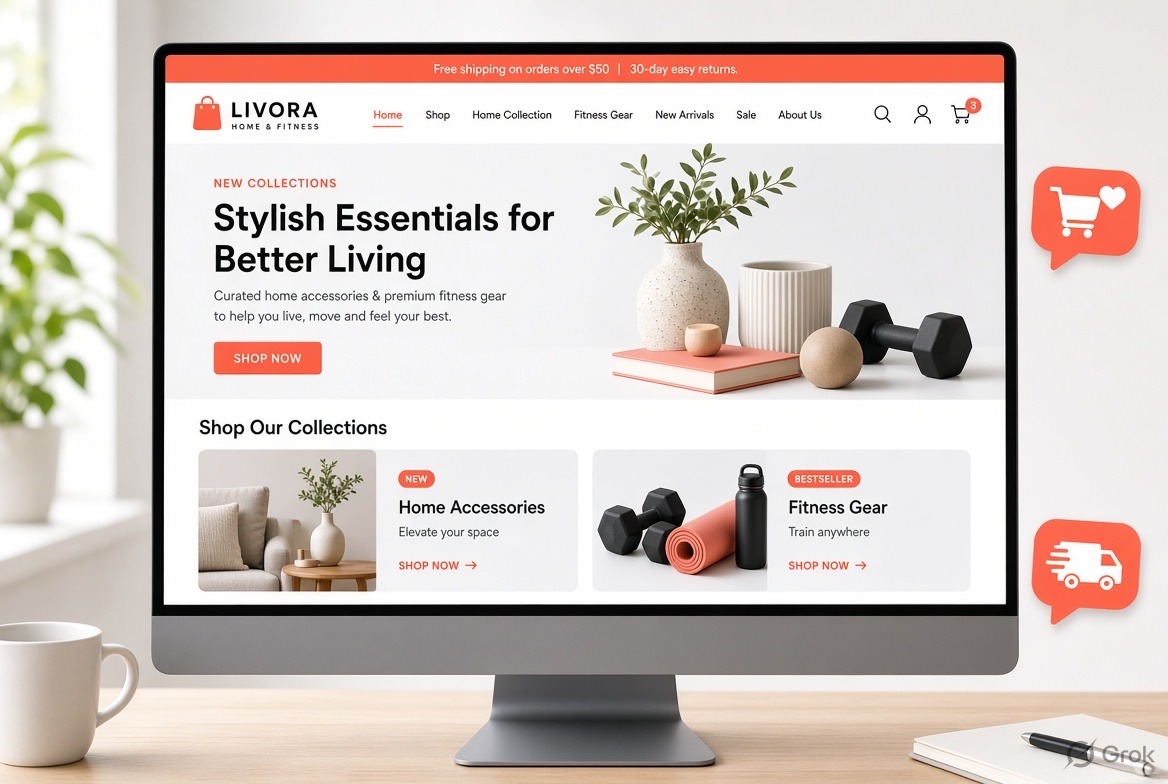
7. Designing a Professional Ecommerce Storefront
The storefront is one of the most important parts of an online business because it creates the first impression for potential customers.
A professional website should be visually appealing, easy to navigate, and designed to make purchasing straightforward.
Beginners should focus on several important website elements.
Homepage
The homepage should clearly communicate what the store sells and why customers should explore its products.
It can include featured products, popular categories, promotional banners, and important store information.
Product Pages
Product pages should contain clear images, informative descriptions, pricing, product variations, and relevant delivery information.
Customers should be able to understand the product without searching through unnecessary information.
Navigation
The website should have simple menus that help visitors find collections, products, contact information, and important policies.
Mobile Responsiveness
Many customers browse online stores using smartphones.
Therefore, the website should work properly across different screen sizes.
Consistent Branding
Use consistent colours, fonts, product photography, and messaging to create a recognizable store identity.
A professional storefront helps build confidence and encourages visitors to spend more time exploring the website.
8. Creating Legal and Policy Pages
Before launching a dropshipping store, entrepreneurs should prepare the important information customers need to understand the business.
The discussion specifically highlights the importance of creating legal pages.
These pages help establish transparency and communicate the store’s responsibilities.
Important pages generally include:
Privacy Policy: Explains how customer information is collected, used, and protected.
Terms and Conditions: Describes the rules governing the use of the website and purchases.
Refund and Return Policy: Explains the conditions under which customers can request returns, replacements, or refunds.
Shipping Policy: Provides information about shipping charges, estimated delivery times, and order processing.
Contact Information: Gives customers a way to communicate with the business.
These policies should accurately reflect the actual business arrangements and comply with applicable legal requirements.
Store owners should not simply copy policies from unrelated websites because their supplier arrangements and customer obligations may be different.
9. Configuring Payments, Pricing, Shipping, and Taxes
A dropshipping store should be properly configured before accepting customer orders.
Several important settings need attention.
Payment Methods
Customers should have access to suitable payment options.
The business should select payment methods supported in its operating region and ensure that payment processing works correctly.
Product Pricing
Pricing should cover the supplier’s product cost and all other business expenses.
For example, a seller should consider:
- Product purchase cost.
- Shipping charges.
- Payment processing fees.
- Advertising expenses.
- Platform and operating costs.
- Taxes and other applicable charges.
A suitable profit margin should be established without making the product unnecessarily expensive compared with competing offers.
Shipping Settings
Shipping arrangements should clearly communicate delivery estimates and applicable charges.
Customers should not be promised unrealistic delivery times.
Taxes
Business owners should understand the tax obligations applicable to their business and the locations where they sell.
Tax settings should be configured carefully to support accurate calculations and compliance.
These settings are essential because mistakes can lead to payment problems, customer dissatisfaction, and unexpected financial losses.
10. Using Automation to Reduce Manual Work
Managing a dropshipping business can involve several repetitive activities.
These may include importing products, updating prices, checking stock availability, processing orders, and forwarding order information to suppliers.
The discussion highlights automation as a way to simplify these operations.
Different store-management services provide different capabilities.
Some focus on connecting suppliers with ecommerce stores, while others offer additional features for order processing, product monitoring, stock synchronization, and pricing updates.
Automation can provide several benefits:
Reduced Manual Work: Repetitive activities can be handled with less direct involvement.
Faster Order Processing: Supported orders can be forwarded to suppliers more efficiently.
Stock Monitoring: Available stock information can be synchronized to reduce the risk of selling unavailable products.
Price Updates: Changes in supplier prices can be reflected in the store where supported.
Operational Efficiency: Store owners can spend more time on product research, customer service, and marketing.
However, automation does not eliminate the need for supervision.
Business owners should regularly review order status, supplier performance, stock information, and any failed processes.
11. Marketing Your Dropshipping Store
Launching an ecommerce website does not automatically bring customers.
Marketing is necessary to make potential buyers aware of the store and encourage them to explore its products.
New entrepreneurs should develop a marketing strategy before or shortly after launching their businesses.
Social Media Marketing
Social media platforms allow businesses to showcase products, share demonstrations, and communicate with potential customers.
Product videos, lifestyle images, educational posts, and customer reviews can help generate interest.
Search Engine Optimization
Search engine optimization helps improve the visibility of website pages in search results.
Store owners should use relevant product descriptions, meaningful page titles, clear category structures, and useful content.
Paid Advertising
Paid advertising can help businesses reach specific audiences interested in their products.
However, advertising requires careful budget management.
Entrepreneurs should test campaigns, monitor results, and avoid spending heavily before understanding which products and audiences perform well.
Content Marketing
Publishing helpful articles, buying guides, and product-related information can attract visitors who are researching particular products.
For example, a kitchen accessories store could publish articles about organizing small kitchens or selecting practical cooking accessories.
Customer Reviews
Genuine customer reviews can help new visitors understand the product and shopping experience.
Businesses should encourage honest feedback and use it to improve their products and services.
12. Common Challenges Beginners Should Prepare For
Although dropshipping reduces inventory requirements, it introduces several business challenges.
High Competition: Many sellers may offer similar products, making differentiation important.
Supplier Dependency: Delayed shipments, unavailable products, and inconsistent quality can affect customer satisfaction.
Low Profit Margins: Product costs, advertising, shipping, and other expenses can reduce profitability.
Delivery Expectations: Customers may expect faster shipping than some suppliers can provide.
Product Quality Issues: Store owners may receive complaints about products they have never physically handled.
Customer Support: Sellers remain responsible for responding to customer questions, refund requests, and order-related problems.
The best way to manage these challenges is to choose reliable suppliers, test products, communicate honestly, and establish clear operating procedures.
13. Building a Sustainable Dropshipping Business
A successful dropshipping business should focus on long-term customer relationships rather than only generating individual sales.
Entrepreneurs should regularly evaluate their store’s performance and identify areas for improvement.
Important activities include:
- Monitoring product sales and customer demand.
- Reviewing supplier performance.
- Improving product descriptions and images.
- Analyzing website traffic and conversion rates.
- Managing advertising expenses.
- Responding to customer feedback.
- Introducing relevant products.
- Improving shipping and fulfilment processes.
Starting with a small product catalogue can make operations easier to manage.
As the business gains experience and customers, the owner can gradually expand into additional products and collections.
Consistency, reliable service, and continuous improvement are important for developing a sustainable ecommerce business.
Conclusion
Establishing a successful dropshipping store involves much more than creating a website and importing products.
The Shopify Community discussion provides a useful starting point for beginners by explaining the major steps involved in launching an online store.
These include choosing a niche, researching products, identifying reliable suppliers, importing product listings, organizing collections, designing the storefront, creating legal pages, and configuring payments, pricing, shipping, and taxes.
It also highlights the importance of automation in reducing repetitive tasks and improving day-to-day store management.
However, choosing the right products and attracting customers remain two of the biggest challenges for new entrepreneurs.
A successful business needs reliable suppliers, competitive pricing, a professional website, effective marketing, and responsive customer service.
Beginners should avoid rushing into large product catalogues or expensive advertising campaigns before understanding their target market.
Instead, they should start with a focused niche, test products, monitor customer responses, and improve their operations gradually.
Ultimately, a successful dropshipping store is built through careful product selection, dependable supplier relationships, an excellent shopping experience, and consistent marketing. By combining these elements with effective automation and continuous improvement, entrepreneurs can create an organized ecommerce business with opportunities for long-term growth.



0 Comments