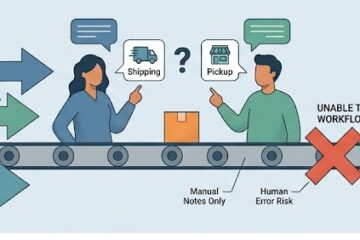
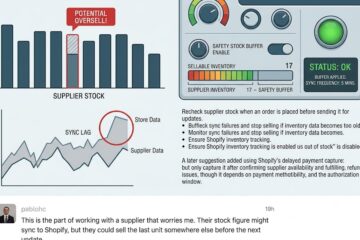
The proposal above presents a much larger vision than simply improving product filtering.
At first glance, the request sounds technical: add structured product attributes and better filtering based on category.
But underneath that request is a broader idea—
turning Shopify into infrastructure capable of supporting industrial commerce at global scale.
The proposal argues that industrial and commercial buyers do not shop the same way consumer shoppers do.
When consumers buy clothing, home décor, or accessories, browsing images and reading descriptions may be enough.
Industrial purchasing works differently.
Technical buyers often make decisions based on exact specifications.
They search using measurable requirements, compare compatibility across suppliers, evaluate inventory availability, and make purchasing decisions based on operational constraints rather than branding alone.
That difference creates a challenge.
Many current storefront structures were designed primarily for consumer products.
Industrial commerce requires deeper product structure.
The proposal suggests category-specific standardized attributes as a way to close that gap.
Let’s explore why this matters and how structured product information could reshape large-scale business commerce.
The Problem With Traditional Product Listings
Most online product systems are flexible.
Sellers can usually write:
titles
descriptions
tags
custom notes
images
This works well for general retail.
But technical industries depend on precision.
Consider two suppliers selling similar electrical equipment.
One may describe power output one way.
Another may use different wording.
A third may omit important details.
All three products may technically match a buyer’s requirement.
But inconsistent data makes discovery difficult.
The buyer cannot reliably compare options.
Why Industrial Buyers Search Differently
Consumer shopping often starts with inspiration.
Industrial purchasing usually starts with requirements.
Examples include:
voltage requirements
power capacity
phase compatibility
dimensions
material type
compliance standards
environmental resistance
installation constraints
Industrial buyers rarely search emotionally.
They search operationally.
That changes how marketplaces must function.
Why Freeform Descriptions Create Friction
Descriptions are useful for context.
But descriptions alone create problems.
Information becomes:
inconsistent
hard to filter
difficult to compare
challenging to synchronize
When specifications vary across listings, buyers spend more time manually reviewing products.
That slows purchasing.
What Structured Attributes Actually Mean
Structured attributes create defined product fields.
Instead of allowing unlimited description styles, categories receive standardized specifications.
For example:
Electrical Equipment:
Voltage
Phase
Power Rating
Frequency
Industrial Materials:
Material Type
Thickness
Dimensions
Mechanical Equipment:
Load Capacity
Pressure Rating
Housing Type
Every seller follows the same structure.
That consistency creates usability.
Why Category-Specific Fields Matter
Not every product needs identical data.
A technical catalog may contain thousands of categories.
Each category requires unique information.
Industrial buyers expect those differences.
Category-based structures allow product information to stay relevant.
Why Search Becomes More Powerful
Structured attributes improve discovery.
Buyers could search more precisely.
Examples:
Find transformers between certain ratings.
Filter only specific enclosure types.
Locate products by exact dimensions.
Search becomes specification-driven.
This reduces friction.
Why Filtering Creates Better Buying Decisions
Filtering does more than improve convenience.
It improves confidence.
Buyers eliminate unsuitable products faster.
Comparison becomes easier.
Decision quality improves.
Operational purchasing becomes more efficient.
Why Marketplace Scale Depends on Standardization
The proposal becomes especially interesting when discussing multi-supplier inventory.
Multiple suppliers create complexity.
Each supplier organizes information differently.
Without shared structure:
catalogs become fragmented
search quality declines
comparisons become difficult
Standardized fields create alignment.
Why Shared Specification Languages Matter
A shared specification language means:
different sellers describe products consistently.
This creates interoperability.
Buyers gain confidence that comparisons are meaningful.
Large marketplaces depend heavily on standardization.
Why Technical Commerce Is Different From Retail Commerce
Consumer marketplaces emphasize:
branding
visual merchandising
storytelling
Industrial commerce emphasizes:
accuracy
availability
compatibility
technical confidence
The underlying infrastructure requirements differ.
Why Surplus Inventory Creates Unique Challenges
The proposal highlights surplus inventory as an important opportunity.
Surplus inventory behaves differently from standard retail inventory.
Items may exist in:
multiple countries
different warehouses
varying conditions
distributed ownership
Discovery becomes difficult.
Structured systems make inventory visible.
Why Long Manufacturing Lead Times Change Buyer Behavior
One example discussed involves high-value industrial equipment with extended production timelines.
When lead times become long:
buyers search broader markets
used inventory becomes valuable
surplus stock becomes strategic
Immediate availability becomes competitive.
Why Inventory Discovery Creates Economic Value
Inventory hidden across suppliers often goes unused.
Discovery creates value.
Structured systems can expose inventory globally.
Buyers find solutions faster.
Sellers monetize otherwise dormant assets.

Why Global Catalog Synchronization Matters
Large industrial networks often involve many participants.
Synchronization allows:
inventory visibility
price coordination
availability updates
catalog consistency
Fragmented systems create inefficiency.
Why One Master Catalogue Changes Operations
A centralized catalogue introduces operational advantages.
Instead of recreating listings repeatedly:
product definitions become standardized
inventory updates become cleaner
search improves
maintenance decreases
This supports scale.
Why Collaboration Could Expand Marketplace Models
The proposal also suggests collaborative commerce.
Collaboration may include:
shared listings
inventory partnerships
commission structures
supplier networks
distributed fulfillment
Commerce becomes ecosystem-driven.
Why Industrial Commerce Rewards Data Quality
Consumer commerce sometimes tolerates imperfect descriptions.
Industrial purchasing generally cannot.
Data quality influences:
trust
compatibility
purchase confidence
operational success
Structured systems improve quality.
Why Comparison Is Central to Technical Purchasing
Technical buyers often compare:
specifications
availability
delivery timing
cost
compliance
Comparison becomes easier when information follows common rules.
Why Technical Buyers Need Reliability
Industrial purchasing mistakes are expensive.
Incorrect purchases may create:
project delays
installation failures
budget overruns
downtime
Reliable specifications reduce risk.
Why Metadata Becomes Strategic Infrastructure
Structured product information may appear administrative.
But in large marketplaces, metadata becomes core infrastructure.
It powers:
search
filtering
catalog organization
analytics
discovery
Data structure drives usability.
Why Global Industrial Commerce Remains Fragmented
Many industrial markets still operate through:
manual sourcing
emails
legacy catalogs
broker networks
distributed systems
Modern catalog structures could reduce friction.
Why Supplier Participation Depends on Simplicity
Standardization only works if suppliers participate.
Systems must balance:
consistency
flexibility
ease of setup
Supplier adoption determines effectiveness.
Why Marketplace Trust Depends on Information Accuracy
Trust matters heavily in B2B environments.
Buyers expect:
clear specifications
predictable inventory
consistent terminology
High-quality structured information improves trust.
Why Flexible Data Models May Become Essential
Commerce categories continue expanding.
Future systems may require:
dynamic fields
custom categories
regional standards
industry-specific specifications
Flexibility becomes important.
Why This Proposal Reflects a Larger Industry Trend
The discussion reflects a broader movement.
Commerce increasingly depends on:
standardized data
discoverability
global inventory visibility
collaborative ecosystems
The future may rely less on isolated storefronts and more on connected catalog networks.
The Bigger Lesson About Industrial Commerce
This proposal is not only about adding filters.
It reflects a shift in thinking.
Instead of asking:
“How do we display products?”
The question becomes:
“How do we structure information so global buyers can discover, compare, and purchase efficiently?”
That shift changes how marketplaces operate.
Final Thought
The proposal for category-based structured attributes introduces a vision of commerce built around data quality and operational discovery rather than simple storefront presentation.
By creating standardized specifications and stronger filtering systems, technical and industrial inventory could become easier to search, compare, and distribute across multiple suppliers worldwide.
Whether such a system is implemented or not, the underlying idea highlights an important reality:
modern commerce increasingly depends on structured information.
Because in large-scale B2B environments, products are not discovered through browsing alone—
they are discovered through precision.
Conclusion
The discussion presents an ambitious idea for improving industrial and commercial commerce through category-based structured attributes and shared specification standards.
The proposed approach could help businesses:
improve inventory discovery
enable reliable comparison
reduce catalog inconsistency
support global supplier collaboration
increase operational transparency
unlock value from distributed inventory
As industrial commerce continues evolving, structured product information may become one of the most important foundations for scalable and efficient marketplace growth.