Businesses often reach a stage where internal marketing efforts begin hitting limits.
Traffic grows but results remain inconsistent.
Content gets published regularly but conversion rates stay flat.
Teams know opportunities exist but lack a structured way to identify them.
At this point, many organizations begin exploring external support to gain strategic insight, specialized expertise, or execution capacity.
That is where an RFP becomes important.
A Request for Proposal is more than a document sent to agencies or consultants.
It is a structured way of defining business problems, aligning expectations, and finding the right partner for measurable outcomes.
The discussion above focuses on a specific scenario:
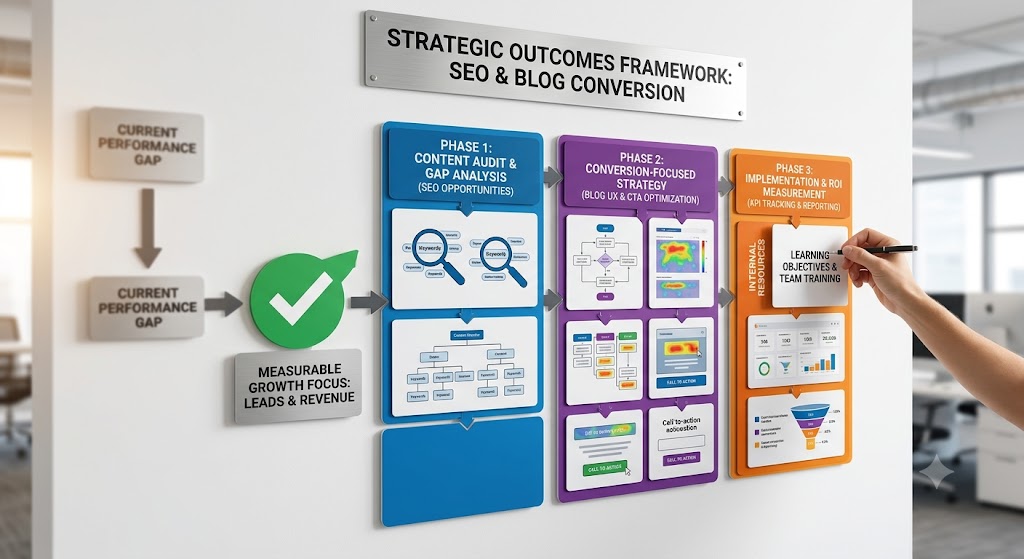
creating an RFP with two primary goals:
- Identify search optimization opportunities
- Improve blog conversion performance
At first glance, this sounds straightforward.
But writing an effective RFP for content growth is more complex than simply asking vendors for recommendations.
The quality of the document often determines the quality of responses.
A vague request produces generic proposals.
A focused request produces actionable solutions.
Let’s explore how businesses should think about writing this type of RFP, why clarity matters so much, and how to create a document that attracts useful recommendations rather than generic marketing promises.
Understanding the Real Purpose of an RFP
Many businesses approach proposal requests as procurement exercises.
They focus heavily on:
pricing
timelines
deliverables
service lists
Those details matter.
But the real purpose is different.
A strong RFP helps answer one question:
Who understands our business problem best?
This shifts the conversation away from buying tasks and toward solving outcomes.
Why SEO and Blog Conversion Should Be Treated Separately
One common mistake is assuming more traffic automatically means more conversions.
Traffic and conversion are connected but not identical.
Search visibility focuses on attracting visitors.
Conversion focuses on helping visitors take action.
A blog may attract large audiences while generating very little business impact.
Likewise, a smaller audience with stronger conversion can outperform high-volume traffic.
The RFP should reflect both goals independently.
Defining the Business Problem Before Writing
Before creating requirements, teams should clarify the actual challenge.
Questions may include:
Are visitors not finding content?
Are visitors leaving too quickly?
Are calls to action weak?
Is traffic irrelevant?
Is content attracting the wrong audience?
Without diagnosis, proposals become guesswork.
Why Objectives Need Specific Business Context
Goals such as:
increase visibility
improve conversion
grow traffic
sound useful but remain too broad.
Better objectives describe outcomes.
Examples may include:
increase qualified traffic
improve newsletter signups
generate more leads
increase product consideration
Clear goals help providers respond intelligently.
Why Current Performance Should Be Shared
Proposal quality improves when context exists.
Useful background may include:
current traffic trends
existing content volume
conversion rates
audience segments
content categories
Transparency reduces assumptions.
Why Expectations Must Be Realistic
Content growth takes time.
Businesses sometimes expect immediate results.
That creates unrealistic proposals.
Strong planning acknowledges:
research periods
testing cycles
optimization phases
measurement windows
Sustainable growth requires patience.
Why Scope Definition Prevents Confusion
One of the biggest RFP failures happens when scope is unclear.
Questions to define:
Is this strategy only?
Execution included?
Content production included?
Analytics included?
Training included?
Unclear expectations produce inconsistent proposals.
Why Audience Understanding Matters
Content performs differently depending on audience intent.
Proposal requests should explain:
who customers are
what they value
how they discover information
where they convert
Audience clarity improves recommendations.
Why Existing Content Should Be Evaluated
Businesses often assume they need more content.
Sometimes improvement comes from existing assets.
Evaluation areas may include:
content quality
topic relevance
structure
search alignment
conversion paths
Optimization can outperform expansion.
Why Conversion Definition Must Be Explicit
Conversion means different things to different businesses.
Examples include:
email subscriptions
consultation requests
product purchases
demo bookings
downloads
Proposal responses improve when success is defined clearly.
Why Measurement Frameworks Matter
Good proposals explain how progress will be evaluated.
Measurements may focus on:
engagement
qualified visits
lead quality
revenue contribution
content effectiveness
Clear metrics create accountability.
Why Asking for Methodology Is More Valuable Than Asking for Deliverables
Many proposal requests focus only on output.
Examples:
audit
recommendations
content calendar
Instead, ask:
How will opportunities be identified?
How will prioritization work?
How will impact be measured?
Process reveals capability.
Why Experience Matters More Than Promises
Proposal responses often contain ambitious claims.
Look for evidence of thinking.
Useful indicators include:
decision frameworks
case approaches
testing philosophy
problem-solving ability
Experience appears through reasoning.
Why Discovery Questions Are a Good Sign
Strong partners ask questions.
Weak proposals assume answers.
Good responses typically seek understanding before prescribing solutions.
Curiosity often signals quality.
Why Blog Conversion Is Usually a Journey Problem
Conversion rarely depends on one page.
Visitors move through stages:
awareness
interest
consideration
action
Proposal requests should consider the entire experience.
Why Content Intent Shapes Results
Not every article should convert directly.
Content often serves different purposes.
Examples:
education
comparison
trust building
decision support
The proposal should recognize content roles.
Why User Experience Impacts Conversion
Content quality alone is rarely enough.
Visitors evaluate:
clarity
navigation
readability
visual hierarchy
ease of action
Conversion happens when experience supports decisions.
Why Internal Resources Must Be Considered
Recommendations are only useful if teams can implement them.
Proposal requests should explain:
available resources
team size
approval processes
execution capacity
Practical recommendations outperform ambitious plans.
Why Communication Style Matters
Choosing a partner is not only about technical capability.
Alignment matters.
Evaluate:
clarity
transparency
collaboration style
communication quality
Long-term success depends on working relationships.
Why Proposal Comparison Needs Structure
Responses should be evaluated consistently.
Useful categories include:
strategy quality
business understanding
measurement approach
execution feasibility
cost alignment
Structured evaluation reduces bias.
Why Timelines Should Focus on Milestones
Content growth rarely follows exact schedules.
Better planning uses milestones.
Examples:
research completed
opportunities identified
testing launched
optimization implemented
Milestones encourage progress.
Why Flexibility Improves Long-Term Results
Proposal requests should allow room for discovery.
Overly rigid requirements may prevent innovation.
The best outcomes often evolve after initial research.
Why Learning Objectives Matter
Businesses should seek more than deliverables.
Questions include:
What will internal teams learn?
Will systems improve?
Will decision-making improve?
Knowledge transfer creates lasting value.
Why Budget Discussions Should Be Framed Around Outcomes
Cost alone rarely predicts value.
Businesses benefit from understanding:
expected impact
effort requirements
resource allocation
decision logic
Investment should align with goals.
Why Proposal Writing Is Strategic Planning
A proposal request is not administrative paperwork.
It becomes a strategic document.
It forces organizations to clarify:
priorities
constraints
expectations
success definitions
That clarity improves outcomes before work even begins.
The Bigger Lesson About SEO and Blog Conversion
The discussion highlights a broader reality.
Businesses often seek external help before fully defining internal goals.
But growth improves when organizations first understand:
what problem exists
what success means
what constraints matter
The strongest proposals emerge from clear thinking.
Final Thought
Writing an effective RFP for search opportunity discovery and blog conversion improvement is not about producing a long document.
It is about creating enough clarity that qualified partners can provide meaningful solutions.
The best proposal requests describe business goals, define success, explain context, and invite thoughtful approaches rather than generic recommendations.
Because stronger proposals do not start with asking for services—
they start with understanding outcomes.
Conclusion
Creating an RFP for content growth and conversion improvement requires balancing structure with flexibility.
Businesses should focus on:
clear objectives
defined conversion goals
business context
measurement expectations
audience understanding
practical implementation
When written thoughtfully, an RFP becomes more than a request for ideas.
It becomes the foundation for smarter decisions, better partnerships, and sustainable growth.