Managing products efficiently is one of the most important parts of running an online store.
Product information is not static. Merchants constantly update titles, descriptions, pricing, images, specifications, inventory details, categorization, custom data fields, and countless other attributes to keep stores accurate and competitive.
Because of this, even small changes in the editing experience can significantly affect day-to-day operations.
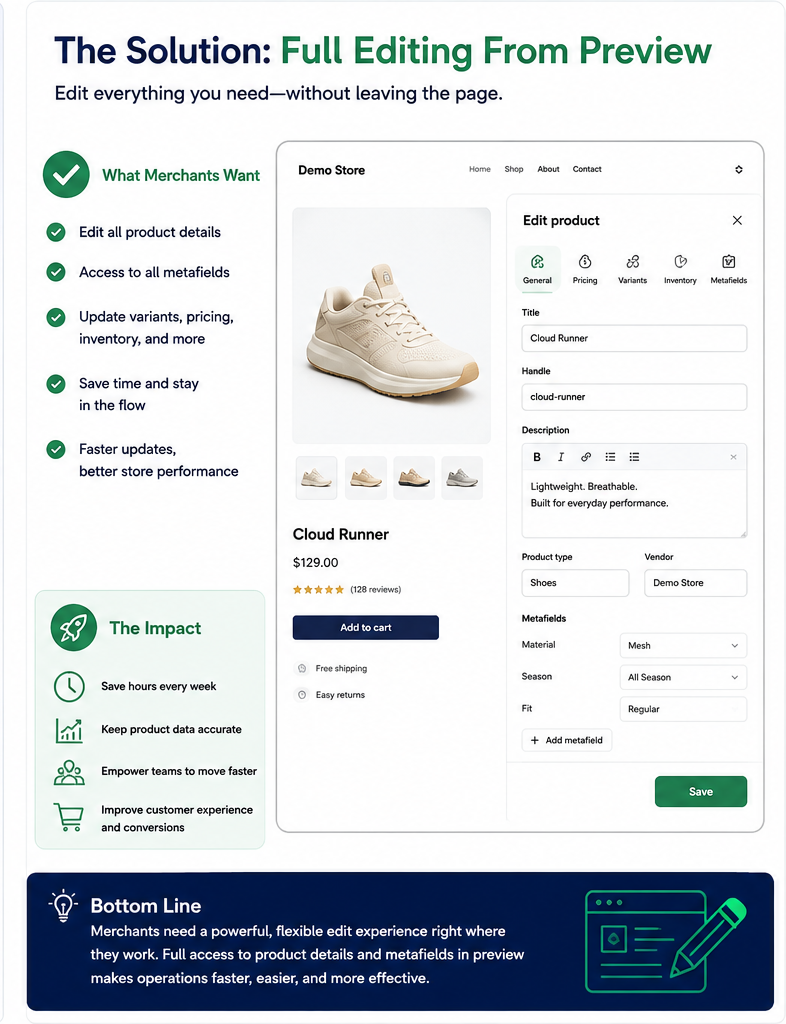
The discussion above highlights a practical workflow issue faced by merchants: the restored edit option available from product preview pages does not currently provide enough functionality compared with previous expectations.
The concern is not that editing is unavailable.
The concern is that editing is incomplete.
According to the discussion, the available editing experience allows limited updates—primarily focused on basic fields such as product titles and descriptions—while merchants want broader control directly from the preview experience, including access to detailed product information and custom product data.
At first glance, this may appear to be a minor interface request.
But underneath it sits a much larger conversation about operational efficiency, merchant workflows, scalability, and how businesses manage increasingly complex product catalogs.
Let’s explore why this issue matters and why flexible product editing has become increasingly important in modern commerce.
The Growing Complexity of Product Management
Years ago, managing products was relatively simple.
A product typically included:
Title
Price
Description
Images
Availability
A merchant could manually update information without much friction.
Modern commerce looks very different.
Today, products often include:
Multiple variants
Detailed specifications
Channel-specific content
Custom product attributes
Regional information
Inventory rules
Fulfillment requirements
Custom operational fields
As stores become more sophisticated, editing requirements become more demanding.
Why Product Editing Is No Longer a Basic Task
Many businesses no longer manage dozens of products.
They manage:
hundreds
thousands
tens of thousands
Product updates happen continuously.
Examples include:
launch preparation
seasonal campaigns
supplier changes
inventory updates
content improvements
SEO adjustments
Operational speed becomes important.
Why Preview-Based Editing Became Valuable
Preview environments create an efficient workflow.
Instead of navigating across multiple pages, merchants can:
review the storefront appearance
spot problems immediately
make changes quickly
confirm results
This reduces context switching.
Preview editing combines observation with action.
The Friction Created by Limited Editing
The issue discussed highlights a common workflow interruption.
A merchant notices something during preview.
They click edit.
But only a subset of information is accessible.
To complete the update they must:
leave preview
open another interface
find the product
navigate to advanced settings
return again
This adds unnecessary effort.
Why Context Switching Slows Operations
Every additional step increases operational cost.
Even small interruptions accumulate.
Merchants may repeatedly:
search
navigate
reload
verify
repeat
Across hundreds of updates, efficiency drops significantly.
Why Quick Editing Works Best When It Feels Complete
Quick editing succeeds because it removes friction.
But if quick editing only supports partial changes, users still depend on full workflows.
Incomplete shortcuts often feel slower than expected.
Merchants naturally begin expecting editing tools to support broader actions.
Why Product Data Has Expanded Beyond Standard Fields
The discussion specifically mentions the desire to edit additional product information and custom product fields.
This reflects how product management has evolved.
Many businesses organize operations using custom information attached to products.
Examples include:
material information
supplier references
internal identifiers
launch dates
collection logic
fulfillment instructions
compliance details
These fields increasingly influence business operations.
Why Custom Data Fields Matter Operationally
Custom product data is no longer optional for many stores.
Businesses use additional fields to support:
automation
catalog organization
search filtering
customer experiences
internal workflows
Without access to these details, editing becomes incomplete.
Why Product Teams Need Faster Decision Loops
Modern teams often work collaboratively.
Examples include:
marketing teams
operations teams
merchandising teams
content teams
Quick edits allow teams to move faster.
Long editing workflows slow execution.
Why Merchants Expect Feature Consistency
When editing becomes available from preview, expectations naturally increase.
Users assume:
If I can edit here—
I should be able to edit everything.
Partial functionality may feel inconsistent.
Consistency strongly affects usability perception.
Why Editing Speed Influences Store Quality
When updates become difficult, businesses delay improvements.
This leads to:
outdated descriptions
inconsistent details
stale content
missed optimization opportunities
Faster editing supports healthier catalogs.
Why Product Information Is Becoming More Dynamic
Modern product information changes frequently.
Examples include:
promotions
seasonal content
pricing updates
inventory shifts
regional differences
Stores increasingly require flexible editing environments.
Why Merchant Expectations Continue Rising
Commerce platforms have evolved rapidly.
Merchants now expect:
speed
accessibility
fewer clicks
contextual actions
flexible workflows
Editing expectations continue increasing.
Why Workflow Design Affects Business Performance
Interface decisions influence real outcomes.
Slow workflows create:
delayed launches
higher labor costs
more mistakes
reduced agility
Efficient editing supports growth.
Why Product Management Needs Different Levels of Editing
Not every task requires full administrative access.
Businesses often need:
quick corrections
moderate updates
full configuration
Flexible systems support all three.
Why Visibility and Editing Work Together
Preview experiences create immediate feedback.
Merchants can evaluate:
content appearance
customer experience
layout quality
product accuracy
Editing directly inside that context increases efficiency.
Why Merchant Feedback Shapes Product Evolution
One interesting part of the discussion is that the response encouraged submitting feedback through official channels.
This highlights an important reality.
Product experiences evolve through repeated merchant feedback.
Large patterns influence roadmap priorities.
Feature requests often begin with operational pain points.
Why Feature Requests Matter Even Without Immediate Changes
Not every request becomes immediate functionality.
But structured feedback creates visibility.
It helps teams understand:
workflow gaps
merchant priorities
operational friction
unmet expectations
Why Product Editing Is Becoming Strategic
Editing tools no longer support only catalog maintenance.
They support:
marketing execution
inventory management
customer experience
search optimization
operational speed
Product editing increasingly influences business performance.
Why Merchant Productivity Impacts Growth
As stores scale, operational efficiency becomes a competitive advantage.
Businesses that update faster can:
launch quicker
optimize faster
respond to demand
improve experiences
Editing capability supports growth.
Why Small Frictions Become Big Problems
A few extra clicks seem harmless.
But multiplied across:
hundreds of products
multiple teams
daily updates
the cost becomes meaningful.
Workflow design matters.
Why Flexibility Usually Wins
Modern commerce businesses rarely operate identically.
Some require simple editing.
Others require extensive product customization.
Flexible systems support more business models.
The Bigger Lesson About Product Management
This discussion reflects a broader shift happening across commerce.
Merchants increasingly expect workflows that combine:
speed
visibility
editing flexibility
operational control
Product management is becoming less about administration and more about enabling rapid business execution.
Final Thought
The request for expanded editing from preview is not simply about convenience.
It reflects how merchants increasingly manage complex product ecosystems that require fast updates and access to richer product information.
Businesses want editing experiences that reduce navigation, minimize friction, and allow decisions to happen where context already exists.
Because efficient product management is no longer just about updating information—
it is about maintaining operational momentum.
Conclusion
The discussion around editing from preview highlights the growing need for more complete and flexible product management experiences.
Merchants increasingly benefit from workflows that allow them to:
make faster updates
reduce unnecessary navigation
manage detailed product information
support operational efficiency
maintain catalog quality
As product catalogs continue becoming more sophisticated, editing experiences will likely become an increasingly important part of delivering scalable and efficient commerce operations.