In today’s competitive eCommerce landscape, success is no longer about simply launching a product and hoping it sells. Instead, it requires a clear understanding of the entire product lifecycle—from the initial idea to a fully stocked and scalable inventory.
This category serves as a hub for entrepreneurs who want to learn, share, and grow by mastering every stage of product creation. Whether you are just starting or looking to refine your approach, understanding this journey can help you build products that not only sell but also sustain long-term growth.
Understanding the Journey: From Idea to Inventory
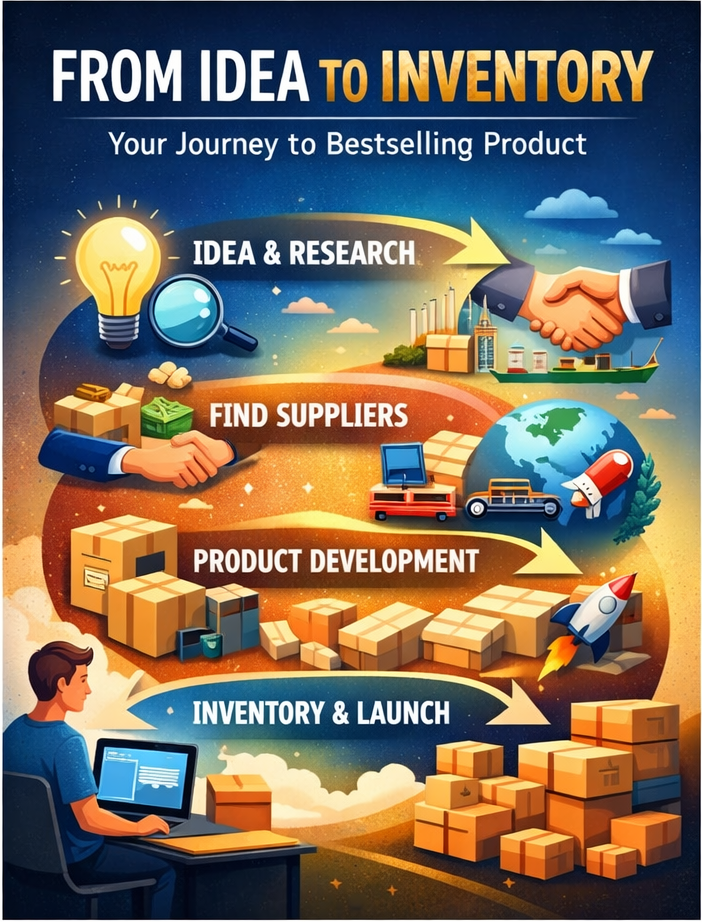
The phrase “From idea to inventory” represents more than just a process—it is a strategic roadmap. It includes:
- Identifying profitable product opportunities
- Validating demand
- Sourcing reliable suppliers
- Developing and improving products
- Managing inventory efficiently
Each step plays a critical role in determining whether your product becomes a bestseller or fails to gain traction.
Step 1: Identifying Winning Product Opportunities
Every successful product starts with a strong idea. However, not all ideas translate into profitable products. The key is to identify opportunities that align with market demand and customer needs.
What Makes a Product “Winning”?
A winning product typically has the following characteristics:
- Solves a real problem
- Improves convenience or efficiency
- Appeals to a specific audience
- Has consistent demand
For example, products that simplify daily tasks or enhance lifestyle experiences often perform well because they offer clear value.
How to Find Product Ideas
There are several ways to discover product opportunities:
1. Market Research
Analyze trends, customer behavior, and popular categories. Look for patterns in what people are buying and discussing.
2. Customer Pain Points
Identify problems people frequently face. Products that solve these problems tend to perform better.
3. Competitor Analysis
Study competitors to understand what works and what doesn’t. Look for gaps that you can fill with a better or improved product.
Validating Your Idea
Before investing time and money, validate your idea by:
- Checking demand trends
- Reviewing customer feedback
- Testing interest through small campaigns
Validation reduces risk and ensures that your idea has real potential.
Step 2: Sourcing Reliable Suppliers and Manufacturers
Once you have a validated product idea, the next step is finding suppliers who can deliver quality products consistently.
Why Supplier Selection Matters
Your supplier directly impacts:
- Product quality
- Delivery time
- Customer satisfaction
A poor supplier can damage your brand, while a reliable one can help you scale smoothly.
Where to Find Suppliers
Common sourcing options include:
- Online marketplaces
- Local manufacturers
- Wholesale suppliers
Each option has its advantages, depending on your business model and target market.
How to Choose the Right Supplier
When evaluating suppliers, consider:
- Product quality
- Pricing and margins
- Communication and responsiveness
- Delivery timelines
- Reviews and reputation
Always request samples before committing to bulk orders. This helps you verify quality and avoid potential issues.
Building Strong Supplier Relationships
A good relationship with your supplier can lead to:
- Better pricing
- Priority production
- Faster problem resolution
Treat your supplier as a partner, not just a vendor.
Step 3: Mastering Product Development
Product development is where your idea transforms into a market-ready product.
Improving the Product
Instead of selling a generic product, focus on improving it by:
- Enhancing design
- Adding useful features
- Increasing durability
- Simplifying usability
Even small improvements can make a significant difference in customer perception.
Branding and Differentiation
Your product is not just about functionality—it is also about presentation.
Key branding elements include:
- Logo and visual identity
- Packaging design
- Product messaging
Strong branding helps you stand out in a crowded market and build customer trust.
Testing and Feedback
Before launching at scale, test your product with a small audience. Collect feedback and make improvements based on real user experiences.
This step ensures that your product meets customer expectations.
Step 4: Inventory Planning and Management
Once your product is ready, you need to manage inventory effectively.
Start Small
Avoid over-investing in large quantities at the beginning. Start with a small batch and scale based on demand.
Monitor Inventory Levels
Keep track of:
- Stock availability
- Sales trends
- Reorder points
Efficient inventory management prevents both overstocking and stockouts.
Use Data for Decision-Making
Analyze sales data to understand:
- Which products perform well
- Which products need improvement
- Customer preferences
Data-driven decisions lead to better outcomes.
Step 5: Pricing Strategy
Pricing plays a crucial role in your product’s success.
Factors to Consider
When setting your price, include:
- Product cost
- Shipping expenses
- Marketing costs
- Platform fees
Finding the Right Balance
Your price should:
- Be competitive
- Reflect product value
- Ensure profitability
Testing different price points can help you find the optimal pricing strategy.
Step 6: Launching Your Product
A strong launch strategy is essential for gaining initial traction.
Choosing Sales Channels
You can sell through:
- Your own online store
- Marketplaces
Each channel offers different advantages, such as control over branding or access to a larger audience.
Marketing Your Product
To generate sales, focus on:
- Social media marketing
- Influencer collaborations
- Paid advertising
- Content creation
Engaging content, especially videos, can effectively showcase your product and attract customers.
Step 7: Scaling Your Business
Once your product starts performing well, the next step is scaling.
Optimize Operations
Improve efficiency by:
- Automating processes
- Streamlining logistics
- Enhancing customer support
Expand Your Product Line
Introduce:
- Variations of existing products
- Complementary products
This increases revenue and strengthens your brand.
Common Mistakes to Avoid
Many entrepreneurs make similar mistakes during this journey:
- Skipping product validation
- Choosing unreliable suppliers
- Ignoring customer feedback
- Over-investing too early
- Competing only on price
Avoiding these mistakes can save time, money, and effort.
The Role of Community and Collaboration
One of the most valuable aspects of this category is the opportunity to learn from others.
By participating in discussions, you can:
- Gain new insights
- Share experiences
- Learn from real-world challenges
Collaboration accelerates learning and helps you avoid common pitfalls.
Staying Aligned with Community Guidelines
While engaging in discussions, it is important to:
- Respect others’ opinions
- Share genuine insights
- Avoid spam or self-promotion
Following these guidelines ensures a positive and productive environment for everyone.
Final Thoughts
The journey from idea to inventory is not about luck—it is about strategy, research, and execution. Every successful product goes through a structured process of discovery, validation, sourcing, and improvement.
By focusing on identifying real opportunities, working with reliable suppliers, and continuously refining your product, you can significantly increase your chances of success.
Remember, your first product does not have to be perfect. What matters is your willingness to learn, adapt, and improve over time.
This category is designed to support you at every stage of your journey. Whether you are exploring your first idea or scaling your business, the knowledge shared here can help you move forward with confidence.
From idea to inventory — find winning products, reliable suppliers, and master the art of product creation. Your next bestseller starts here. 🚀
If you’re looking for professionally written articles, in-depth content, or eCommerce-focused writing, feel free to connect with me. I provide customized content solutions based on your requirements.
📞 Contact: +91 98285 56909