Improving a Shopify store is an important step in building a successful eCommerce business. Many store owners spend time refining product collections, improving search visibility, installing useful apps, and creating a cleaner shopping experience. These changes create a stronger foundation, but one major challenge still remains: getting the right customers to visit the store and converting those visitors into buyers.
This is where marketing strategy becomes critical.
Many businesses reach a point where they realize that improving the store itself is only part of the journey. The next stage is bringing qualified traffic, increasing conversions, and building a system that generates consistent sales. This often leads to an important question: Should you hire a Shopify marketing expert or agency, and what exactly should they help with?
The answer depends on your current business stage, your goals, and your biggest challenge—whether that is low traffic, poor conversion rates, weak customer retention, or a combination of all three.
This article explains what kind of marketing support is most valuable, how to identify the right expert or agency, and the strategies that actually help a Shopify store grow.
Step One: Identify the Real Problem Before Scaling
Before running more ads or hiring an agency, the first step is understanding the actual problem.
Many store owners assume they need more traffic, but sometimes the real issue is conversion.
For example:
- If your store gets very few visitors, the problem is traffic
- If your store gets traffic but few purchases, the problem is conversion
- If customers buy once but never return, the problem is retention
Spending money on ads without identifying the real issue can lead to wasted budget and frustration.
That is why a good marketing expert should first analyze your store before launching campaigns.
Traffic vs Conversion: Understanding the Difference
These two terms are often connected, but they are not the same.
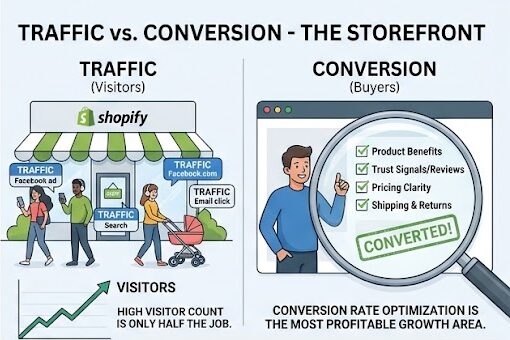
Traffic Means Visitors
Traffic is the number of people visiting your store.
This includes people coming from:
- Social media
- Paid advertisements
- Search engines
- Email campaigns
- Influencer promotions
- Referral links
More traffic means more opportunities for sales—but only if the traffic is relevant.
Conversion Means Turning Visitors into Buyers
Conversion is what happens after visitors arrive.
It answers the question:
Do people trust your store enough to buy?
Good conversion depends on:
- Product presentation
- Trust signals
- Reviews
- Pricing clarity
- Shipping information
- Return policy
- Checkout experience
If these are weak, even high traffic will not generate strong results.
Why Qualified Traffic Matters More Than High Traffic
Not all traffic is valuable.
A thousand random visitors are often less useful than one hundred highly targeted visitors.
Qualified traffic means people who are:
- Interested in your products
- Ready to buy
- Aligned with your target audience
- Searching for solutions you provide
This is why marketing should focus on quality, not just quantity.
A professional marketing expert understands this difference.
Paid Advertising: Facebook, Instagram, and Google
One of the most common reasons people hire a marketing expert is paid advertising.
Running ads may seem simple, but successful campaigns require strategy, testing, and continuous optimization.
Facebook and Instagram Ads
These platforms are powerful for product discovery and visual selling.
They work especially well for:
- Fashion
- Beauty
- Home products
- Lifestyle brands
- Impulse-buy products
A marketing expert helps with:
- Audience targeting
- Creative testing
- Ad copy writing
- Budget optimization
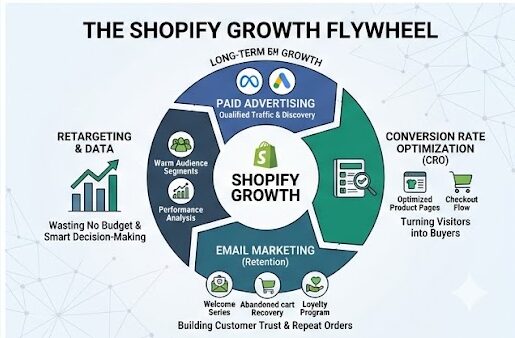
- Retargeting campaigns
- Performance analysis
Without proper management, ad spend can disappear quickly without strong results.
Google Ads
Google works differently because customers often arrive with buying intent.
They are actively searching for products rather than discovering them.
This is useful for:
- High-intent products
- Problem-solving products
- Competitive niches
- Search-driven demand
A skilled marketer knows when to use social ads, search ads, or both together.
Conversion Rate Optimization (CRO)
Driving traffic is only half the job.
Conversion Rate Optimization focuses on improving the percentage of visitors who actually purchase.
This is one of the most profitable areas because improving conversion increases results without increasing ad spend.
What CRO Usually Includes
Product Page Optimization
Your product pages should answer questions before customers ask them.
Strong product pages include:
- Clear benefits
- High-quality visuals
- Social proof
- Trust-building descriptions
- Strong call-to-action buttons
Trust Signals
Customers buy faster when they feel safe.
Important trust elements include:
- Customer reviews
- Shipping details
- Return policy
- Secure checkout messaging
- Contact information
- Clear brand identity
Many stores underestimate how important these are.
Checkout Improvement
A complicated checkout kills sales.
Experts often improve:
- Checkout flow
- Cart abandonment points
- Payment trust
- Mobile checkout experience
Small improvements here can create major results.
Email Marketing: The Hidden Revenue Engine
Many businesses focus only on ads and ignore email marketing.
This is a major mistake.
Email marketing is often one of the highest-return channels because it targets people who already know your brand.
Important Email Flows
Welcome Series
When someone joins your email list, the first few emails create trust and interest.
Abandoned Cart Recovery
Many customers leave without purchasing.
A strong recovery email sequence brings them back.
This alone can recover significant lost revenue.
Post-Purchase Follow-Up
After a purchase, email helps with:
- Repeat orders
- Upsells
- Reviews
- Customer loyalty
Retention is cheaper than acquisition.
Retargeting: Selling to Warm Audiences
Most visitors do not buy on the first visit.
Retargeting helps bring them back.
This works by showing ads to:
- Visitors who viewed products
- Customers who added to cart
- People who visited checkout
- Previous buyers
These audiences are more likely to convert because they already know your brand.
Retargeting is often where ad campaigns become truly profitable.
Should You Hire an Agency or a Freelancer?
This depends on your budget and business needs.
Working with an Agency
Agencies usually offer:
- Paid ads
- Email marketing
- CRO
- SEO support
- Strategy management
They are stronger for businesses needing full-service support.
However, they are often more expensive.
Working with a Freelancer or Specialist
Freelancers may focus on:
- Only ads
- Only email
- Only CRO
They can be more affordable and flexible.
This is often a better option for smaller stores or focused projects.
What to Ask Before Hiring
Never hire based only on promises.
Ask:
- What results have they achieved before?
- Have they worked with Shopify stores like yours?
- How do they report performance?
- What is their strategy before scaling ads?
- Do they understand your customer journey?
Good marketers ask questions before selling services.
Bad marketers promise fast results without diagnosis.
A Different Perspective: Learn Some Marketing In-House
Not every store should immediately depend on an agency.
Some business owners benefit from learning the basics themselves first.
This helps with:
- Better decision-making
- Stronger control over spending
- Easier communication with experts later
Even if you hire help, understanding marketing basics protects you from poor service.
Learning in-house does not replace experts—it makes collaboration smarter.
Store Foundation Still Matters
Before scaling ads, make sure your store itself is ready.
Even the best marketing cannot fix a weak store.
Check:
- Product benefits are clearly explained
- Reviews are visible
- Shipping times are transparent
- Return policies are easy to find
- Pricing is clear
- Mobile experience is strong
Sometimes improving these basics increases sales more than launching new campaigns.
Inventory and Data Accuracy Matter Too
Marketing works best when operations are stable.
If your pricing, stock, or product data are incorrect, paid traffic becomes expensive and frustrating.
A good growth strategy includes:
- Accurate inventory
- Correct product pricing
- Reliable product availability
- Clear order fulfillment systems
Marketing and operations must work together.
Final Strategic Recommendation
Do not begin by asking:
“Who can run my ads?”
Start by asking:
“What is stopping my growth?”
That answer determines the right type of expert.
If traffic is low → focus on acquisition
If conversions are low → focus on CRO
If retention is weak → focus on email and customer loyalty
The best experts solve problems—not just run campaigns.
Final Conclusion
Hiring a Shopify marketing expert can be a powerful step for store growth, but success depends on choosing the right strategy before choosing the right person.
Paid ads, email marketing, conversion optimization, and retargeting all matter—but only when built on a strong foundation.
A successful store needs:
- Qualified traffic
- Strong conversion systems
- Customer trust
- Repeat purchase strategies
- Reliable operations
Whether you work with an agency, a freelancer, or learn some of it yourself, the goal remains the same:
Sustainable, profitable growth—not just temporary traffic spikes.
Final Thought
A refined Shopify store is only the beginning.
Real growth happens when the right people visit, trust what they see, and choose to buy.
Marketing is not just about bringing people in.
It is about building a system that turns visitors into loyal customers.
That is where real eCommerce success begins.