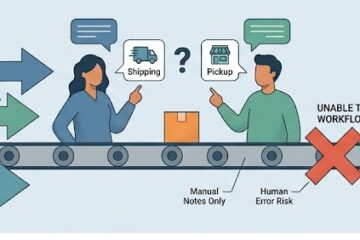
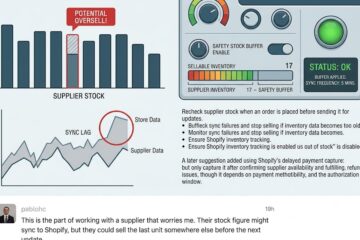
One of the biggest advantages of modern eCommerce automation is efficiency. Store owners can automate inventory updates, pricing, product imports, order fulfillment, and synchronization between suppliers and online stores. This saves time and makes scaling easier, especially for dropshipping businesses handling large product catalogs.
However, automation also creates a common but frustrating problem:
manual product edits inside the online store keep getting overwritten later.
This issue is becoming increasingly common among store owners who use automated syncing systems between their product management platform and their online storefront. In the situation discussed here, the seller noticed that direct edits made inside the Shopify store — particularly product titles and prices — reverted back to older versions after a few hours.
The reason appears to be that the automation platform still treats itself as the “source of truth” for product data. As a result, any manual changes made directly inside Shopify are eventually replaced during synchronization cycles.
At first glance, this may seem like a simple technical issue. But in reality, it highlights a much larger challenge in eCommerce automation:
how to balance automation with manual control.
Let’s explore why this happens, how syncing systems work, why conflicts occur, and what store owners should understand before relying heavily on automated product management systems.
Understanding the “Source of Truth” Problem
In connected eCommerce systems, product information can exist in multiple places at the same time:
- Online storefront
- Supplier platform
- Product management system
- Inventory system
- Fulfillment software
- Marketplace integrations
The challenge is deciding:
Which system controls the final product data?
This controlling platform is often called the “source of truth.”
When automation software acts as the source of truth, it assumes:
- Product titles
- Descriptions
- Prices
- Inventory
- Variants
- Images
should always match the data stored inside that platform.
This means if someone manually edits a product directly inside Shopify, the sync system may detect a mismatch and automatically overwrite those changes during the next synchronization cycle.
Why Store Owners Get Confused
Many merchants assume:
“If I edit the product directly inside my store, the changes should stay.”
That feels logical.
But automated syncing systems often work differently.
The automation platform may continuously monitor:
- Supplier data
- Product feeds
- Pricing rules
- Inventory levels
and then push updates back into the store regularly.
From the software’s perspective, manual edits inside Shopify may appear to be “incorrect” or “outdated” compared to the master data source.
So the system restores what it believes is the correct version.
This creates frustration because sellers feel like:
- The system ignores their edits
- They lose control over products
- Product optimization becomes difficult
Why Automation Exists in the First Place
To understand the problem properly, it helps to understand why automation systems became popular.
Managing large dropshipping stores manually is extremely difficult.
Without automation, sellers would need to:
- Update stock levels constantly
- Monitor supplier pricing
- Adjust product availability
- Track inventory changes
- Process orders manually
This becomes impossible at scale.
Automation systems solve these problems by:
- Syncing supplier data automatically
- Updating inventory in real time
- Preventing overselling
- Adjusting prices automatically
- Simplifying store management
The problem is not automation itself.
The problem is control conflict.
The Difference Between Manual Control and Automated Control
There are generally two operational approaches in automated eCommerce systems.
1. Automation-First Model
In this model:
- The external management platform controls everything.
- Shopify becomes mainly a storefront display layer.
- Product changes should happen only inside the automation system.
Advantages:
- Consistency
- Faster scaling
- Reduced manual workload
- Better inventory synchronization
Disadvantages:
- Less flexibility
- Manual edits may be overwritten
- Store owners lose granular control
2. Store-First Manual Model
In this model:
- Shopify becomes the primary control center.
- Store owners edit products manually.
- Automation is limited or selective.
Advantages:
- Full creative control
- Easier product optimization
- Better branding customization
Disadvantages:
- More manual work
- Increased operational complexity
- Higher risk of inventory mismatch
The conflict happens when businesses try to combine both systems without clear hierarchy rules.

Why Product Titles Often Revert
Product titles are commonly affected because automation systems frequently sync:
- Supplier product names
- Product feed updates
- Marketplace naming conventions
A seller may optimize a title for:
- SEO
- Branding
- Higher conversion rates
But the sync system may restore the original supplier title automatically.
This creates a major issue because optimized product titles are critical for:
- Search visibility
- Customer trust
- Product clarity
- Conversion performance
Merchants want control over branding.
Automation systems prioritize synchronization consistency.
Why Price Changes Revert Even Faster
Pricing conflicts are even more common.
Many automated systems continuously monitor supplier pricing to protect merchants from:
- Profit loss
- Supplier price increases
- Inventory shortages
- Margin problems
If supplier pricing changes, the automation platform may:
- Recalculate retail prices
- Apply pricing rules automatically
- Push updates into the store
This means manually adjusted prices inside Shopify may quickly revert.
For example:
A seller lowers a product price for a temporary campaign.
A few hours later, the automation system restores the original pricing formula.
This confuses merchants and disrupts marketing campaigns.
Inventory Syncing Creates Another Layer of Complexity
Stock synchronization is essential in dropshipping because supplier inventory changes constantly.
Without syncing:
- Stores may sell unavailable products
- Orders may fail
- Refund rates may increase
However, automated stock monitoring also reduces manual flexibility.
If a seller wants to:
- Pause sales manually
- Limit inventory intentionally
- Create scarcity campaigns
the sync system may override those decisions.
Again, the root problem is conflicting control systems.
The Importance of Two-Way Synchronization
A newer feature mentioned in the discussion involves two-way synchronization.
Traditionally:
- External systems pushed updates into Shopify only.
But newer synchronization models attempt to allow:
- Shopify edits to sync back into the automation platform.
This is important because it creates:
- Better flexibility
- More balanced control
- Reduced overwrite conflicts
However, even with two-way synchronization, problems may still occur if:
- Price monitoring remains active
- Supplier syncing overrides manual edits
- Automation rules take priority
Two-way sync helps, but it does not fully solve the control hierarchy problem.
Why Sellers Need Clear Operational Rules
One major lesson from this situation is that businesses need clear operational workflows.
Before using automation systems, merchants should decide:
- Which platform controls pricing?
- Which platform controls titles?
- Which platform controls inventory?
- Which edits should sync both ways?
- Which updates should remain manual?
Without clear rules, systems begin fighting each other.
This creates:
- Data inconsistency
- Store confusion
- SEO problems
- Branding issues
- Pricing instability
Automation Is Powerful but Not Intelligent
Many sellers assume automation systems understand business intent.
They do not.
Automation systems follow rules.
If the system rule says:
“Supplier pricing updates override store pricing”
then the system will continue doing that regardless of marketing goals or branding decisions.
This is why automation requires configuration, monitoring, and operational planning.
Why Manual Pricing Control Sometimes Matters
Not all businesses want dynamic pricing.
Some merchants intentionally maintain:
- Stable brand pricing
- Psychological price points
- Promotional campaigns
- Custom retail positioning
Automatic supplier-based pricing changes may interfere with those strategies.
This is especially problematic for:
- Branded stores
- Premium positioning
- Long-term customer trust
- Consistent marketing campaigns
Businesses must decide whether automation convenience outweighs branding flexibility.
The SEO Impact of Product Reversions
Repeated title or description changes can also affect SEO performance.
If product data constantly changes:
- Search indexing may fluctuate
- Keyword optimization weakens
- Product consistency suffers
For stores investing in organic traffic, uncontrolled synchronization may create long-term SEO instability.
This is another reason why merchants often want stronger manual control over:
- Titles
- Descriptions
- Product structure
Why Some Sellers Pause Monitoring Features
One recommendation mentioned was pausing monitoring systems when full manual control is needed.
This can help temporarily because:
- Automatic overwriting stops
- Manual campaigns remain stable
- Pricing changes stay intact
However, disabling monitoring also introduces risk:
- Supplier stock may change unnoticed
- Inventory mismatches may occur
- Supplier price increases may reduce profit margins
This shows the trade-off between:
- Control
- Automation safety
There is rarely a perfect balance.
The Bigger Lesson About eCommerce Automation
This issue reflects a broader reality in modern eCommerce:
automation solves operational problems but introduces system dependency.
As businesses grow, they increasingly rely on:
- Sync systems
- Product feeds
- Supplier integrations
- Automated workflows
These systems improve scalability but reduce direct manual oversight.
The challenge becomes:
How much control should businesses surrender to automation?
Every store must answer that differently based on:
- Product volume
- Branding strategy
- Marketing style
- Operational complexity
Why Beginners Often Struggle With Automation Systems
New sellers are especially vulnerable because they:
- Expect immediate simplicity
- Assume systems work intuitively
- Do not fully understand sync hierarchy
When product edits suddenly disappear, frustration increases quickly.
The problem is usually not software failure —
it is misunderstanding how synchronization architecture works.
Final Thought
The issue of Shopify product edits reverting after synchronization is not simply a technical glitch.
It represents a deeper operational challenge inside automated eCommerce systems:
the conflict between scalability and control.
Automation platforms are designed to maintain consistency, protect inventory accuracy, and simplify operations. But when merchants want manual flexibility for branding, SEO, pricing, or marketing campaigns, conflicts naturally emerge.
Understanding which platform acts as the “source of truth” is critical before scaling any automated workflow.
Conclusion
Automated synchronization systems can dramatically simplify dropshipping operations by managing inventory, pricing, and product data efficiently. However, they can also create frustration when manual Shopify edits are overwritten during sync cycles.
The core issue usually comes from control hierarchy:
the automation platform continues treating itself as the master source of product information.
To avoid ongoing conflicts, merchants need clear operational rules about:
- Which platform controls product data
- When manual edits should override automation
- How pricing and inventory monitoring should behave
Automation is extremely powerful for scaling online businesses, but it works best when store owners fully understand how synchronization systems manage data behind the scenes.
Because in eCommerce, efficiency is important —
but maintaining intentional control over your store experience matters just as much.