Introduction
Launching an online store is an exciting step for any business owner. However, one of the most frustrating experiences for new ecommerce sellers is building a store, adding products, and waiting for sales that never arrive.
This situation can be particularly confusing for merchants who have already sold successfully on large online marketplaces. They may have experience managing products, processing orders, and communicating with customers, yet struggle to generate sales through their own website.
The main reason is that selling through an established marketplace is different from operating an independent ecommerce store. Marketplaces often provide access to shoppers who are already searching for products. An independent store, on the other hand, must attract visitors, build trust, and convince those visitors to make a purchase.
A discussion in the Shopify community explored this exact problem. A new seller wanted to understand why their independent store was not generating sales despite having previous experience selling on other marketplaces. The responses highlighted several important areas, including website design, product presentation, marketing, search engine optimization, customer reviews, and promotional offers.
Although the discussion did not produce a specific solution for the seller, it offers a useful starting point for understanding why an online store may struggle and what business owners can do to improve their results.
1. Understanding Why Marketplace Success Does Not Guarantee Shopify Sales
One of the most important differences between a marketplace and an independent store is the source of traffic.
Established marketplaces attract shoppers through their brand recognition, search functionality, advertising, recommendations, and repeat customers. When someone visits a marketplace, they may already intend to purchase a particular product.
Sellers can benefit from this existing demand if their products appear in relevant searches and offer competitive prices, quality, and delivery options.
An independent ecommerce website operates differently. Even if the website looks professional and contains excellent products, potential customers may not know it exists.
For example, imagine a merchant who previously sold hundreds of phone accessories through a marketplace. The marketplace helped customers discover the products while comparing similar items.
After launching an independent store, the same merchant may receive very few visitors because there is no established source of traffic. The products may still be attractive, but shoppers are not finding them.
This illustrates an important principle: building a store does not automatically bring customers to it.
Independent store owners need a strategy for attracting visitors through search engines, social media, paid advertising, email, partnerships, and other relevant channels.
They must also create reasons for shoppers to trust the website instead of purchasing from a familiar marketplace or competing store.
The first step is therefore to separate the problem into two questions:
- Is the store attracting enough relevant visitors?
- Are those visitors turning into customers?
The answers determine what needs to be improved.
2. Identify Whether the Problem Is Traffic or Conversion
When an online store has no sales, changing the website design or spending money on advertising immediately may not solve the underlying problem.
Store owners should first examine the customer journey.
Traffic refers to the number of people visiting the website. Conversion refers to the percentage of visitors who complete a desired action, such as purchasing a product.
A store with almost no visitors has a traffic problem. A store with many visitors but no purchases may have a conversion problem, an audience mismatch, or both.
Consider three possible situations.
Situation one: Very few visitors. The store may not have enough visibility in search results, social media, advertising, or other channels. The priority is to attract relevant potential customers.
Situation two: Visitors arrive but leave quickly. The products may not match their expectations, the homepage may be confusing, or the website may appear untrustworthy. The priority is to improve the first impression and product presentation.
Situation three: Visitors view products or add items to their carts but do not complete purchases. Shipping costs, payment options, delivery estimates, unclear policies, or checkout difficulties may be creating hesitation.
These patterns are not definitive proof of a particular problem, but they help narrow the investigation.
A merchant should review available website analytics, product views, add-to-cart activity, checkout starts, and completed orders. This information can reveal where potential customers are leaving.
Without this basic diagnosis, it is easy to spend money attracting more visitors to a website that is not ready to convert them into buyers.
3. Improve the Store’s First Impression
A store’s design influences how easily visitors understand the business and find what they need.
Customers should be able to identify what the store sells, who its products are intended for, and why they should consider buying from it.
A complicated homepage, unclear navigation, inconsistent product categories, or excessive promotional messages can make shopping unnecessarily difficult.
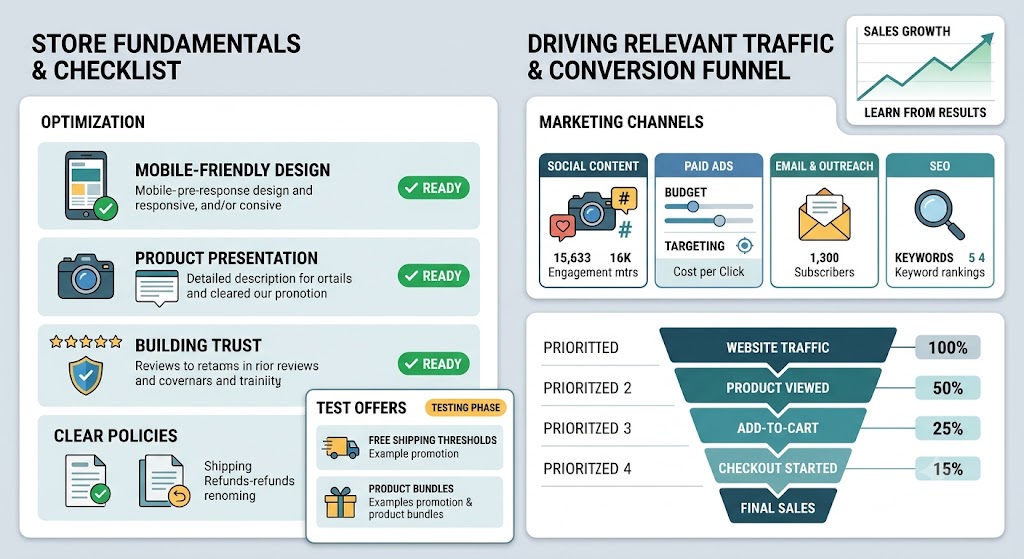
A well-organized store should include:
- Clear product categories and navigation.
- A visible search function when the catalog is large.
- Consistent branding and readable text.
- Easy access to contact information and customer support.
- Clear shipping, return, and refund policies.
- A straightforward path from product discovery to checkout.
Mobile usability deserves particular attention. Many customers discover products through social media or browse while using their phones. If product images load slowly, text is difficult to read, or important buttons are hard to tap, visitors may leave before making a purchase.
Store owners should test the entire shopping experience on different screen sizes. They should open product pages, select variants, add products to the cart, enter delivery details, and check whether the checkout process is easy to understand.
A visually attractive store is useful, but appearance alone is not enough. The design must help customers make decisions and complete purchases without unnecessary effort.
4. Strengthen Product Images and Descriptions
Product pages are among the most important parts of an ecommerce website because they provide the information customers need before buying.
On a marketplace, shoppers may already be familiar with the general purchasing process. On an independent store, they may need additional reassurance about the product and the business selling it.
High-quality product photographs help customers understand what they are purchasing. Images should be clear, consistent, and representative of the actual product.
Depending on the product category, useful images may include different angles, close-up details, size comparisons, packaging, and photographs showing the product in use.
Descriptions should explain more than basic features. They should help customers understand the product’s practical benefits.
For example, instead of simply stating that a backpack has several compartments, explain how those compartments help organize daily essentials.
Important information may include:
- Product dimensions, materials, and specifications.
- Available sizes, colors, and variations.
- Instructions for use or care.
- Compatibility requirements, where relevant.
- Included accessories or components.
- Expected delivery information and applicable limitations.
Descriptions should also answer common customer questions before they become reasons not to purchase.
Avoid exaggerated claims, unclear specifications, and copied descriptions that fail to explain what makes the product suitable for its intended audience.
The objective is to reduce uncertainty and help shoppers decide whether the product meets their needs.
5. Build Trust With Reviews and Clear Policies
Customers purchasing from an unfamiliar website may be concerned about product quality, payment security, delivery reliability, and customer support.
A store can reduce these concerns by providing genuine customer reviews, accurate business information, clear policies, and responsive support.
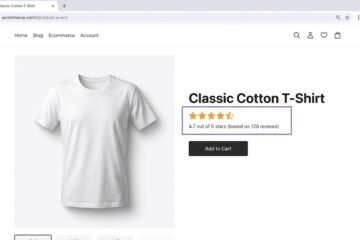
Reviews are especially valuable because they provide information from people who have already experienced the product. Detailed feedback can help prospective buyers understand product quality, fit, usability, and potential limitations.
If the store is new and has no reviews, the owner should not create fake testimonials or display unsupported claims. Instead, focus on building credibility through accurate product information, transparent policies, professional presentation, and reliable service.
Other useful trust signals include:
- Clear contact information.
- An understandable refund and return policy.
- Realistic delivery estimates.
- Secure and familiar payment options.
- Accurate product availability.
- Prompt responses to customer enquiries.
- Consistent branding and professional communication.
Trust must also be supported by the actual customer experience. A website may appear credible initially, but delayed deliveries, poor-quality products, or unresponsive support can damage its reputation.
The goal is not simply to make visitors feel safe enough to purchase once. It is to create a reliable experience that encourages repeat purchases and positive recommendations.
6. Attract the Right Visitors Through Marketing
Once the store is ready to receive customers, the next challenge is attracting relevant traffic.
The community discussion mentioned several possible channels, including social media, search advertising, video content, email marketing, giveaways, and direct outreach. These approaches can be useful, but not every channel is appropriate for every business.
The best choice depends on the product, target audience, budget, competition, and purchasing behaviour.
Social media marketing
Social media can help a business introduce products to potential customers and demonstrate how those products solve everyday problems.
Rather than publishing only promotional messages, create content that educates, demonstrates, entertains, or answers common questions.
For example, a home organization store might publish practical organization ideas using its products. A fashion business might share styling suggestions or explain differences between materials.
Consistent, relevant content can help a brand build recognition and encourage interested viewers to visit its website.
Paid advertising
Paid advertising can help a store reach people who are likely to be interested in its products. However, advertising should not be treated as a guaranteed source of sales.
Before spending heavily, establish a small, controlled budget and define what success means. Monitor relevant measures such as product page visits, add-to-cart activity, completed purchases, and the cost of acquiring a customer.
If advertisements attract clicks but no meaningful shopping activity, investigate the audience, offer, product page, and overall customer experience before increasing spending.
Search engine optimization
Search engine optimization, commonly known as SEO, helps product and category pages become more understandable and discoverable through search engines.
Store owners can improve their chances of attracting relevant organic traffic by using descriptive page titles, clear product descriptions, useful category pages, and content that answers customers’ questions.
Search visibility generally takes time to develop. It should be treated as a long-term source of traffic rather than an immediate solution to a store with no visitors.
Email marketing and previous customers
Merchants who have previously sold through marketplaces may have experience with customers who purchased similar products. Where customer contact information has been obtained lawfully and can be used for marketing under applicable rules, email can help introduce customers to the independent store.
Useful messages may include new product announcements, helpful product information, special offers, or reminders about relevant products.
Customer information should never be copied from a marketplace or used for marketing without the required permission and compliance with the marketplace’s rules and applicable privacy requirements.
Each marketing channel should have a clear purpose. The objective is to attract people who are genuinely interested in the products, rather than simply increasing visitor numbers.
7. Test Offers That Give Customers a Reason to Buy
Even when visitors are interested in a product, they may hesitate because of price, shipping costs, uncertainty about value, or the availability of alternatives.
Promotional offers can help address these concerns, but they should be tested carefully.
Possible approaches include:
Product bundles: Combine complementary products into a useful package. Bundles can make purchasing more convenient and may increase the value of each order.
Free shipping thresholds: Offer free shipping when an order reaches a specified amount, provided the business can afford the associated costs. This may encourage customers to add another relevant item to their cart.
Limited introductory discounts: A reasonable launch offer can encourage first-time purchases. However, constant discounts may reduce profitability and train customers to wait for lower prices.
Product demonstrations or samples: Where practical, demonstrations and samples can help customers understand quality and value before committing to a purchase.
Related product recommendations: Suggest accessories or complementary items that genuinely improve the customer’s purchase.
Every offer should be evaluated in terms of profitability, not sales volume alone. A discount that generates orders but leaves insufficient margin to cover product costs, shipping, advertising, and returns may harm the business.
Merchants should test one or two relevant offers and compare the results before introducing multiple promotions simultaneously.
8. Start With a Small Product Range and Learn From Results
A new store does not necessarily need a large catalog to generate its first sales.
Offering too many products can make it difficult to understand which items attract interest, which audiences respond, and which marketing messages work.
A smaller, carefully selected product range allows the merchant to focus on quality, presentation, and customer needs.
Begin with products that have a clear target audience and a convincing reason to buy. Research competitors, compare pricing, review customer questions, and understand the costs involved in delivering each product.
Then test demand using a manageable marketing budget.
For each product, examine whether visitors view the page, engage with the information, add items to their carts, and complete purchases. If customers show interest but do not buy, investigate the reasons instead of immediately adding more products.
Customer enquiries and feedback can provide valuable clues. Repeated questions about sizing, delivery, product compatibility, or returns may reveal information that needs to be clearer on the website.
This process helps the business make decisions based on evidence rather than assumptions.
9. Common Mistakes That Prevent Shopify Sales
Several mistakes can make it difficult for a new independent store to generate consistent sales.
Expecting sales without marketing: A new website rarely attracts a substantial audience automatically. Traffic generation requires a deliberate plan.
Spending on ads before fixing the store: Advertising can bring visitors, but it cannot compensate for confusing navigation, weak product information, or an unreliable checkout experience.
Copying marketplace listings without adapting them: Independent stores may need more detailed descriptions, stronger branding, and additional trust signals to persuade customers who are unfamiliar with the business.
Offering too many products too early: An oversized catalog can spread limited resources across products without proven demand.
Using discounts as the only strategy: Constant promotions can reduce margins without creating lasting customer loyalty.
Ignoring customer questions: Repeated questions and objections can identify missing information that should be added to product pages.
Making too many changes at once: If the store changes its design, pricing, products, and advertising simultaneously, it becomes difficult to identify which changes affect performance.
Giving up too quickly: Some marketing activities, particularly organic search and brand building, take time. However, patience should be combined with regular evaluation rather than waiting indefinitely without measuring results.
10. A Practical Plan for Getting the First Sales
A structured plan can make the process easier to manage.
During the first stage, review the store’s mobile experience, navigation, product descriptions, images, pricing, shipping costs, payment options, and policies. Make sure the complete purchasing process works correctly.
Next, choose a small group of products to promote. Identify the customers most likely to need them and develop clear messages explaining the products’ benefits.
Then select one or two marketing channels that fit the audience and budget. Publish useful social content, improve relevant product pages for search, conduct compliant outreach, or run a small advertising test.
Monitor the results regularly. If there are no visitors, focus on visibility. If visitors leave quickly, improve relevance and the first impression. If they add products to their carts but do not purchase, investigate pricing, shipping, trust, and checkout concerns.
Finally, use customer feedback and performance data to refine the store. Repeat the activities that produce promising results, stop spending on ineffective approaches, and expand gradually as demand becomes clearer.
Conclusion
A Shopify store can have excellent products and still struggle to generate sales because an independent website does not automatically receive the traffic that established marketplaces provide.
Success requires a combination of visibility, strong product presentation, customer trust, relevant marketing, competitive offers, and a convenient shopping experience.
The most important first step is to identify the real problem. A store with no visitors needs a traffic strategy, while a store with visitors but no purchases needs a closer examination of its product pages, pricing, trust signals, and checkout experience.
Instead of trying every marketing method at once, merchants should start with the basics, test a small number of products and offers, and use measurable results to guide their next decisions.
Marketplace experience can provide a valuable foundation, but operating an independent store requires additional skills in customer acquisition and conversion optimization. With a clear strategy and continuous improvement, merchants can build a stronger path toward their first sales and sustainable long-term growth.

0 Comments