Retail technology is changing rapidly. Over the past decade, physical stores have increasingly looked for ways to modernize operations, reduce manual work, and improve pricing accuracy. One technology that has gained major attention is the electronic shelf label system.
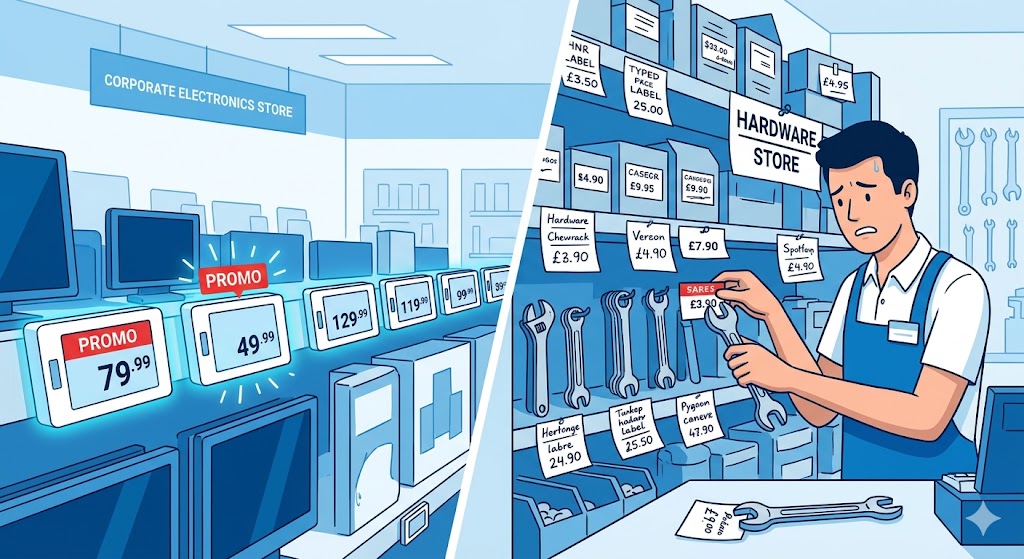
Electronic shelf labels, often called digital price tags, replace traditional paper price labels with small digital displays attached to store shelves. These displays can automatically update prices, promotions, and product information without requiring staff to manually replace printed tags.
Large retailers have already adopted this technology in many regions. Customers now frequently see digital price labels in:
- supermarkets
- electronics stores
- pharmacies
- department stores
- warehouse retailers
For big retail chains, electronic shelf labels help reduce labor costs and improve pricing consistency across thousands of products.
However, the discussion above focuses on a very different question:
can smaller businesses create affordable do-it-yourself electronic shelf label systems without the massive enterprise costs seen at large retailers?
The conversation highlights growing frustration among small and medium businesses that want modern retail technology but cannot justify enterprise-level deployment expenses.
The core issue is not whether electronic shelf labels are useful.
Most people already recognize their advantages.
The real challenge is:
how to make the technology affordable, flexible, and practical for smaller businesses without requiring expensive custom integration projects.
The discussion remains unresolved because no clear plug-and-play solution has emerged yet. But the conversation reflects a much larger trend in modern commerce:
smaller retailers increasingly want access to advanced retail automation once available only to large corporations.
Let’s explore why electronic shelf labels are becoming attractive, why enterprise deployments remain expensive, and why smaller businesses are searching for simpler DIY alternatives.
What Electronic Shelf Labels Actually Do
Traditional retail stores use printed paper labels to display:
- prices
- discounts
- product names
- barcodes
- promotional information
Whenever pricing changes, employees must manually:
- print new labels
- replace old tags
- verify shelf accuracy
This process becomes time-consuming in stores with large product catalogs.
Electronic shelf labels automate this process.
Digital displays connected to a central system can instantly update:
- pricing
- discounts
- promotions
- inventory indicators
- product information
Instead of physically replacing tags, changes happen automatically.
Why Large Retailers Adopt Electronic Shelf Labels
For enterprise retailers, the benefits are significant.
Large stores may change prices:
- multiple times per day
- across thousands of products
- in multiple locations simultaneously
Manual price updates create:
- labor costs
- pricing inconsistencies
- operational delays
- human error
Electronic shelf labels help solve these problems by automating pricing management.
Large retailers also benefit from:
- centralized control
- dynamic pricing strategies
- faster promotions
- inventory synchronization
- real-time updates
For enterprise businesses, the long-term operational savings can justify the large upfront investment.
Why Small Businesses Want the Same Technology
Smaller retailers increasingly want similar operational advantages.
Even modest-sized stores deal with:
- pricing updates
- promotions
- inventory changes
- staff workload
- labeling errors
Digital shelf labels appear attractive because they promise:
- less manual labor
- cleaner store presentation
- faster price changes
- modern customer experience
Small retailers increasingly want access to the same operational efficiency tools used by larger chains.
The Main Problem: Enterprise Pricing
The discussion highlights the biggest obstacle:
cost.
Most electronic shelf label systems are designed primarily for enterprise retail environments.
These systems often involve:
- expensive hardware
- custom networking
- professional installation
- software integration
- maintenance contracts
- vendor support agreements
Costs increase quickly because enterprise deployments usually require:
- dedicated infrastructure
- custom engineering
- specialized hardware ecosystems
For smaller stores, these costs often become unrealistic.
Why Enterprise Deployments Become Expensive
Many enterprise systems involve much more than just digital labels.
Large deployments often require:
- centralized servers
- wireless communication gateways
- proprietary protocols
- installation specialists
- custom configuration
- technical support teams
In large stores with thousands of labels, setup becomes a major infrastructure project.
This creates pricing models designed for:
- large retail chains
- enterprise contracts
- long-term commercial deployments
Small retailers looking for affordable DIY solutions often feel excluded from the market.
Why Smaller Businesses Want DIY Solutions
The conversation specifically explored the idea of self-install electronic shelf label kits.
This reflects a broader trend:
small businesses increasingly prefer flexible self-service technology solutions instead of enterprise consulting projects.
DIY systems appeal because they potentially offer:
- lower upfront costs
- simpler setup
- operational independence
- reduced vendor dependency
Many smaller retailers do not need highly customized enterprise infrastructure.
They simply want:
- digital price updates
- basic synchronization
- easier store management
Why Cloud-Based Retail Systems Create Optimism
One important point raised in the discussion was that modern cloud-based retail systems often expose APIs and integration capabilities.
This creates optimism among smaller businesses.
The argument is relatively logical:
if modern commerce systems already support digital connectivity, why should electronic shelf label integration remain so difficult?
Many merchants assume:
- pricing data already exists digitally
- inventory systems already update automatically
- store information already synchronizes online
So theoretically, electronic labels should integrate relatively easily.
Why Integration Is Still Complicated
In practice, integration remains more difficult than many people expect.
Electronic shelf label systems involve:
- wireless communication standards
- display management
- battery optimization
- synchronization reliability
- network scalability
Retail environments also require high reliability because incorrect pricing can create:
- customer complaints
- legal issues
- inventory confusion
- operational mistakes
Enterprise vendors prioritize stability, which often increases complexity and cost.
Why Plug-and-Play Solutions Are Rare
The discussion noted that true plug-and-play solutions remain difficult to find.
This is partly because electronic shelf label technology still occupies a niche market compared to mainstream consumer electronics.
Many existing systems were originally designed for:
- large grocery chains
- enterprise retailers
- commercial infrastructure projects
Smaller DIY retail deployments were not the original target market.
As a result:
- interfaces remain complex
- setup requires technical knowledge
- integration often needs customization
Why Vendor Ecosystems Create Lock-In
Another major issue with enterprise systems is ecosystem lock-in.
Some electronic shelf label vendors use:
- proprietary hardware
- closed software systems
- restricted integrations
This can make small retailers dependent on specific vendors for:
- updates
- support
- maintenance
- replacements
DIY-minded businesses often prefer open, flexible systems they can control independently.
Why Alternative Solutions Are Emerging
Because affordable DIY shelf label systems remain limited, businesses are experimenting with alternative approaches.
The discussion mentioned:
- tablet-based displays
- QR-code shelf labels
- smaller starter kits
These alternatives attempt to provide some benefits of electronic labels without requiring full enterprise infrastructure.
For example:
QR-code labels allow customers to scan products for:
- updated pricing
- promotions
- product information
Tablet displays can act as larger dynamic signage systems.
These solutions may not fully replace traditional electronic shelf labels, but they reduce deployment complexity.
Why Small Retailers Value Flexibility More Than Scale
Large enterprise retailers prioritize:
- scalability
- reliability
- centralized control
Smaller businesses often prioritize:
- affordability
- flexibility
- simplicity
- independence
DIY systems appeal because small businesses usually do not need:
- thousands of synchronized labels
- complex infrastructure
- enterprise deployment services
They simply want operational convenience without massive investment.
Why Labor Costs Still Matter for Small Stores
Even smaller stores experience operational pain from manual labeling.
Employees may spend significant time:
- updating prices
- changing promotions
- correcting shelf errors
- replacing damaged labels
For lean businesses with limited staff, automation can still provide meaningful operational benefits.
Why Retail Modernization Is Becoming More Important
Customers increasingly expect modern retail experiences.
Digital shelf labels contribute to:
- cleaner presentation
- faster promotions
- modern aesthetics
- pricing consistency
Retailers increasingly compete not only on products, but also operational presentation and shopping experience.
Why Dynamic Pricing Is Changing Retail
Electronic shelf labels also support dynamic pricing models.
Retailers can adjust pricing based on:
- demand
- inventory levels
- promotions
- timing
- competition
This flexibility becomes difficult with printed paper labels.
As dynamic pricing becomes more common, digital labeling systems become more attractive.
Why Battery and Connectivity Matter
One hidden challenge in electronic shelf label systems is hardware reliability.
Displays must operate:
- wirelessly
- continuously
- with minimal maintenance
Battery efficiency becomes critical.
Connectivity problems can also create:
- outdated pricing
- synchronization failures
- customer confusion
These technical requirements partly explain why enterprise systems remain specialized.
Why Smaller Markets Often Lag Behind
Many retail technologies follow a predictable adoption pattern:
- Enterprise adoption first
- Simplified consumer versions later
Electronic shelf labels appear to still be transitioning between these stages.
Currently:
- enterprise systems dominate
- DIY solutions remain immature
- consumer-friendly ecosystems are limited
But growing interest from smaller businesses may eventually push the market toward simpler solutions.
Why Open Integration Could Change the Market
If more flexible integration standards emerge, DIY adoption may increase significantly.
Businesses increasingly want:
- modular systems
- affordable hardware
- easier setup
- flexible software compatibility
Open integration ecosystems could dramatically reduce deployment costs for smaller retailers.
Why This Reflects a Larger Retail Technology Trend
The discussion reflects a broader trend in modern commerce:
smaller businesses increasingly want enterprise-level capabilities without enterprise-level complexity.
This applies not only to electronic shelf labels, but also:
- automation
- analytics
- inventory systems
- fulfillment technology
- customer engagement tools
Retail technology is gradually becoming more democratized.
Why Operational Simplicity Matters Most
For many smaller retailers, simplicity matters more than advanced functionality.
Businesses usually prefer systems that are:
- easy to install
- easy to maintain
- affordable
- reliable
Complex infrastructure projects rarely fit smaller operational realities.
The Bigger Lesson About Retail Automation
The discussion highlights an important truth:
automation technology succeeds only when operational accessibility improves.
Even useful technologies struggle when:
- deployment costs remain high
- setup complexity stays intimidating
- vendor dependency increases
Smaller businesses increasingly want retail technology designed around usability instead of enterprise consulting models.
Final Thought
The discussion around DIY electronic shelf label systems reflects growing interest among smaller retailers seeking affordable retail automation.
Electronic shelf labels clearly offer advantages:
- faster pricing updates
- reduced manual labor
- cleaner presentation
- operational efficiency
But most existing systems remain heavily enterprise-focused, with costs driven by:
- custom integration
- specialized hardware
- installation complexity
- vendor infrastructure
Smaller businesses increasingly want simpler, more flexible alternatives that provide modern retail functionality without requiring massive deployment budgets.
Although no widely accepted DIY solution has emerged yet, the growing demand suggests that affordable self-install systems may become more important in the future.
Conclusion
The question of whether affordable DIY electronic shelf label systems exist highlights a major gap between enterprise retail technology and small-business accessibility.
Large retailers benefit from sophisticated digital pricing infrastructure, but smaller businesses often struggle with:
- high deployment costs
- integration complexity
- limited plug-and-play options
As modern commerce continues evolving, smaller retailers increasingly want operational tools that are:
- affordable
- flexible
- self-manageable
- easy to integrate
The discussion remains unresolved because no clear universal solution currently exists, but the growing interest shows that small businesses are actively searching for retail automation systems that balance modern functionality with realistic operational simplicity.