Managing consignment inventory creates a very different operational challenge compared with traditional retail inventory.
In a standard inventory model, a business owns products before they are sold. Orders are processed, inventory decreases, and fulfillment continues normally.
But consignment introduces another layer of responsibility.
The merchant may sell products on behalf of multiple consignors while maintaining visibility into:
- who owns each item
- which products belong to which consignor
- how revenue should be distributed
- how inventory should be tracked
- which orders contain consigned products
The discussion above focuses on a practical version of this challenge:
how to show consignor names on the orders page so merchants can quickly identify consignment products without exposing internal information to customers.
At first glance, this may appear to be a simple display issue.
But underneath, it touches inventory structure, operational workflows, privacy concerns, order visibility, and long-term catalog management.
Let’s explore why this request matters and why businesses increasingly need better ways to organize internal product ownership information.
Understanding the Consignment Business Model
Consignment works differently from standard retail.
Instead of purchasing inventory upfront, a merchant receives products from another party and only pays after products are sold.
This creates multiple responsibilities.
The business must know:
- who supplied each product
- which products remain unsold
- which orders include consigned items
- how commissions should be calculated
- when payouts should occur
Without proper visibility, operations become difficult.
Why Order Visibility Matters in Consignment Operations
Orders become more than customer transactions.
Every order may also represent:
- supplier reporting
- ownership tracking
- payout calculations
- inventory reconciliation
This means merchants often need additional internal information visible directly inside order management screens.
Without that visibility, teams may constantly switch between systems.
The Operational Problem Being Discussed
The request discussed was straightforward:
display consignor names directly on the orders page.
The objective was not customer-facing branding.
Instead, the goal was operational efficiency.
Store teams wanted immediate visibility into:
Which consignor owns this order?
Which products require supplier reporting?
Which inventory source fulfilled the order?
Why Manual Consignment Tracking Becomes Difficult
Many businesses begin managing consignments manually.
Examples include:
spreadsheets
internal notes
supplier lists
manual order reviews
This may work at small scale.
But growth introduces complexity.
Imagine managing:
50 consignors
1,000 products
500 weekly orders
Manual tracking quickly becomes difficult.
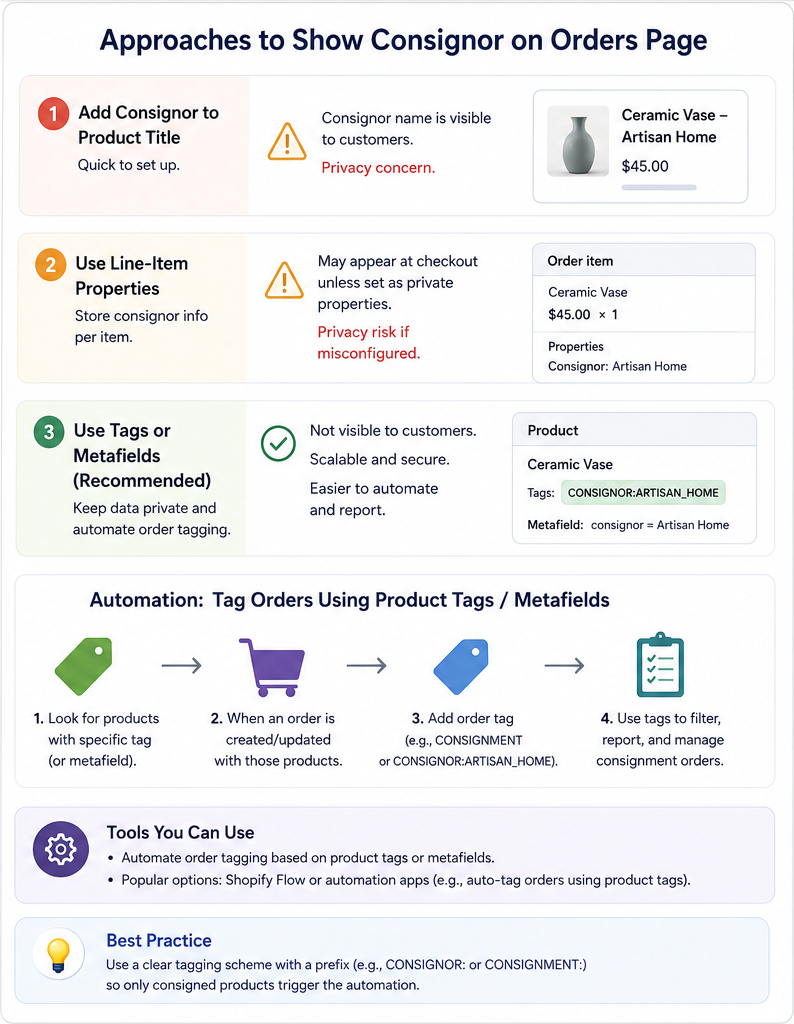
Why Adding Consignor Names Directly to Product Titles Creates Problems
One suggestion mentioned was placing consignor information inside product titles.
This approach appears simple.
Example:
Ceramic Vase – Supplier A
Leather Bag – Supplier B
Operationally, this works.
But it introduces major drawbacks.
The Customer Visibility Problem
Product titles are customer-facing.
Internal information becomes visible publicly.
Customers may begin asking:
Who is this supplier?
Why are supplier names shown?
Is the store reselling inventory?
Internal operational details usually should remain private.
Why Internal Data Should Stay Internal
Businesses often separate:
customer experience
operational management
Customers should see:
clear product information
Teams should see:
internal workflow information
Mixing these creates confusion.
Understanding Item-Level Product Attributes
Another proposed direction involved attaching consignor information to individual products inside orders.
This creates more flexibility.
Instead of changing visible product names, ownership data travels with each order.
This approach supports more detailed tracking.
Why Privacy Becomes Important
Internal product attributes may accidentally become customer-visible if not handled carefully.
Potential problems include:
supplier exposure
internal notes appearing publicly
confusing checkout experiences
Businesses must carefully separate operational fields from customer-facing information.
Why Product Metadata Is Valuable
Metadata allows businesses to attach additional information to products.
Examples include:
supplier identifiers
ownership details
inventory notes
commission percentages
storage locations
This information supports internal workflows without changing storefront appearance.
Why Metadata Improves Catalog Organization
Consignment businesses often manage:
different owners
different commission structures
different reporting requirements
Metadata creates cleaner organization.
Teams gain operational visibility.
Customers see simplified storefronts.
Why Labels Help Operational Workflows
Another concept discussed involved using labels attached to products or orders.
Labels create fast identification.
Examples:
Consignment
Supplier Group A
Vendor Collection
Special Handling
This improves filtering.
Why Order-Level Visibility Matters More Than Product-Level Visibility
Products may remain static.
Orders create action.
Teams often care more about:
which orders contain consigned items
than individual catalog records.
Order-level identification speeds daily operations.
The Challenge of Mixed Orders
Many businesses sell both:
owned inventory
consigned inventory
One order may contain both.
This creates operational complexity.
Questions arise:
Who fulfills what?
Who receives payment?
Which items require reporting?
Visibility becomes essential.
Why Automation Is Attractive
Manual identification works temporarily.
Growth usually creates demand for automation.
Businesses want systems that automatically:
identify orders
assign labels
organize workflows
reduce manual review
Automation improves consistency.
Why Standard Naming Conventions Help
Consignment operations often benefit from structured naming.
Examples:
supplier prefixes
ownership categories
inventory groups
standardized labels
Consistency reduces confusion.
Why Operational Data Supports Better Reporting
Visibility improves analytics.
Businesses can measure:
sales by consignor
inventory turnover
commission performance
supplier contribution
Without organization, reporting becomes fragmented.
Why Duplicate Catalog Structures Create Problems
Some merchants separate consigned products into duplicate catalogs.
This often creates:
maintenance overhead
inventory errors
duplicate updates
pricing inconsistencies
Centralized organization scales better.
Why Internal Classification Improves Efficiency
Classification systems help teams answer questions quickly.
Examples:
Which supplier owns this?
Which orders need review?
Which inventory source shipped this?
Fast answers reduce operational friction.
Why Order Screens Become Operational Dashboards
Order pages increasingly serve as control centers.
Teams expect visibility into:
ownership
status
fulfillment
supplier data
tracking
Adding operational context reduces navigation.
Why Customer Experience Should Stay Simple
Customers rarely benefit from internal ownership visibility.
Customers care about:
quality
delivery
availability
support
Keeping operational complexity behind the scenes creates cleaner experiences.
Why Privacy Concerns Should Not Be Ignored
Internal product information may reveal:
supplier relationships
business structure
partner arrangements
Protecting internal information supports competitive positioning.
Why Consignment Businesses Require Flexible Data Models
Traditional inventory systems assume ownership.
Consignment businesses operate differently.
Products may require:
ownership tracking
supplier attribution
commission management
custom reporting
Flexibility becomes important.
The Long-Term Impact of Better Order Organization
Improved order visibility creates benefits across operations.
Teams gain:
faster processing
fewer mistakes
better reporting
simpler reconciliation
reduced manual work
Small improvements scale over time.
Why Workflow Design Matters More Than Individual Features
The discussion was not simply about showing a name.
It reflected a broader operational question:
How should internal business information move through product and order workflows?
Good workflows prioritize:
clarity
privacy
scalability
maintainability
The Bigger Lesson About Operational Visibility
As businesses grow, operational information becomes increasingly valuable.
Teams need fast access to:
ownership
inventory sources
supplier relationships
order classification
Good visibility supports better decisions.
Final Thought
The request to display consignor names on the orders page highlights a larger challenge in modern commerce operations.
Businesses increasingly manage products that involve multiple stakeholders, ownership structures, and reporting requirements.
Simply adding supplier names to visible product information may solve short-term problems but introduces privacy and operational concerns.
A more sustainable approach is organizing internal product ownership separately from customer-facing content while ensuring order-level visibility remains fast and efficient.
Conclusion
The discussion around consignor names reflects the growing need for stronger operational organization in modern commerce.
Consignment businesses must balance:
inventory visibility
supplier tracking
order management
privacy protection
customer experience
Internal ownership data should support operational workflows without affecting the storefront experience.
By organizing products and orders more effectively, businesses can reduce manual effort, improve reporting, and create scalable processes that remain manageable as inventory and supplier relationships grow.