Starting a dropshipping business in the United Arab Emirates is an attractive opportunity for many entrepreneurs because the country offers a growing digital economy, strong internet adoption, and access to regional and international markets. However, one of the first questions many new business owners face is whether they have chosen the correct business license to legally operate an online store.
The discussion centers on a new entrepreneur based in the UAE who plans to operate a dropshipping business and wants to know whether a professional license under an activity described as an internet portal or brokerage service is sufficient. The activity appears to involve connecting buyers and sellers through an online platform, which sounds similar to how dropshipping works. However, the responses reveal that the answer is not entirely straightforward.
Some participants believe a dedicated e-commerce license is likely required, while others suggest that a brokerage-style activity could be suitable because the business facilitates online transactions rather than manufacturing or storing products. Later comments also introduce broader licensing considerations that are less directly related to the original legal question, such as software licensing and operational documentation. Additional practical advice focuses on supplier selection and shipping challenges for UAE-based dropshipping businesses, particularly the importance of reducing long delivery times.
Although the discussion does not reach a definitive legal conclusion, it highlights several important considerations that every UAE entrepreneur should understand before launching a dropshipping business.
Understanding the Dropshipping Business Model
Before choosing a license, it is important to understand how dropshipping actually works.
Unlike traditional retail businesses, a dropshipping business usually does not keep products in its own warehouse.
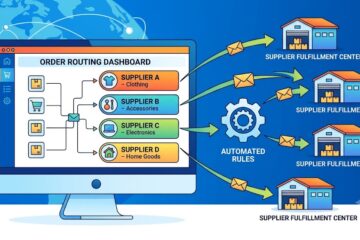
Instead, the typical process works like this:
- A customer places an order.
- The retailer receives payment.
- The supplier prepares the product.
- The supplier ships the product.
- The customer receives the order.
Although the retailer does not physically handle inventory, the business still plays an important commercial role.
The retailer is responsible for:
- Marketing products
- Operating the website
- Managing customer relationships
- Handling customer support
- Processing payments
- Coordinating orders
Because the retailer actively conducts commercial activities, appropriate business licensing remains important.
Why Business Licensing Matters
Many first-time entrepreneurs assume that not holding inventory means fewer legal requirements.
However, business licensing serves purposes beyond inventory management.
A proper license can help:
- Establish legal business status
- Build customer trust
- Open business banking services
- Meet regulatory requirements
- Support payment processing
- Create supplier credibility
- Reduce legal uncertainty
Operating without appropriate authorization may create complications later, especially as the business grows.
The Confusion Around Business Activities
One reason licensing becomes confusing is that official activity descriptions often sound similar.
For example, activities involving:
- Online marketplaces
- Brokerage services
- Digital platforms
- Internet portals
- Online trading
may appear closely related.
However, small differences in wording can significantly affect which activity officially covers a particular business model.
This is why entrepreneurs should focus on what their business actually does rather than relying solely on activity titles.
Is a Brokerage Activity Enough?
The discussion revolves around whether a brokerage-style activity can support a dropshipping business.
The reasoning behind this idea is understandable.
A dropshipping business often connects buyers with products supplied by another company.
The retailer facilitates transactions without manufacturing products directly.
This creates similarities with brokerage activities.
However, similarities alone do not necessarily guarantee regulatory compliance.
The exact legal interpretation depends on how local authorities define each licensed activity.
Why Some Recommend an E-Commerce License
Several participants believe an e-commerce license may be the safer option.
This recommendation is based on the fact that a dropshipping business usually operates as an online retail business.
Even though suppliers fulfill orders, the retailer typically controls:
- The storefront
- Product listings
- Customer payments
- Marketing
- Customer communication
From the customer’s perspective, they are buying from the retailer.
Because of this, some believe an e-commerce license more accurately reflects the business’s commercial activities.
Understanding Business Responsibilities
Regardless of which license is ultimately appropriate, a dropshipping business still carries significant responsibilities.
These responsibilities often include:
- Customer service
- Refund management
- Order communication
- Product information
- Marketing accuracy
- Business compliance
A supplier shipping products does not automatically transfer every responsibility away from the retailer.
Customers generally expect the store they purchased from to resolve problems.
The Importance of Official Verification
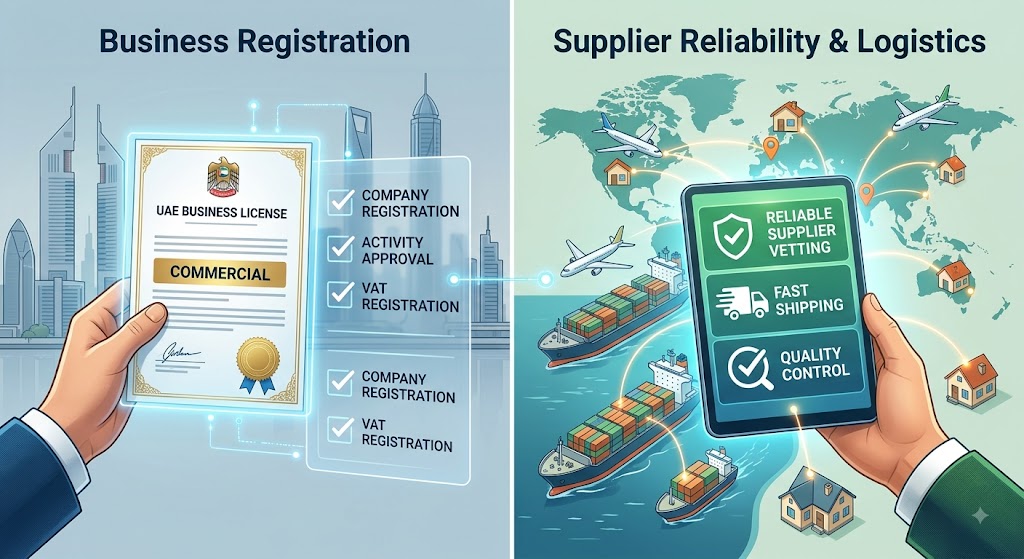
One of the strongest practical lessons from the discussion is the importance of verifying licensing requirements through official channels before registering a business.
Business regulations may change.
Activity descriptions may also differ between jurisdictions.
Entrepreneurs should confirm:
- Eligible activities
- Required documentation
- Renewal requirements
- Allowed business operations
- Geographic limitations
Relying entirely on community opinions can create unnecessary uncertainty.
Official confirmation provides greater confidence.
Matching the License to Real Operations
Instead of choosing a license based only on its title, entrepreneurs should describe their planned business operations clearly.
Questions include:
- Will customers purchase directly through my website?
- Will I receive payments?
- Will I advertise products?
- Will suppliers ship orders?
- Will I hold inventory?
- Will I sell internationally?
These practical details help determine which licensed activity best matches the business.
Shipping Challenges for UAE Dropshippers
The discussion also introduces another important issue that affects many dropshipping businesses: shipping speed.
Long international shipping times can create customer dissatisfaction.
Customers increasingly expect faster delivery.
Long delivery periods may lead to:
- Refund requests
- Order cancellations
- Customer complaints
- Negative reviews
- Reduced repeat purchases
Shipping performance therefore becomes an important business decision, not just a logistics issue.
Why Supplier Selection Matters
A successful dropshipping business depends heavily on supplier quality.
Good suppliers help businesses provide:
- Faster shipping
- Consistent inventory
- Better packaging
- Reliable communication
- Product quality
Poor suppliers often create problems that damage the retailer’s reputation.
Customers usually judge the retailer rather than the supplier.
For this reason, choosing reliable suppliers becomes one of the most important business decisions.
International Selling Considerations
Many UAE entrepreneurs eventually want to sell internationally.
Expanding beyond the domestic market introduces additional considerations.
Businesses may need to understand:
- Shipping destinations
- Customs requirements
- Import regulations
- Taxes
- Currency handling
- Delivery expectations
Planning for future expansion early can make growth much smoother.
 Building Customer Trust
Whether selling locally or internationally, trust remains essential.
Customers are often cautious when buying from unfamiliar online stores.
Businesses can strengthen trust through:
- Professional branding
- Clear contact information
- Transparent shipping policies
- Honest product descriptions
- Fair return policies
- Reliable customer support
Trust becomes especially important when products ship from third-party suppliers.
Managing Customer Expectations
Clear communication helps prevent many customer complaints.
Customers should understand:
- Delivery timelines
- Shipping costs
- Return procedures
- Product availability
- Order updates
Unrealistic promises create disappointment even when products eventually arrive.
Setting accurate expectations improves customer satisfaction.
Why Documentation Matters
Although one response shifted toward software licensing rather than business licensing, it indirectly highlights a useful principle: documentation matters.
Businesses benefit from keeping organized records of:
- Business registration
- Supplier agreements
- Product permissions
- Policies
- Customer procedures
- Business decisions
Good documentation supports smoother operations as the business grows.
Understanding Risk Beyond Licensing
Choosing the correct license is only one part of building a successful business.
Entrepreneurs should also consider operational risks.
Examples include:
- Shipping delays
- Supplier stock shortages
- Customer disputes
- Product quality issues
- Payment problems
- Regulatory changes
Planning for these risks improves long-term business stability.
Preparing Before Launch
Before opening a dropshipping store, entrepreneurs should complete several important preparation steps.
These include:
- Confirm business licensing.
- Select reliable suppliers.
- Understand shipping times.
- Create clear policies.
- Build a professional website.
- Test ordering processes.
- Review customer communication.
Taking these steps reduces avoidable problems later.
Building Strong Supplier Relationships
Successful dropshipping businesses often treat suppliers as long-term partners rather than temporary vendors.
Strong relationships improve:
- Communication
- Order handling
- Problem resolution
- Inventory updates
- Business reliability
Good supplier relationships become increasingly valuable as sales grow.
Why Legal Clarity Supports Growth
Some entrepreneurs postpone licensing questions until after generating sales.
However, obtaining clarity early offers important advantages.
A properly structured business may find it easier to:
- Work with suppliers
- Build customer confidence
- Expand internationally
- Open financial accounts
- Meet regulatory requirements
Legal certainty creates a stronger foundation for future growth.
Thinking Beyond Startup Costs
Many entrepreneurs focus primarily on keeping startup costs low.
While controlling expenses is important, choosing the appropriate business structure should also support long-term sustainability.
Saving money initially may become expensive later if licensing problems require restructuring the business.
Making informed decisions early often reduces future complications.
Creating a Sustainable Dropshipping Business
Long-term success depends on balancing compliance with customer experience.
Important priorities include:
- Proper business registration
- Reliable suppliers
- Realistic shipping expectations
- Strong customer support
- Transparent communication
- Professional operations
Each element contributes to building a trustworthy online business.
A Practical Decision-Making Process
A practical approach for a UAE entrepreneur can include the following steps:
- Clearly define the business model.
- Confirm which licensed activity matches those operations.
- Verify requirements through official authorities.
- Understand supplier fulfillment capabilities.
- Evaluate shipping performance.
- Prepare customer-facing policies.
- Launch with realistic expectations.
- Review compliance regularly as the business grows.
This structured approach reduces uncertainty while supporting sustainable growth.
Conclusion
Choosing the right business license for a UAE dropshipping business is not simply about selecting the closest-sounding activity description. Instead, entrepreneurs should begin by understanding how their business will actually operate, including how customers place orders, how payments are processed, how suppliers fulfill purchases, and how customer service responsibilities are managed.
The discussion demonstrates that community opinions alone cannot provide a definitive legal answer. Some believe a brokerage-style activity may align with dropshipping because it connects buyers and sellers, while others believe an e-commerce license more accurately reflects online retail operations. Because regulations depend on official definitions and local business rules, verifying the appropriate licensed activity through the relevant authorities remains the most reliable next step.
Beyond licensing, the discussion also highlights practical lessons about building a successful dropshipping business. Reliable suppliers, faster shipping, transparent customer communication, strong documentation, and careful operational planning all contribute to a better customer experience and a stronger long-term business.
Ultimately, a successful UAE dropshipping business requires more than launching an online store. It requires legal clarity, trustworthy supplier relationships, realistic shipping expectations, professional customer service, and thoughtful planning that supports both compliance and sustainable growth.