Modern eCommerce operations are built around speed, flexibility, and customer convenience. Businesses today are expected to process orders quickly, fulfill them efficiently, and provide delivery experiences that meet increasingly high customer expectations.
At first glance, automatic shipment splitting seems like a useful feature.
If an order contains both available products and products that require additional time before fulfillment, separating shipments appears logical:
Ship available products immediately.
Send remaining products later.
From a customer service perspective, this can reduce waiting time.
From an operational perspective, however, the situation is often more complicated.
The discussion above highlights a growing concern among merchants who manage mixed inventory orders and want greater control over how those orders are fulfilled.
The request focuses on adding a merchant-controlled setting that allows businesses to choose between:
sending products separately as inventory becomes available
or
holding the entire order until everything is ready.
Although this may appear to be a simple fulfillment preference, it reflects much larger challenges around shipping economics, customer expectations, operational efficiency, sustainability, and order management.
Let’s explore why this issue matters and why fulfillment flexibility is becoming increasingly important for online businesses.
Understanding Mixed Inventory Orders
Mixed inventory orders happen when customers purchase products with different availability conditions.
Examples include:
Items currently in stock
Items arriving soon
Pre-order products
Backordered products
Products stored in different fulfillment locations
Custom production items
Supplier-delayed inventory
In these situations, fulfillment decisions become more complex.
Businesses must decide whether to:
ship immediately
wait for inventory
split deliveries
communicate delays
Each approach creates tradeoffs.
Why Automatic Shipment Splitting Exists
Automatic shipment splitting is generally designed to improve delivery speed.
The logic is straightforward:
If some items are ready, customers receive them immediately.
Remaining products arrive later.
Benefits may include:
faster partial delivery
reduced waiting time
improved delivery perception
higher immediate satisfaction
For some business models, this works well.
But not every merchant benefits equally.
Why Small Merchants Experience Different Pressures
Large retailers often absorb shipping complexity more easily.
They may have:
volume shipping discounts
multiple warehouses
automated fulfillment systems
dedicated logistics teams
Smaller businesses operate differently.
Every shipment creates measurable costs.
Shipping two parcels instead of one may significantly reduce profitability.
The Hidden Cost of Multiple Shipments
Shipping costs extend far beyond carrier pricing.
Each shipment may require:
packaging materials
labor
label creation
warehouse handling
tracking management
support communication
Returns processing may also become more complicated.
What appears to be customer convenience can create operational strain.
Why Customer Preferences Are Not Always Obvious
One important point raised in the discussion is that many customers reportedly prefer waiting for complete orders.
This challenges common assumptions.
Customers may value:
single delivery experiences
simpler tracking
fewer packages
lower environmental impact
reduced delivery confusion
Fast shipping is not always the only priority.
The Customer Expectation Problem
When customers place one order, they often expect one delivery.
Multiple shipments sometimes create confusion.
Customers may ask:
Was my order split?
Did something go wrong?
Will I pay additional shipping?
Is part of my order missing?
Expectation gaps increase support volume.
Why Customer Support Workloads Increase
Shipment splitting frequently creates additional support requests.
Customers often ask:
Where is the rest of my order?
Can shipments be combined?
Can shipping charges be refunded?
Support teams spend time explaining fulfillment decisions.
Operational efficiency decreases.
Why Shipping Refund Requests Matter
Refund requests reduce margins.
If merchants refund duplicate shipping charges repeatedly, profitability declines.
This becomes especially difficult for smaller operations.
Margins become compressed.
Customer expectations become harder to manage.
Sustainability Concerns Are Becoming More Important
Environmental concerns increasingly influence operational decisions.
Multiple shipments often mean:
extra cardboard
additional labels
more transport cycles
increased packaging waste
Many merchants actively try to reduce unnecessary shipping activity.
Shipment consolidation supports sustainability goals.
Why Packaging Efficiency Matters
Packaging is rarely free.
Additional shipments require:
boxes
padding
printing
handling
storage
Reducing package count lowers operational waste.
Why Fulfillment Complexity Increases Quickly
Modern businesses often fulfill through multiple channels.
Examples include:
warehouses
inventory partners
third-party logistics providers
supplier fulfillment
regional fulfillment centers
Shipment splitting adds coordination complexity.
Why Order Control Becomes Valuable
Businesses increasingly want fulfillment rules aligned with their strategy.
One merchant may prioritize:
speed
Another may prioritize:
cost efficiency
Another may prioritize:
customer experience
Flexible fulfillment settings support different business models.
The Operational Challenge of Partial Fulfillment
Partial fulfillment changes internal workflows.
Teams may need to:
track remaining inventory
monitor pending items
update customers
manage multiple shipments
close orders later
Complexity increases quickly.
Why Holding Orders Can Sometimes Improve Experience
Keeping orders together may create advantages.
Customers receive:
one delivery
one tracking flow
simpler communication
predictable expectations
Although delivery takes longer, the experience may feel cleaner.
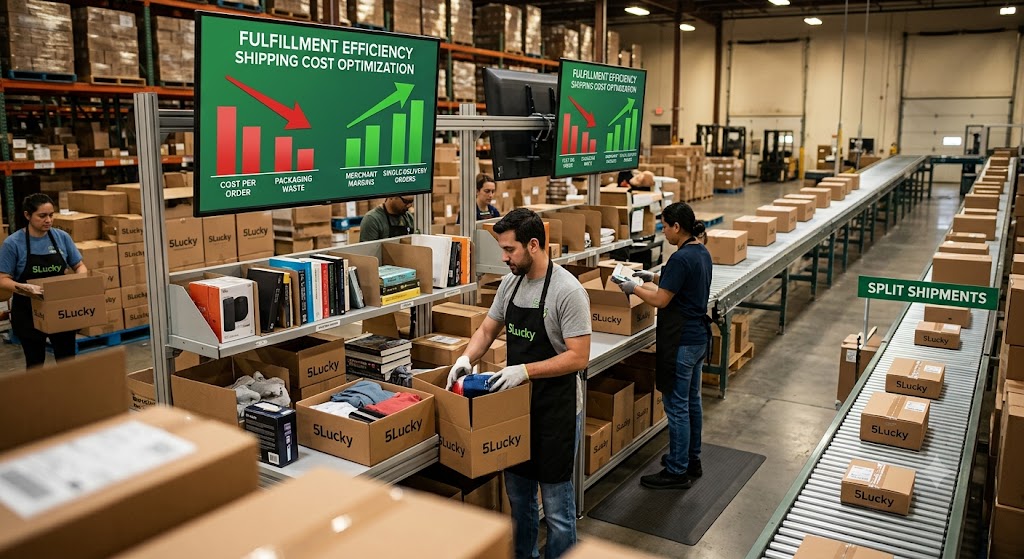
Why Fulfillment Is Not Only About Speed
Many businesses optimize for fast delivery.
But customers also value:
clarity
predictability
consistency
trust
Delivery quality matters as much as delivery speed.
Why Pre-Orders Complicate Fulfillment
Pre-order systems introduce additional challenges.
Customers intentionally purchase unavailable products.
In those situations:
shipment timing becomes expected.
Splitting shipments may not match customer intent.
Why Inventory Flexibility Has Changed Commerce
Traditional retail relied on available inventory.
Modern commerce increasingly uses:
backorders
incoming inventory
made-to-order production
supplier sourcing
inventory availability has become dynamic.
Fulfillment systems must adapt.
Why Merchant Choice Matters
One important theme in the discussion is flexibility.
Merchants are not necessarily asking to remove shipment splitting.
They want options.
Examples:
Ship immediately.
Wait for all items.
Choose per order.
Choose per customer.
Control supports operational diversity.
Why Checkout Decisions Influence Satisfaction
Customers increasingly expect control.
Some customers may prefer:
fast partial delivery
Others may prefer:
single combined delivery
Offering fulfillment choices can improve satisfaction.
Why Logistics Systems Need More Flexibility
Fulfillment systems historically prioritized standardization.
Modern commerce increasingly demands:
dynamic inventory
custom fulfillment
flexible shipping
personalized delivery
Rigid rules become limiting.
Why Shipping Transparency Builds Trust
Customers tolerate delays better when expectations are clear.
Businesses should communicate:
shipment timing
split delivery expectations
tracking details
inventory status
Transparency reduces frustration.
Why Order Routing Is Becoming More Important
Order routing influences:
cost
delivery speed
inventory efficiency
customer experience
Businesses increasingly seek smarter routing strategies.
The Difference Between Operational Optimization and Customer Optimization
Operational optimization focuses on:
cost
efficiency
fulfillment simplicity
Customer optimization focuses on:
speed
clarity
convenience
Successful businesses balance both.
Why One Default Rule Rarely Fits Everyone
Commerce operations vary significantly.
Businesses sell:
high-margin products
low-margin products
made-to-order products
fast-moving inventory
A single fulfillment rule cannot fit every scenario.
Why Flexibility Supports Growth
As businesses expand, operational requirements evolve.
Flexible fulfillment controls allow merchants to:
adapt logistics
protect margins
improve customer experience
support multiple sales models
The Bigger Lesson About Modern Fulfillment
This discussion highlights a larger shift.
Fulfillment is becoming part of customer experience strategy.
Shipping decisions influence:
trust
profitability
retention
brand perception
The businesses that manage fulfillment intelligently often create stronger long-term relationships.
Final Thought
The request for merchant-controlled shipment splitting reflects a broader challenge in modern commerce:
how to balance speed with operational efficiency.
Automatic split shipments may improve delivery times in some situations, but they can also increase costs, create customer confusion, and add fulfillment complexity.
Businesses increasingly want the flexibility to decide how inventory availability translates into delivery experiences.
Because successful fulfillment is not simply about moving products—
it is about aligning operations with customer expectations.
Conclusion
The discussion around automatic split shipments reveals how fulfillment decisions affect far more than logistics.
Modern merchants increasingly need systems that allow them to:
control shipping behavior
reduce operational overhead
manage inventory complexity
improve customer communication
support sustainable practices
Providing merchants with greater fulfillment flexibility can create better outcomes for both businesses and customers.
As commerce operations continue evolving, shipment strategy will become an increasingly important part of building efficient and customer-friendly buying experiences.